How it works: crime lab specialist talks ID’ing human remains
Published 10:30 pm Monday, December 13, 2021

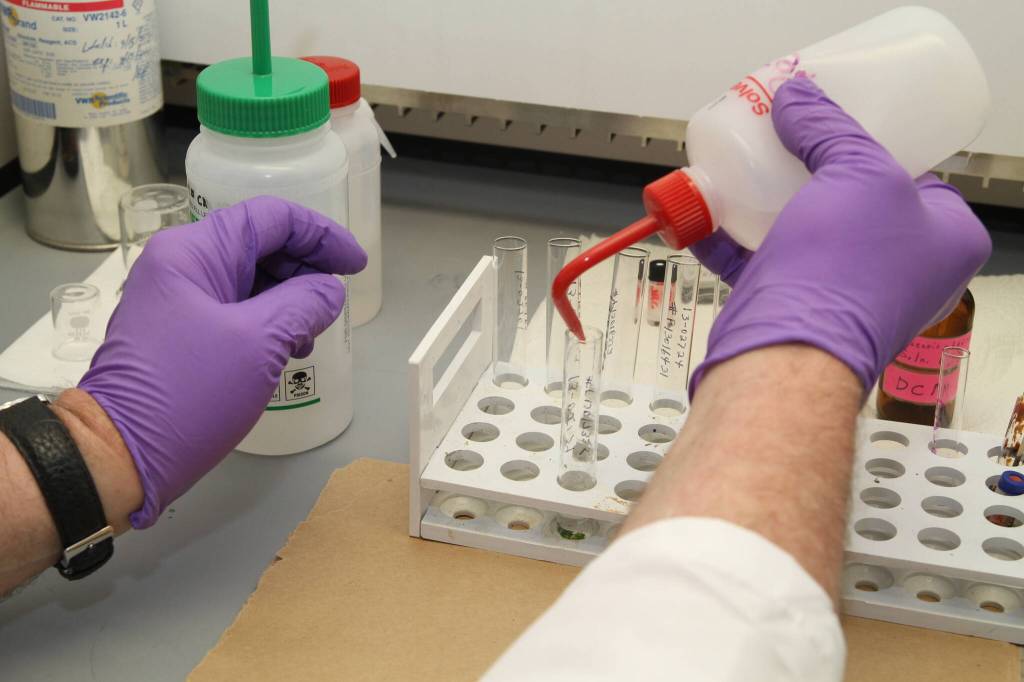
A human foot that washed ashore in Juneau in 2020 was recently identified by the Alaska State Crime Lab as belonging to a man who went missing in the water several years before.
But how does the process actually work?
For the Juneau Police Department, the process begins with finding a human remain, and then submitting it to the State Medical Examiner’s office in Anchorage, as has happened in multiple cases where a body was found but not easily able to be identified.
“The remains would first go to the Medical Examiners office to determine if they are able to make a positive identification (for example, with dental records or other features that could be found on the remains like medical implants with a serial number that can be tracked),” said Jennifer Foster, the forensic biology supervisor at the state crime lab, in an email. “If they are unable to make an identification at that point it would potentially be submitted to the lab to try and generate a DNA profile.”
[Easy on the ice: CCFR recommends caution around icy lakes]
Remains that are reduced entirely to bones need to be sent to a different lab, such as the FBI’s, Foster said, as Alaska’s crime lab isn’t set up to work bones. The crime lab gets a handful of human remains each year to analyze.
“I don’t have an exact number for how many cases we get a year as we have not historically tracked this until recently, but on average I would say five t0 ten per year,” Foster said. “This does not include the ones that are skeletonized as we do not actually receive those here at the lab.”
In the case like that of the foot found in Juneau, there’s a specific process, complicated by the conditions the foot likely found itself in during its immersion.
“We would not receive the entire foot we would receive a sample of the tissue present to take through our process. What we really need is deep muscle tissue (like thigh muscle) for the best chance of getting a comparable DNA profile,” Foster said. “In this case with the foot that was recovered the DNA present would likely be compromised due to the fact that it was submerged in water.”
Exposure to the elements and to the animals in it degrades the remains and the chances of getting a good DNA profile, Foster said.
“Remains that are recovered after being out in the elements are very degraded and the best chance of getting a profile will be from the bones/teeth and not soft tissue,” Foster said. “Once we have a sample we take it through out normal DNA procedures.”
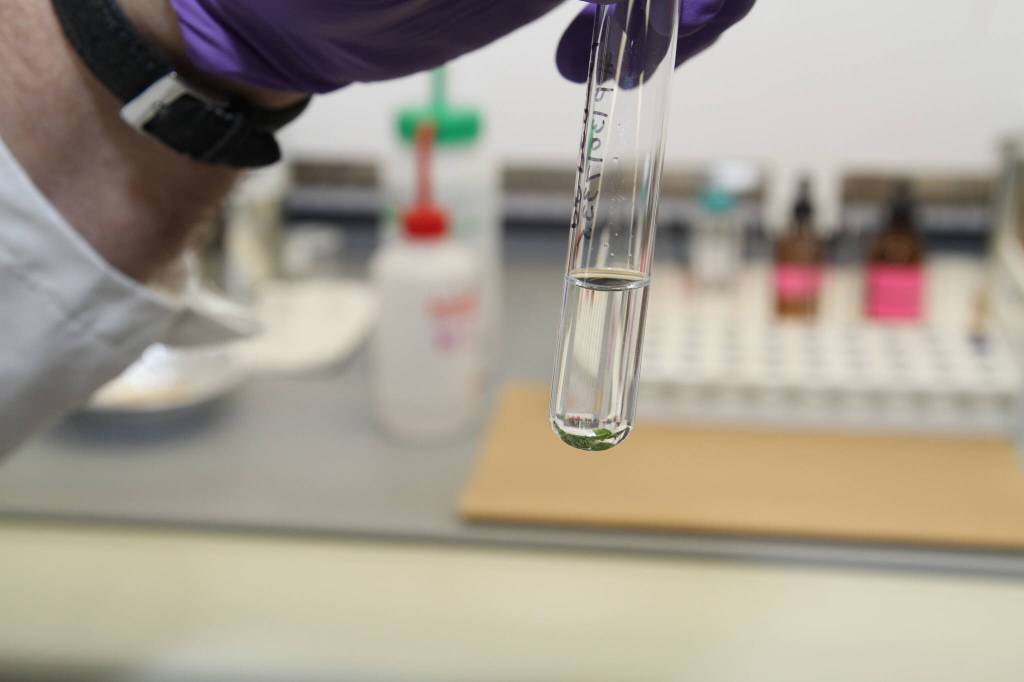
The normal DNA procedures have four steps, Foster said: extraction, quantification, amplification and analysis/interpretation.
“Extraction, isolating the DNA from the cells and ‘cleaning’” it up — getting rid of cellular debris and other things. Quantification, which tells us how much DNA we have in the sample, if it is degraded and if we have enough to go forward in the process,” Foster said. “Amplification, making millions of coping of the DNA present. Analysis/Interpretation, using capillary electrophoresis to separate the DNA pieces by size and generate a profile.”
If a DNA profile is able to be generated, Foster said, it’s uploaded to the Combined DNA Index System, a program run by the FBI maintaining a wide variety of DNA databases that can be searched against with the profile that’s been generated. It might also be compared a sample from a known relative of a possible missing person.
“If there is an idea of who the remains may belong to and known samples are able to be collected from biological parents or children, we’re able to make this type of comparison,” Foster said. “(The Alaska state crime lab is) not able to do a sibship comparison (comparing the profile to biological siblings), but this can be done and can be sent out to a lab that is able to make that type of comparison.”
The processing takes a series of weeks, following a review of the case, Foster said. Human remains cases are fast-tracked, Foster said, giving them priority as they come in. Not every set of remains generates a result, Foster said; in those cases, she consults with the law enforcement agencies and the medical examiner to find another option for identification.
• Contact reporter Michael S. Lockett at (757) 621-1197 or mlockett@juneauempire.com.