How investing in early education is good for Alaska’s economy
Published 4:25 am Friday, March 3, 2017
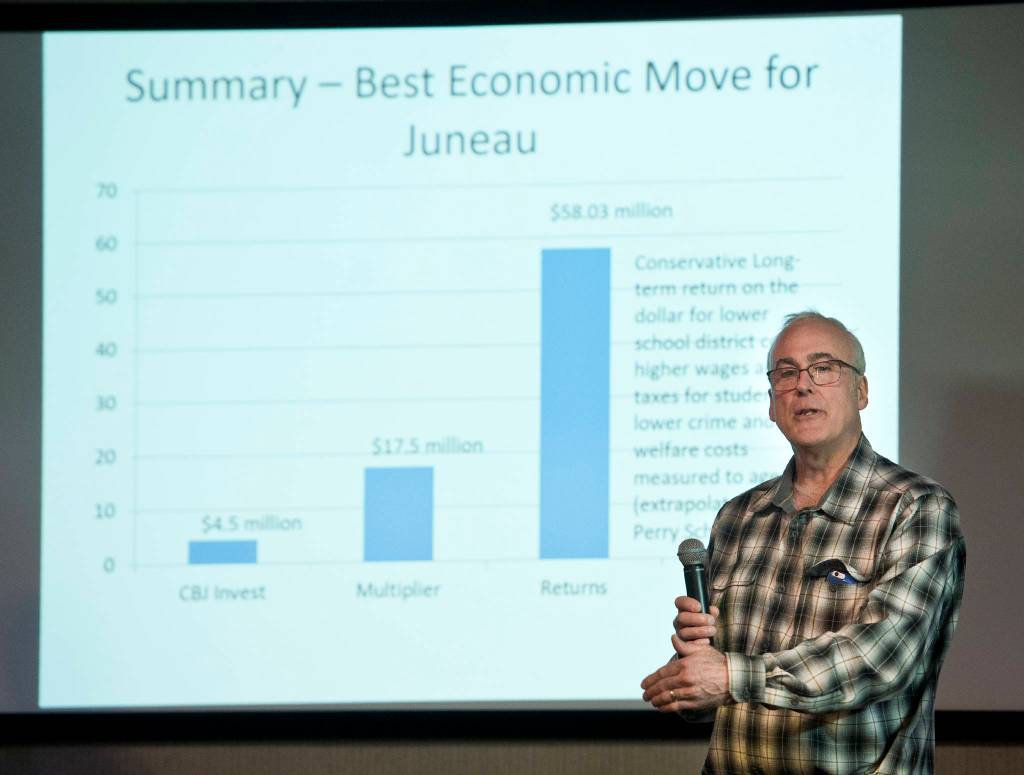
Juneau serves as a symbol of the state in a number of ways, and presenters at the Chamber of Commerce luncheon believe that the city can also serve as an example for the rest of the state in another way: early childhood development.
Anchored by former City and Borough of Juneau City Manager Kevin Ritchie, a group of presenters offered a number of potential benefits to investing in pre-kindergarten education. Both Ritchie and Director of the Association for the Education of Young Children Joy Lyon said Juneau is in a position to be a “pilot community” for the rest of the state in terms of investing in early childhood development.
“Juneau always has an issue about, ‘Are we the best capital city we can be?’” Ritchie said. “Certainly childcare, preschool and youth services are a major component of that.”
He and Lyons, along with local business owner Bruce Denton and Juneau School Board President Brian Holst, described both the need for the investment and an outline for how to fund and execute such a plan. A great deal of learning and development happen before the age of 5, Ritchie explained, and Holst spoke about the fact that Juneau kindergarteners aren’t as prepared for school as they should be.
Ritchie’s presentation proposed a $4.5 million investment in early education. One way to secure the funds, Ritchie said, is to take advantage of a continuing 1 percent sales tax that goes to a vote this October. Half of one percent of the existing 5 percent sales tax, he explained, would be around $4.5 million and the city could take that money and use it to invest in early education. That would result in taking money away from capital projects and maintenance, however.
He explained that an investment of that magnitude would more than pay off in the long run. Increasing the amount of daycare and pre-kindergarten education would provide more local jobs, and that down the line, it would save both schools and the state money, Ritchie said. According to multiple studies, Ritchie said, better early education cuts down on future special education costs and (even further down the line) reduces the amount of state spending on jails and prisons.
Lyon explained that the three main focuses for the increased investment in early childhood development are affordability, availability and quality. Some in attendance, however, felt sought clarification on the exact ways the money will be spent and specific measures that will be taken.
Ritchie said the main goal at the moment is to start a conversation about the need for this investment in early education, saying he’d like to meet with the CBJ Assembly or the Juneau Community Foundation to set specific plans and goals and get the ball rolling.
“I don’t know exactly how it would be structured at this point,” Ritchie said, “but we need a group of experts that can say, ‘This is the best way to do it,’ and then keep massaging it to make sure it’s the most efficient, effective thing that we can do.”
State Rep. Justin Parish, D-Juneau, was also in attendance, and spoke passionately about the issue, specifically about how the initiative will positively affect the city itself.
Parish has noticed that while other areas of the state are gaining state jobs, Juneau is losing them. He said he makes a point to ask state commissioners whether or not they live in Juneau, and if they don’t, he wants to know why not. In some cases, it’s because there isn’t easily accessible or affordable daycare or child services.
He saw eye-to-eye with Ritchie and Lyon, saying that Juneau has a chance to be an example for the state, and it starts with keeping families in town.
“This is happening,” Parish said of the loss of state jobs from Juneau. “This is real. This is having terrible economic consequences for us. Anything that we can do to say, ‘Juneau is a place where I want to raise my family, Juneau is the place where I want to have my employees, Juneau is the place where I can be sure that my employees will be showing up, even when their kid’s sick,’ we should be doing that.”
Clarification: An earlier version of this article stated Parish told the Chamber that he makes a point of asking state legislators whether they live in Juneau. He was referring to commissioners, not legislators.
• Contact reporter Alex McCarthy at 523-2271 or at alex.mccarthy@juneauempire.com.