Housing First facility may more than double in size
Published 9:15 am Thursday, July 19, 2018
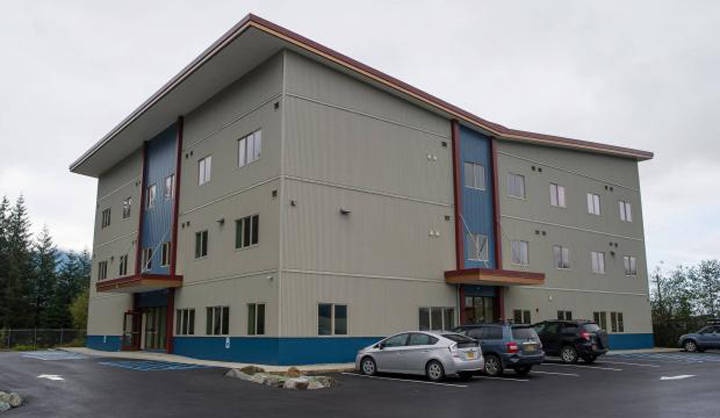


The Housing First facility may be more than doubling its residents.
Bruce Denton, Vice Chair on the Housing First board, said Housing First — a 32-room supportive housing facility in Lemon Creek geared toward housing homeless alcoholics and inebriates — has submitted an application for grant funding that would cover the costs of construction and maintenance to expand the current housing by approximately 45 more rooms at the same location.
The grant, through Alaska Housing and Finance Corporation Greater Opportunities for Affordable Living funding, would accumulate to $2.8 million total, with $1.8 million going toward operating funds spread out over three years. If the funding is approved, this would be part of the phase two expansion at Housing First’s residential facility.
“This was in mind during phase one,” Denton said in an interview with the Empire at the Juneau Chamber of Commerce weekly luncheon at the Moose Lodge Thursday. “There were limitations on how much money we could get. So we built phase one. We already have the property ready for the second phase.”
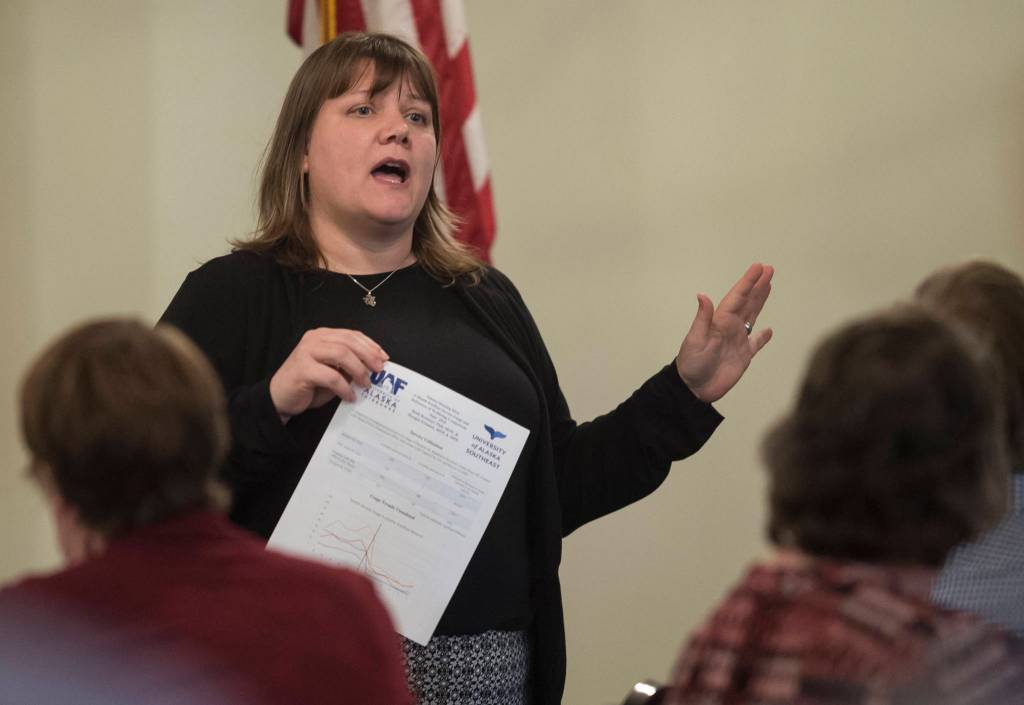
Heidi Brocious gave an update to the chamber on Housing First, which is nearing its year anniversary in September. Brocious, professor of social work at University of Alaska Fairbanks, discussed data that was released June 25 about the program’s progress in its first six months. This data showed drastic decreases in the number of police and fire department calls, usage of the sleep-off center at Bartlett Regional Hospital and times going to the Bartlett Regional Hospital emergency room for tenants in the facility, compared to six months ago before they moved in.
The overall numbers, collected from the departments and given to a UAF investigative team stated that visits to the sleep-off center went from 344 visits during the six months before tenants moved into Housing First, to two visits in the six months afterward. Visits to the ER dropped from 360 to 126, contact with Juneau Police Department for any reason went down from 604 to 168 and transport by Capital City Fire/Rescue fell from 137 to 63.
Brocious added that this was the first of several studies that will be released through a three-year period, and the first of three this year. Brocious said her team is currently working on interviews conducted in April with various people in town that includes emergency services responders, the staff at Bartlett Regional Hospital and local business owners on whether they have witnessed any effects from Housing First. Brocious said they will begin transcribing those interviews next week and the study is expected to be released this fall. A one-year study, similar to the six-month study, will also be released this fall.
Denton said the data, funded by an $18,000 grant from the Alaska Mental Health Trust Authority, supports expanding the facility because the early numbers concluded that it has helped clients and emergency service numbers.
Homelessness is still a major issue in Juneau. In May, City and Borough Chief Housing Officer Scott Ciambor gave the City and Borough of Juneau Assembly an overview of an increase in homelessness. Ciambor reported 235 people were accounted for in unshelter, emergency shelter or transitional housing. This number is an increase from 2016 (211) and 2017 (215).
Denton said there is no timeline on if or when the project would receive funding but did say applications are due by Oct. 5 for the Alaska Housing and Finance Corporation funding. If the funding is granted, work on phase two could begin next year.
“Best case scenario, construction would begin in spring of 2019 and be done by the end of the year,” Denton said.
• Contact reporter Gregory Philson at gphilson@juneauempire.com or call at 523-2265. Follow him on Twitter at @GTPhilson.