Five-year economic plan for Southeast suggests spending $300M to address top priority of housing
Published 9:30 pm Tuesday, February 11, 2025
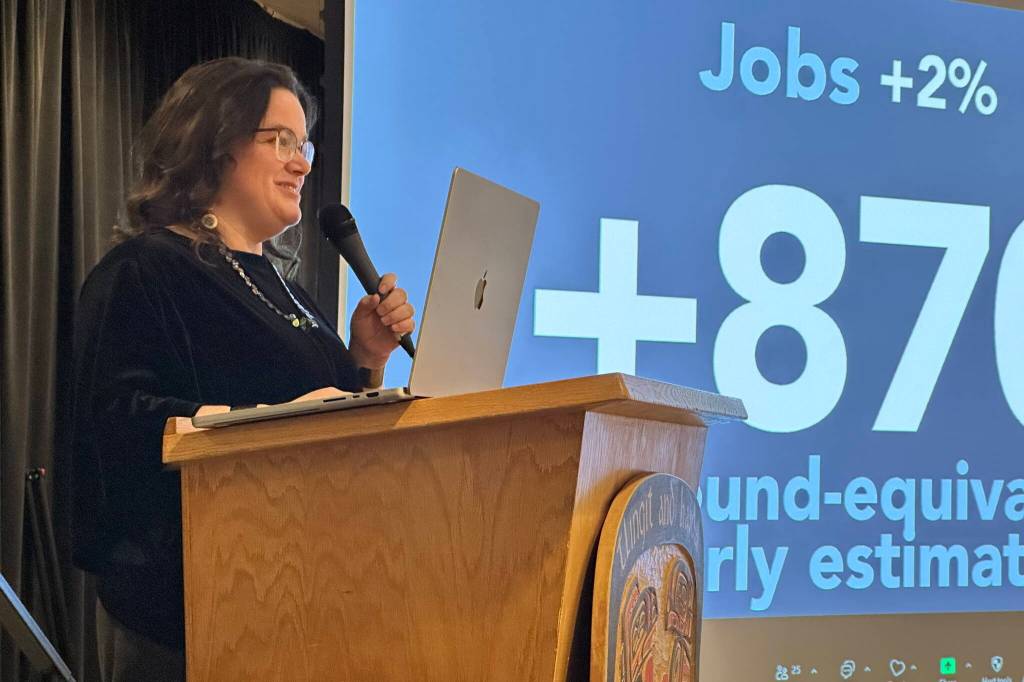
An economic development plan for Southeast Alaska during the next five years highlights familiar goals such as developing housing, markets for Alaska seafood and locally-owned tourism enterprises — which may now be helped or hindered by the wholesale policy and budget changes vowed by President Donald Trump as he begins his second term.
The draft plan presented to Southeast Conference on Wednesday contains 46 objectives, with seven classified as priorities. The priorities include the above items as well as ensuring the stability of the Alaska Marine Highway System, improving childcare access and boosting renewable energy sources as part of an effort to lower costs.
Businesses and other Southeast Conference members will have 30 days to review the draft, which has been crafted during the past year, said Meilani Schijvens, owner of Rain Coast Data, during the presentation. She said goals were drafted by six committees focusing on seafood, energy, transportation, natural resources, economic development and tourism.
The draft’s top overall priority for the next five years is housing, with lack of availability and affordability a primary factor in the region’s widespread workforce shortage and projected 17% population decline by 2050, Schijvens said.
“We need more housing for our young people in Southeast Alaska to attract and retain that workforce,” she said.
That assertion is nothing new since housing has been cited by officials as a top-tier regional issue for years. The report, by way of seeking solutions, details a multi-tiered series of actions beginning with a complete inventory of land ownership, availability and suitability for residential development. That assessment is expected to take one to three years.
Subsequent steps include establishing public/private incentives to offer housing developers, developing a manufactured model home suitable for Southeast Alaska, altering zoning codes to allow more development flexibility, and luring construction workers with training and housing incentives.
The report estimates the five-year housing plan would cost $300 million, with one of the biggest line-item costs being “Infrastructure Investment Partnerships” that each participating borough/census area would spend $10 million on annually. A long list of federal, state, tribal and other funding sources municipalities might tap for the housing plan is also provided.
Similarly detailed outlines for the other top priority goals are included in the report, but since most of the work was done prior to Trump’s return to the White House doesn’t factor in policy changes already enacted or announced that may affect those goals. In some instances, such as his executive order to eliminate federal regulations that inhibit maximum utilization of Alaska’s natural resources, officials said it may help the region’s economic prospects, especially in industries such as mining and timber.
“We want to maintain a stable regulatory regime in natural resources,” Schijvens said. “Maybe we’re worried less about this now.”
Other Trump actions may hinder some of the primary goals stated in the regional plan, including one to “reduce energy costs and increase deployment of renewables.” The president, seeking to eliminate any funding linked to climate change, has issued orders affecting tens of billions of dollars for such projects, as well as ordering a halt to federal approval of alternative energy projects.
The Anchorage Daily News on Wednesday reported hundreds of millions of dollars in funding for energy projects in Alaska are on hold due to Trump’s actions. Among those projects is $40 million for a hydropower facility in Angoon that would replace diesel-powered fuel.
Similarly, another primary goal in the regional five-year plan is “Support the stability, sustainability and longevity of the Marine Highway System of Alaska.” U.S. Sen. Lisa Murkowski, R-Alaska, told conference attendees Tuesday that Trump’s freezes could apply to federal funding previously announced for upgrades to the state ferry system’s fleet and infrastructure.
The other members of Alaska’s all-Republican congressional delegation, Sen. Dan Sullivan and Rep. Nick Begich III, addressed the convention on Wednesday. Both are strong Trump supporters and said his action should benefit the region as a whole.
Begich said his office is hearing from people statewide concerned about the Trump administration’s vow to slash federal funding deemed wasteful. The congressman said he is talking to fellow policymakers about matters such as “how unique Southeast Alaska is , that what some call a ferry system is actually really a highway system for Southeast and it’s very important for our communities for getting goods around, for moving people around.”
He said he also agrees with the assessment housing is among the biggest challenges facing the region.
“I’ll be working to find ways to open up more lands for housing, and that’s a priority that I continue to hear talked about as people from your communities come to to our office in D.C. and raise issues that need to be addressed,” he said.
Sullivan, in addition to promoting Trump’s actions on energy development and vow to increase the U.S. Coast Guard presence in the Arctic, said efforts are also being made to aid the state’s ailing fisheries industry.
“What I’ve been saying is we need to make sure we’re encouraging Americans to buy American-Alaskan freedom fish, not the Chinese-Russian communist fish,” Sullivan. “And I got a real strong commitment from the incoming Secretary of Commerce to focus on fisheries. Focus on fisheries, especially the superpower of seafood, which is us.”
• Contact Mark Sabbatini at mark.sabbatini@juneauempire.com or (907) 957-2306.