Aspen trees near Glennallen show signs of the changing seasons. (Courtesy Photo / Ned Rozell)

Aspen trees near Glennallen show signs of the changing seasons. (Courtesy Photo / Ned Rozell)

Fall equinox and the signs of the big turn

It is time for Alaskans to start paying the bill for all that summer daylight.

By Ned Rozell

On the first day of October, a little girl pulls on her rubber boots and rushes outside into crisp fall air. She knows the days are getting shorter, but she doesn’t realize Alaska is a week past the autumnal equinox.

On the equinox, the sun appears to sit over Earth’s equator, causing days and nights to each last about 12 hours everywhere in the world. It is time for Alaskans to start paying the bill for all that summer daylight.

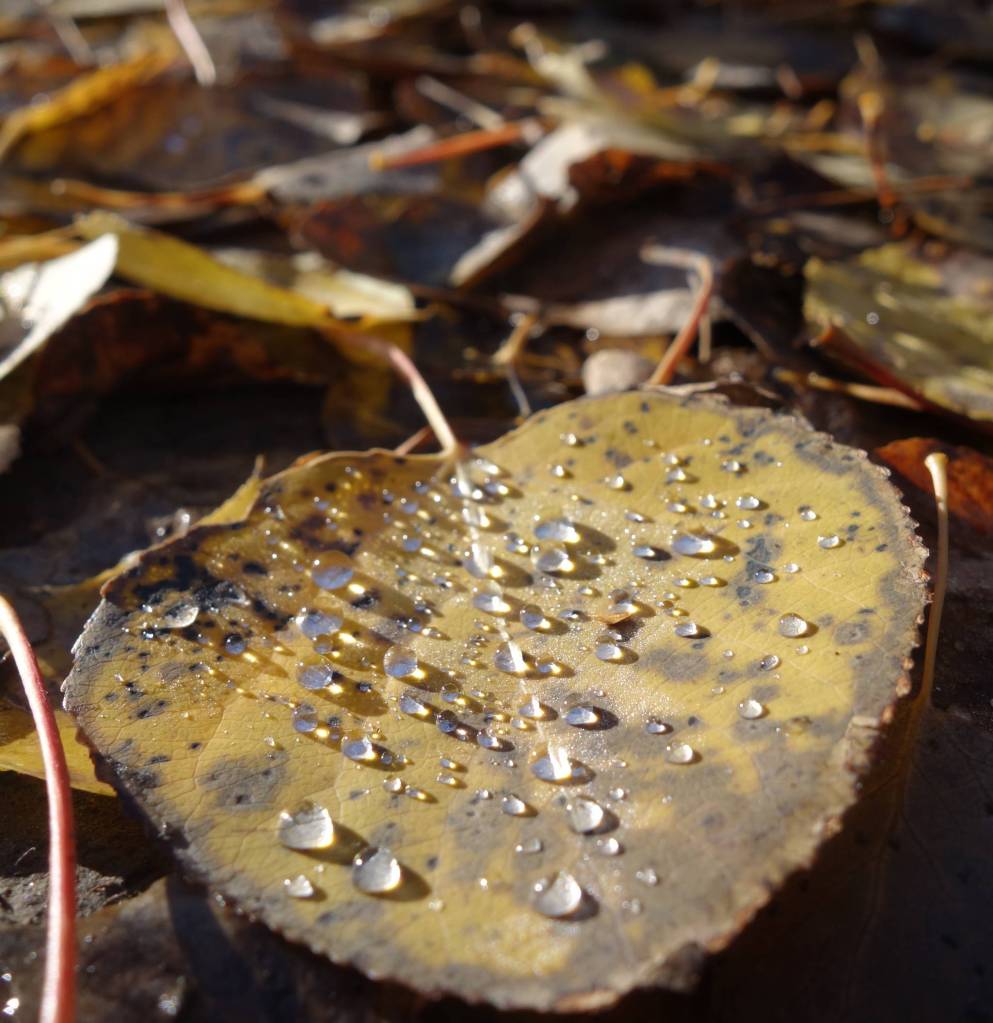
An aspen leaf sits on the forest floor in Alaska. (Courtesy Photo / Ned Rozell)

An aspen leaf sits on the forest floor in Alaska. (Courtesy Photo / Ned Rozell)

The girl hears the ground crunching under her feet. The temperature dropped to 27 degrees Fahrenheit the night before, killing many of the plants in her mother’s garden. The plants didn’t die on earlier nights when the temperature dipped to 32 because sugars within their sap depress the freezing point.

She walks to her favorite place, the frog pond, down a forest path. She is surrounded by the gold leaves of birch and willow trees. The trees are responding to cooler temperatures and longer nights by shutting down their solar panels by destroying chlorophyll. Packed within leaf cells, chlorophyll enables plants to convert the sun’s energy to sugars.

The trees’ shift to dormancy allows other pigments within the leaves to express themselves. It’s a brief show of color, lasting until the tree forms abscission layers at the base of leaves. After clipping their summer connection to branches, the leaves fall to the ground.

The girl notices perfect little spheres of water on the surface of a fallen aspen leaf. Water molecules tend to attract each other and trend toward the minimum possible surface area, which is a sphere. The balls of water will evaporate into water vapor as the day warms.

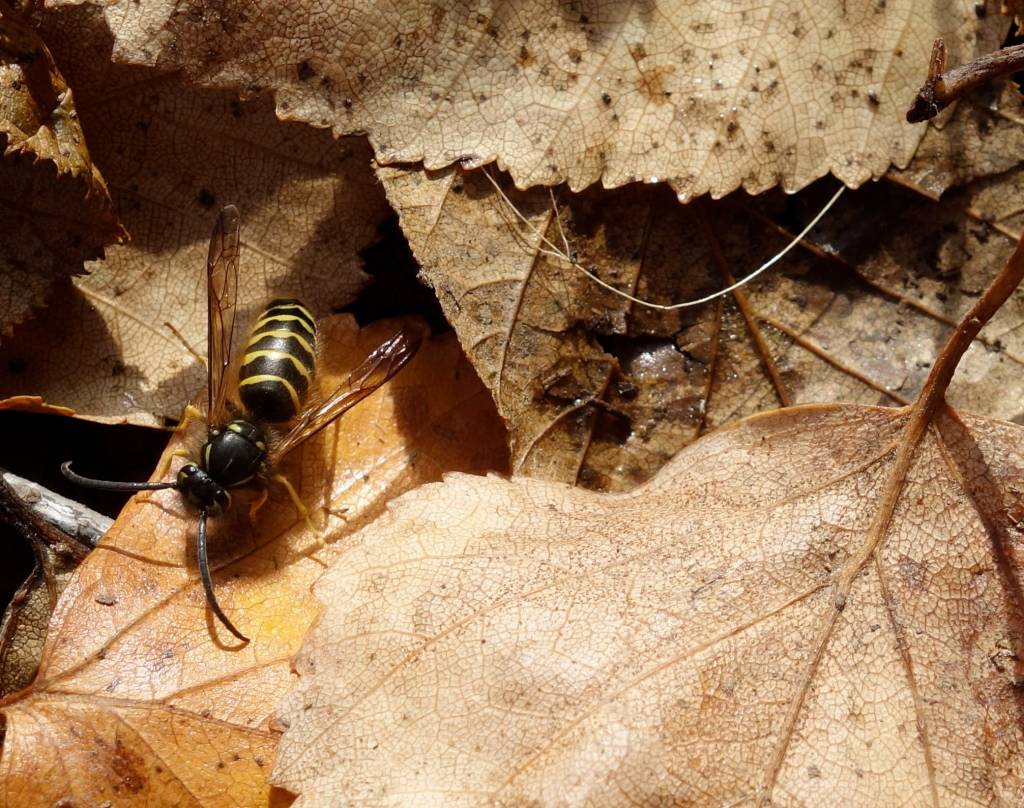
An Alaska yellowjacket sits among the leaves in late fall. (Courtesy Photo / Ned Rozell)

An Alaska yellowjacket sits among the leaves in late fall. (Courtesy Photo / Ned Rozell)

Beneath the girl’s boots, burrowed a few inches into the forest floor, are wood frogs, the only amphibians in northern Alaska. During the weeks ahead, a blanket of snow will protect frogs and other hibernators, such as yellowjackets and snow mosquitoes, from the cold air. Even close to the warmth of the earth, the frogs will freeze like little green ice cubes — a process that doesn’t kill them because their blood contains high levels of glucose, which acts as a sort of antifreeze. They will thaw and hop away the next spring.

Honks in the air draw the girl’s attention to the sky, which is clear and blue because air molecules in the atmosphere scatter blue light. Autumn skies in Alaska are a deeper blue than spring skies. Snow covering the ground in springtime reflects about 90 percent of the light that hits it. Air molecules scatter the reflected sunlight again, washing away a bit of the blue.

[Raging fires are the new normal of climate change]

The little girl watches as Canada geese fly in a V-formation, leaving the rich breeding grounds of the far north for warmer places. Scientists who once studied flying geese found that a flock of 25 birds in a V could fly 70 percent farther than a single bird using the same amount of energy. In a well-formed V, even the bird at the front receives a benefit from its neighbors.

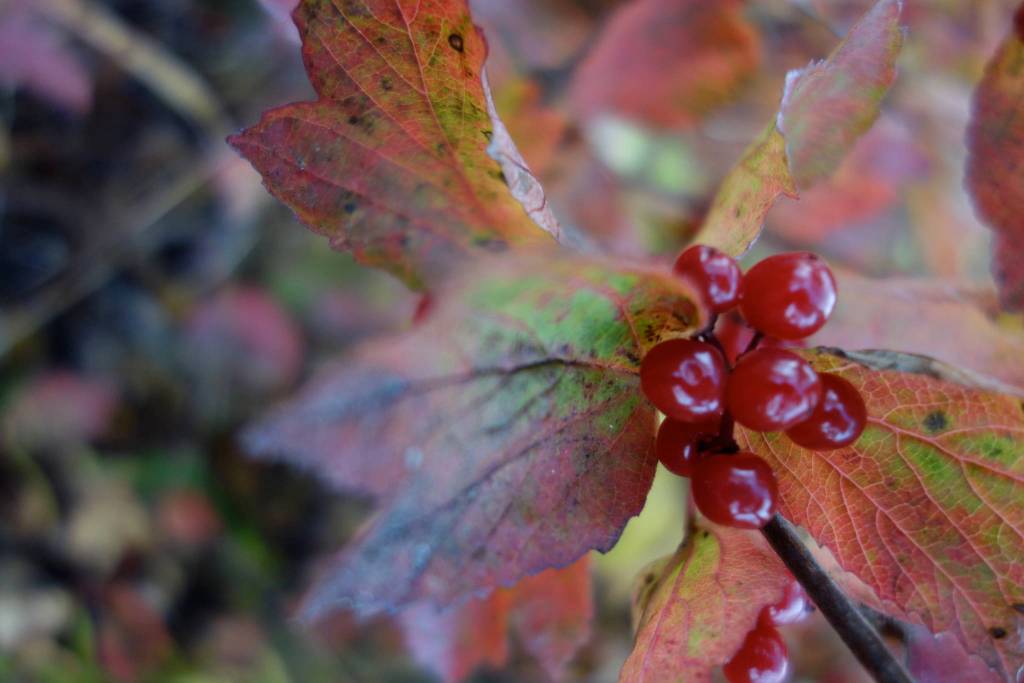
Highbush cranberry emits a musty smell in autumn. (Courtesy Photo / Ned Rozell)

Highbush cranberry emits a musty smell in autumn. (Courtesy Photo / Ned Rozell)

As the girl turns to walk home, she catches the musky smell of fall wafting from highbush cranberries. The fragrance will remind her of home the rest of her life.

The scent — a chemical compound released as the fruit matures — may be intended to lure a creature to eat the tart berries, but the girl wrinkles her nose and walks past the bushes, back up the path to her house. She will not be a seed carrier for the highbush cranberry; it’s a task she leaves for the foxes and birds.

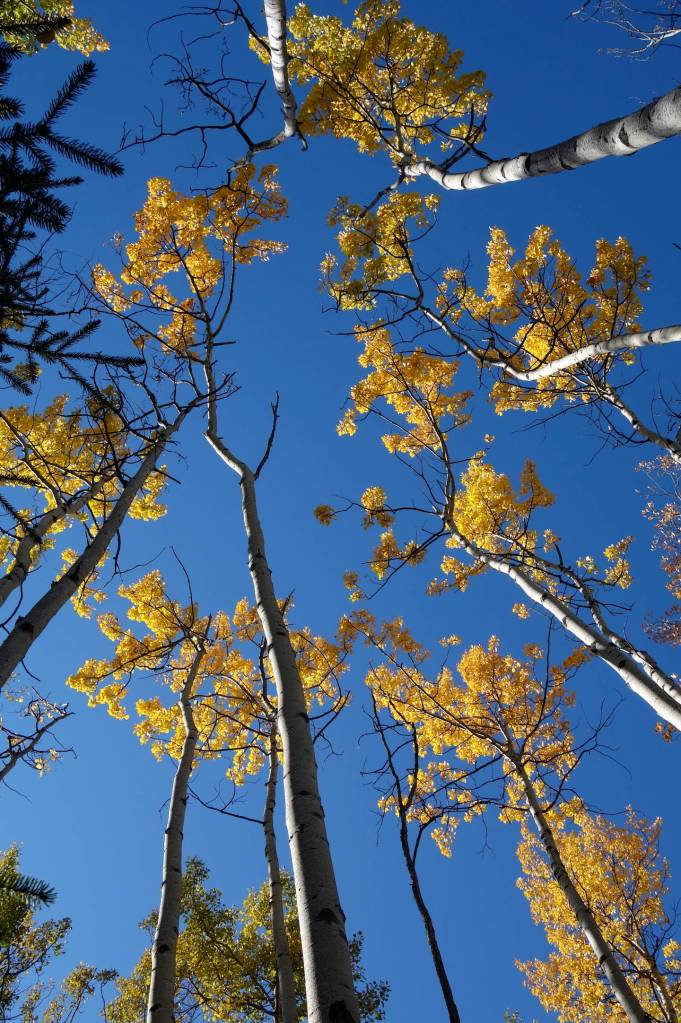
Aspen trees near Glennallen show signs of the changing seasons. (Courtesy Photo / Ned Rozell)

Aspen trees near Glennallen show signs of the changing seasons. (Courtesy Photo / Ned Rozell)

Since the late 1970s, the University of Alaska Fairbanks’ Geophysical Institute has provided this column free in cooperation with the UAF research community. Ned Rozell ned.rozell@alaska.edu is a science writer for the Geophysical Institute. A version of this column appeared in 1999.
More in News

A Capital City Fire/Rescue truck drives in the Mendenhall Valley in 2023. (Clarise Larson / Juneau Empire file photo)
Juneau man found dead following residential fire

The cause of the fire is still under investigation.

CBJ sign reads “Woodstove burn ban in effect.” (City and Borough of Juneau photo)
Update: CBJ cancels air quality emergency in Mendenhall Valley Sunday morning

The poor air quality was caused by an air inversion, trapping pollutants at lower elevations.

A dusting of snow covers the Ptarmigan chairlift at Eaglecrest Ski Area in December 2024. (Eaglecrest Ski Area photo)
Update: Waterline break forces closure at Eaglecrest Friday, Saturday

The break is the latest hurdle in a challenging opening for Juneau’s city-run ski area this season.

Patrick Sullivan stands by an acid seep on July 15,2023. Sullivan is part of a team of scientists who tested water quality in Kobuk Valley National Park’s Salmon River and its tributaries, where permafrost thaw has caused acid rock drainage. The process is releasing metals that have turned the waters a rusty color. A chapter in the 2025 Arctic Report Card described “rusting rivers” phenomenon. (Photo by Roman Dial/Alaska Pacific University)
Ecosystem shifts, glacial flooding and ‘rusting rivers’ among Alaska impacts in Arctic report

NOAA’s 2025 report comes despite Trump administration cuts to climate science research and projects

The U.S. Capitol in Washington, D.C., on Oct. 1, 2025. (Photo by Jennifer Shutt/States Newsroom)
Moderate US House Republicans join Dems to force vote on extension of health care subsidies

WASHINGTON — Republican leaders in the U.S. House will face a floor… Continue reading

The National Weather Service Juneau issues a high wind warning forDowntown Juneau, Southern Douglas Island and Thane due to increased confidence for Taku Winds this afternoon. (National Weather Service screenshot)
Taku winds and dangerous chills forecast for Juneau

Gusts up to 60 mph and wind chills near minus 15 expected through the weekend.

Chloe Anderson for the Juneau Empire
Fallen trees are pictured by the Mendenhall river on Aug. 15, 2025. Water levels rose by a record-breaking 16.65 feet on the morning of Aug. 13 during a glacial outburst flood.
Lake tap chosen as long-term fix for glacial outburst floods

The U.S. Army Corps of Engineers and Juneau leaders agreed on the plan.

Gift card displays, such as this one in a CVS in Harlem, N.Y., have been a source of concerns for lawmakers hoping to combat gift card fraud. “Card draining,” or stealing numbers from poorly packaged cards, is one of the costliest and most common consumer scams, and states are trying to combat it with consumer alerts, arrests and warning signs on store displays. (Photo by Robbie Sequeira/Stateline)
Alaskans targeted by scammers posing as government officials, FBI warns

The FBI reports Alaskans lost over $26.2 million to internet-based scams in 2024, with $1.3 million of those losses due to government impersonation scams

A buck enters the view of an Alaska Department of Fish and Game trail camera on Douglas island in November 2020. (Alaska Department of Fish and Game courtesy photo)
Douglas deer: The island’s hunt faces calls for new rules

Board of Game is seeking public comment on regulation changes that would affect Juneau.

Most Read