Dunleavy outlines priorities for special session
Published 9:30 pm Sunday, July 27, 2025
Familiar policy proposals including more charter school authorizers, payments to teachers and a cross-district open enrollment provision characterize Gov. Mike Dunleavy’s agenda for next month’s special session of the Alaska Legislature — which he called on July 2. The special session starts Saturday, Aug. 2.
A press release from the governor’s office on Monday outlines “specific policy priorities lawmakers will tackle” in the coming weeks. The governor has said he will not provide specific details on his proposals until the first day of the special session, but his agenda describes the creation of a Department of Agriculture to focus on food security; development of tribal compacting between the State Department of Education and select tribes to create “better performing schools”; expansion of a corporate tax credit program for education; establishment of the state education department as a charter school authorizer; open enrollment that reaches beyond a student’s resident district; grants for reading improvement and after-school reading tutoring; and recruitment retention payments to teachers “to reduce turnover.”
If the governor’s policy priorities are approved, “long-term certainty in funding for K-12 schools” could be considered. The governor in June vetoed funding in the state’s budget for education to a level below the amount set in law by a new bill approved this year. Dunleavy had also previously vetoed that bill, but his veto was overridden by a 46-14 majority of the Legislature.
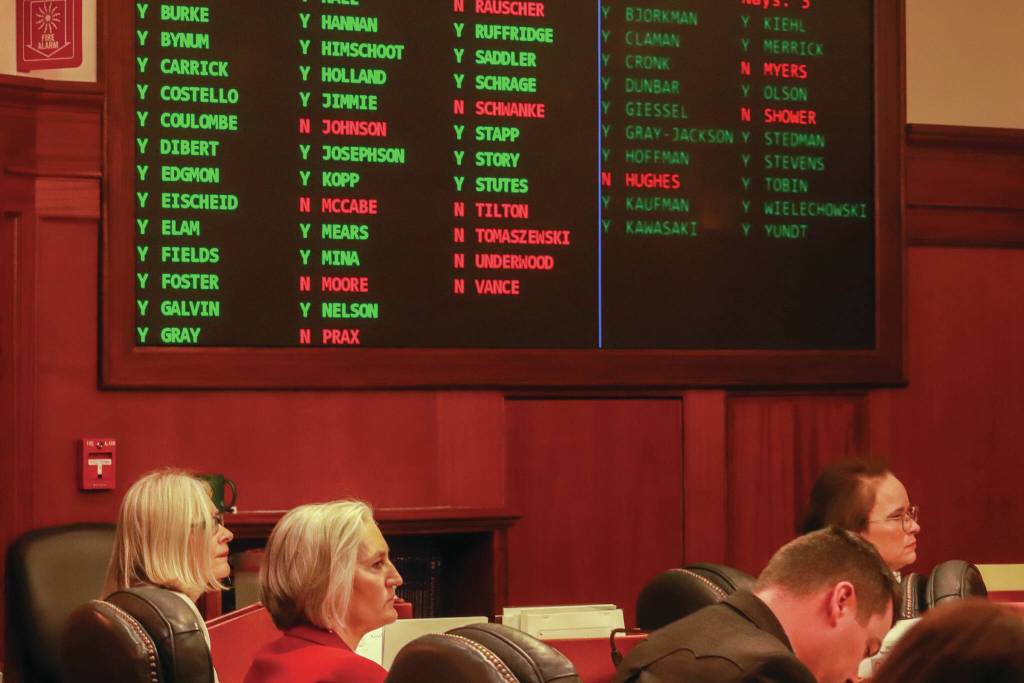
When Dunleavy announced his special session on July 2, multiple legislators said they thought the move was intended to undercut another override of the budget veto. The Legislature is required to vote on an override within the first five days of the session.
That override would require 45 votes, rather than the 40 vote hurdle to override the veto of a bill, and multiple legislators who voted for the education funding bill were expected to be absent from the state this summer.
Dunleavy asked Republican lawmakers not to attend the first days of the session, specifically to preempt the effort to override his vetoes. Rep. Sarah Vance, R-Homer, has said she plans to delay her arrival in Juneau until the sixth day of the session, after the veto override window has passed. The three lawmakers who represent the central Kenai Peninsula, Sen. Jesse Bjorkman and Reps. Justin Ruffridge and Bill Elam have all said they plan to attend the special session.
It’s uncertain whether there will be enough votes this weekend to override the governor’s veto. Sen. Forrest Dunbar, D-Anchorage, was expected to be unable to return for the override vote because he’s serving in the National Guard in Poland and has an excused absence from the Legislature. He announced July 23 that he will be attending the session.
The Alaska Beacon reported on the same day that Sen. James Kaufman, R-Anchorage, who was expected to be away in Vietnam, will also be able to return for the vote.
A joint release from the Alaska Legislature’s Senate and House majority says that the Legislature plans to consider two veto overrides, to restore $51 million in funding for public education cut by the governor and to overturn a veto of Senate Bill 183, which “affirms the Legislature’s oversight of oil and gas tax revenues.” The two overrides will “immediately” be considered in joint session around 10:15 a.m. Saturday, and then the Legislature “intends to adjourn later that day, having completed its work.”
“I urge every lawmaker not formally excused to be present in Juneau to fulfill our constitutional duty,” Senate President Gary Stevens, R-Kodiak, wrote in the release. “These override votes are not just symbolic. They are about preparing Alaska’s students, restoring public trust in how we manage billions in state revenues, and maintaining the Legislature’s role as a co-equal branch of government.”
As for Dunleavy’s policy proposals, Stevens said on July 2 that the Legislature had already considered the governor’s priorities for both education reform and a department of agriculture — “rather than respecting that process, the Governor is doubling down on proposals that failed to gain legislative support.”
Dunleavy in his press release says that special session “is an opportunity to address Alaska’s performance issues and funding issues in K-12 education well into the future.” He writes that any bill approved now can be signed before the new school year begins.
The bills brought forward by the governor will be introduced on Aug. 2, the first day of the session. In the release, he says he’s requesting bill hearings to begin on Aug. 3.
Reach reporter Jake Dye at jacob.dye@peninsulaclarion.com.