Do you know the differences between hares and rabbits?
Published 9:30 pm Monday, February 24, 2020
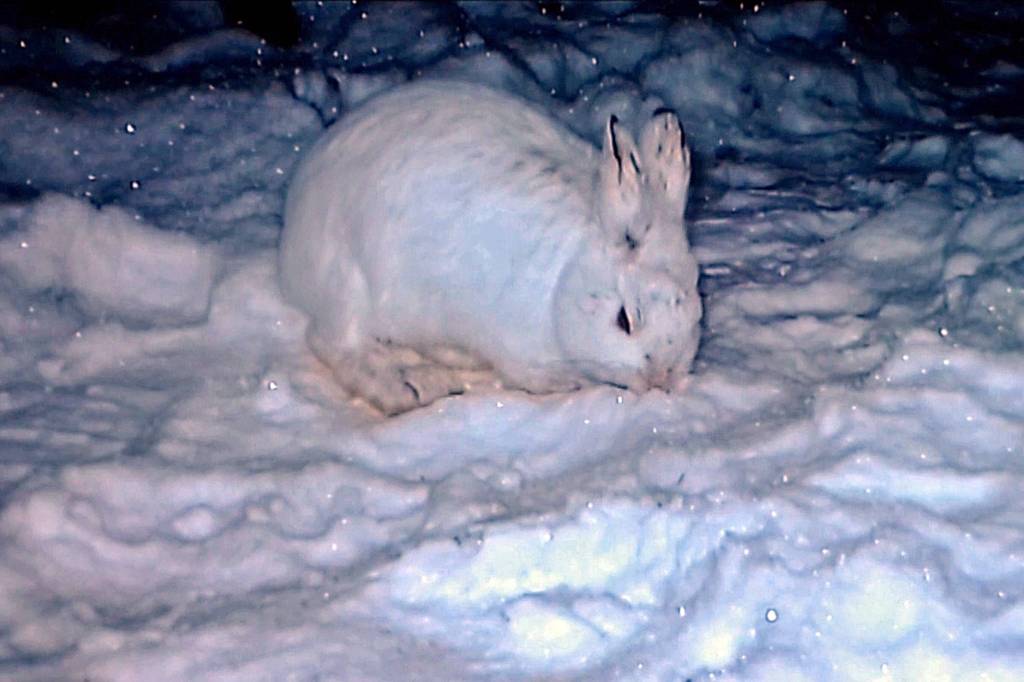
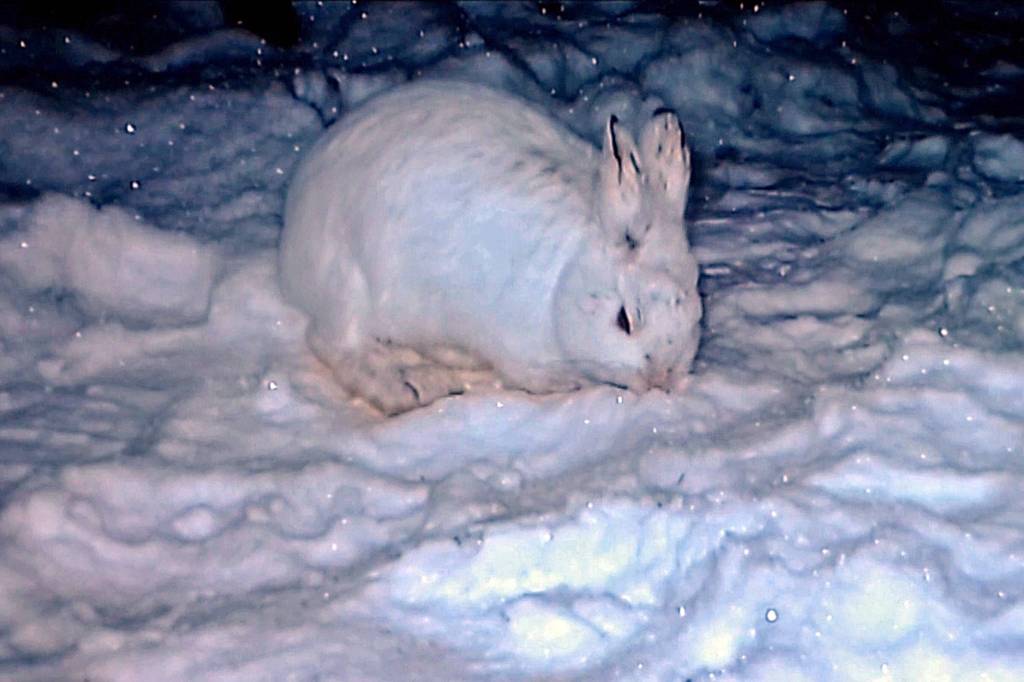


It’s mid-February, and Parks and Rec hikers are headed up from Crow Hill Road to Lawson Meadows. The skiers soon disappeared, leaving the snowshoe-ers to plod our way up. The lead hikers got lucky — a snowshoe hare dashed across the trail right in front of them. We almost never see the critters themselves, just lots of tracks and occasional pellets. They are nocturnal, and often active in the twilight hours of dawn and dusk. I was not one of the lucky ones, sadly. I think the only hare I’ve actually seen was a young one — called a leveret — that was clamped in the jaws of a cat.
Hares are distinguished from rabbits in several ways, one of which is the condition of the young at birth. Female hares make a simple nest, just a shallow depression. The leverets are born with their eyes soon open, ready to hop about in a couple of days, while little bunnies are born furless, blind, and helpless, restricted for several weeks to a nest, often in a burrow. In general, hares are larger than rabbits, with bigger ears and feet. Just to confuse the issue, jackrabbits are really hares!
Two species of hare live in Alaska. The Alaskan hare is found primarily in tundra habitats in western Alaska, with scattered occurrences along the north coast. It is much larger than the snowshoe hare (well over six pounds vs three or four pounds), which is the smallest hare in the world.
[Find out more about the Mendenhall Glacier’s famous bear]
Snowshoe hares are widespread across northern North America and in the mountain chains that extend southward. They live in forested and shrubby habitats where they eat a variety of woody and herbaceous plants. Winter diets include lots of twigs and bark, but sometimes the hares dig down through deep snow to reach buried herbaceous plants. They may even feed, very occasionally, on carcasses. As is common among hares and their relatives — and some rodents also — two kinds of fecal pellets are produced. A soft form is re-ingested — this is called coprophagy — allowing further extraction of nutrients. Then the more fully digested result emerges as a hard, round pellet. In hard times, hares may even re-ingest hard pellets for a third trip through the digestive tract. Pellets are usually deposited singly, so a pile of pellets means that the animal spent some time in that place.
Northern populations of snowshoe hares are famous for extreme variations in abundance, with around ten years between population peaks, usually. Reasons for these cycles have been much debated. Hares have many predators and mortality, especially of leverets, is high. The Canada lynx preys heavily on hares, and its abundance closely tracks the abundance of hares, peaking with the same cyclic pattern.
Snowshoe hares are solitary creatures, except of course in mating season. They are territorial, defending their home ranges vs. others of the same gender. A reputable Canadian source says that the trampled runways that we see are made deliberately by territory owners. Each runway is trimmed of intruding twigs and herbs and packed firm by hopping up and down, leaving clear escape routes through the territory.
[Former visitor center director gets a lifetime achievement award]
Female hares can produce several litters a year. They can mate right after producing a litter and gestate the next litter while nursing the first. Considering the high energetic cost of lactation, this is noteworthy. A single litter often has more than one father. Birthing a typical litter of four takes just a couple of minutes, after which the female leaves the nest, coming back once a day to nurse her kids. After about three days, the young ones scatter, coming back to the nest in evening to nurse. They can eat solid food when they are a week or so old and are weaned after about four weeks.
The hare spotted by P&R hikers had patches of brown fur mixed with the winter white. Mid-February seems early for the transition to summer coloration. Timing of the molt is regulated chiefly by day length, not by the amount of snow on the ground, so sometimes out-of-sync brown hares are conspicuous on snow and white ones are very visible on leaf litter.
Mary F. Willson is a retired professor of ecology.
• Mary F. Willson is a retired professor of ecology. “On The Trails” is a weekly column that appears every Wednesday.