Budget stalls in House as leaders confer with Senate
Published 9:30 pm Tuesday, April 11, 2023
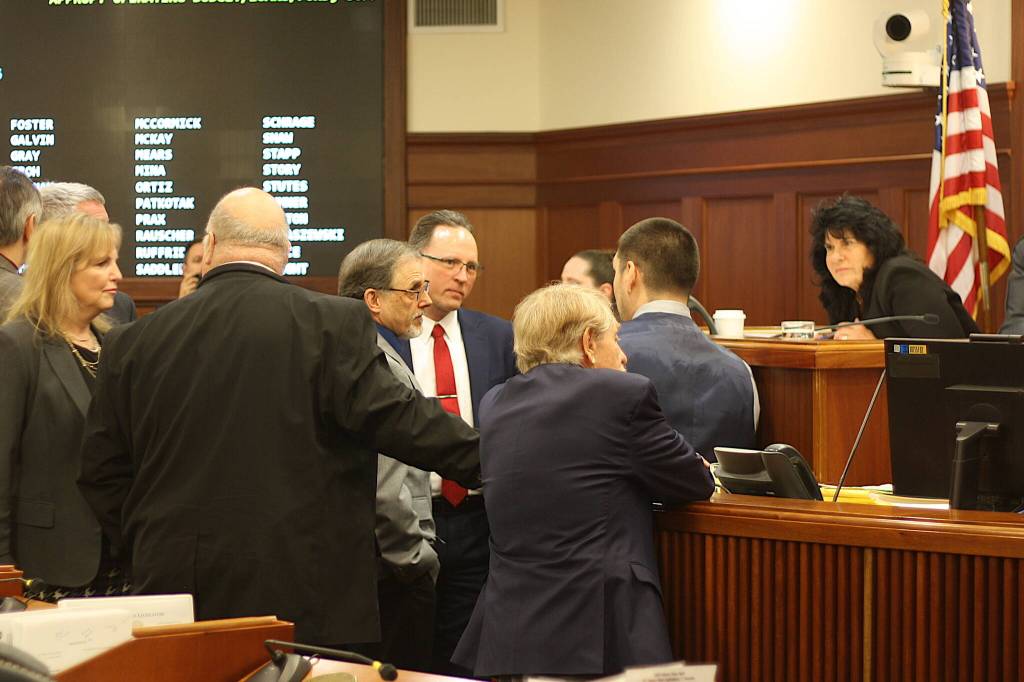
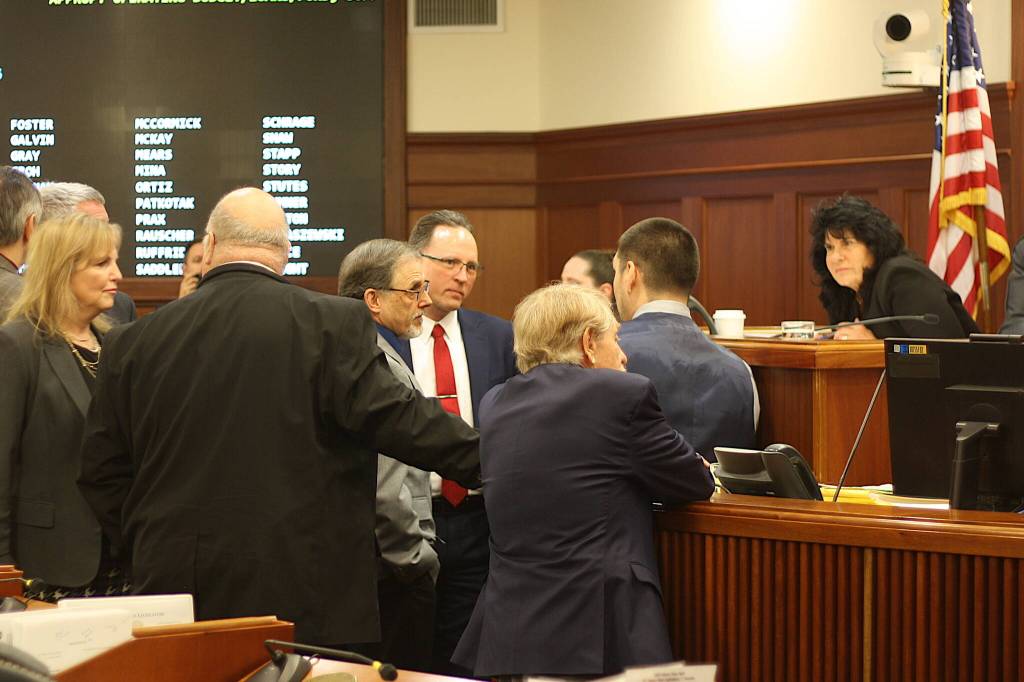


The budget process has gone from overheated to superchill in the state House during the past week, as leaders are holding off on a floor vote while they discuss an overall spending plan with key members of the Senate that addresses differences such as an education spending increase, the amount of the Permanent Fund Dividend and how to cope with a sizeable expected deficit.
House leaders originally hoped to pass a proposed budget by last Thursday, but were thwarted when an angry dispute about education funding prompted nearly the entire minority caucus to stage a walkout last Wednesday. That led to further turbulence Thursday, resulting in the session being adjourned for a long Easter weekend and the floor vote scheduled for Monday — only to see that vote delayed every day so far this week.
“It’s to give the Senate time to get some work done,” said House Speaker Cathy Tilton, a Wasilla Republican, in an interview after Wednesday’s floor session. “They have some things they’re discussing.”
House and Senate members involved in the budget process met Wednesday morning to discuss a timeline as the session approaches its final month, along with some of the differences that need to be resolved. Tilton said the plan is still to have the House pass its budget bills that will then be evaluated by the Senate.
“I would say it would be toward the end of this week or early next week,” she said.
The Senate expects its budget subcommittees to complete work on specific sections this week, after which the Senate Finance Committee will begin work on that body’s draft. Sen. Bert Stedman, a Sitka Republican who co-chairs the committee, said he believes the operating budgets proposed by the Senate, House and Gov. Mike Dunleavy will be largely similar — and thus essentially maintain the status quo for most state functions — but there are a handful of high-profile and high-dollar items where differences that have emerged during the session remain.
The most notable difference for many residents will be the size of the PFD, which almost certainly will be smaller — perhaps much smaller — than the $3,284 dividends Alaskans received last year.
Dunleavy is proposing a “statutory” dividend that would be a comparable amount, but result in a likely deficit of more than $1 billion in a roughly $6.5 billion budget. The Republican-led House is as of now proposing dividends of about $2,700 by splitting available Permanent Fund earnings evenly between PFDs and state spending (known as the “50-50 plan”) with a resulting deficit of about $600 million. The bipartisan Senate majority is favoring a “75-25” plan that would result in PFDs of about $1,300, but no deficit since most of the available Permanent Fund earnings would be used for state spending.
“It’s highly unlikely the Senate will put a 50% dividend in because we can’t afford it,” Stedman said.
Perhaps the most discussed difference this session is the proposals to increase the Base Student Allocation for public education, which has remained almost unchanged since 2017. The House majority is proposing a $175 million one-time allocation for next year that amounts to an 11% increase, but that’s roughly half the amount the Senate is seeking to provide during the next two years as part of a permanent increase.
House leaders say the one-time increase will allow time to discuss a longer-term solution next session.
Legislative leaders and Dunleavy administration officials will also have to agree on a budget for capital projects, which currently is set at $400 million in forecast models used by state fiscal analysts. But that amount could vary widely depending on what lawmakers feel they can afford, or are at least willing to tap into reserve funds to pay for.
How to pay for next year’s state spending is the other major piece of the puzzle.
Several bills imposing new taxes — including a statewide sales tax, an income tax and revising oil industry taxes — have been introduced, but are encountering resistance from key members in the House and Senate. Even if one or more bills passes it might not make a significant difference during coming year, Stedman said.
“If you do a new revenue process you have to have time to collect it,” he said.
That most likely means the solution is the roughly $2 billion Constitutional Budget Reserve (CBR) that’s been used to cover deficits during many previous years. However, since a three-fourths vote of both the House and Senate is needed to tap into the fund that creates additional complications by giving leverage to minority caucus members. A dispute about relying on those funds to pay for the education funding increase, for example, is what prompted the House minority walkout last week because they didn’t want the increase tied to that vote.
Senate leaders say a 75-25 dividend plan would ensure the extra education funds and avoid the need for a CBR vote. State Sen. Donny Olson, a Golovin Democrat who also co-chairs the Senate Finance Committee, said he is “optimistic, but not sure” a deal with the House that avoids a CBR vote is possible.
But Tilton said she isn’t as optimistic.
“I think that is going to be very difficult with the size of the deficit we have,” she said.
• Contact Mark Sabbatini at mark.sabbatini@juneauempire.com