Board of Regents votes to consolidate UA system
Published 1:20 pm Tuesday, July 30, 2019


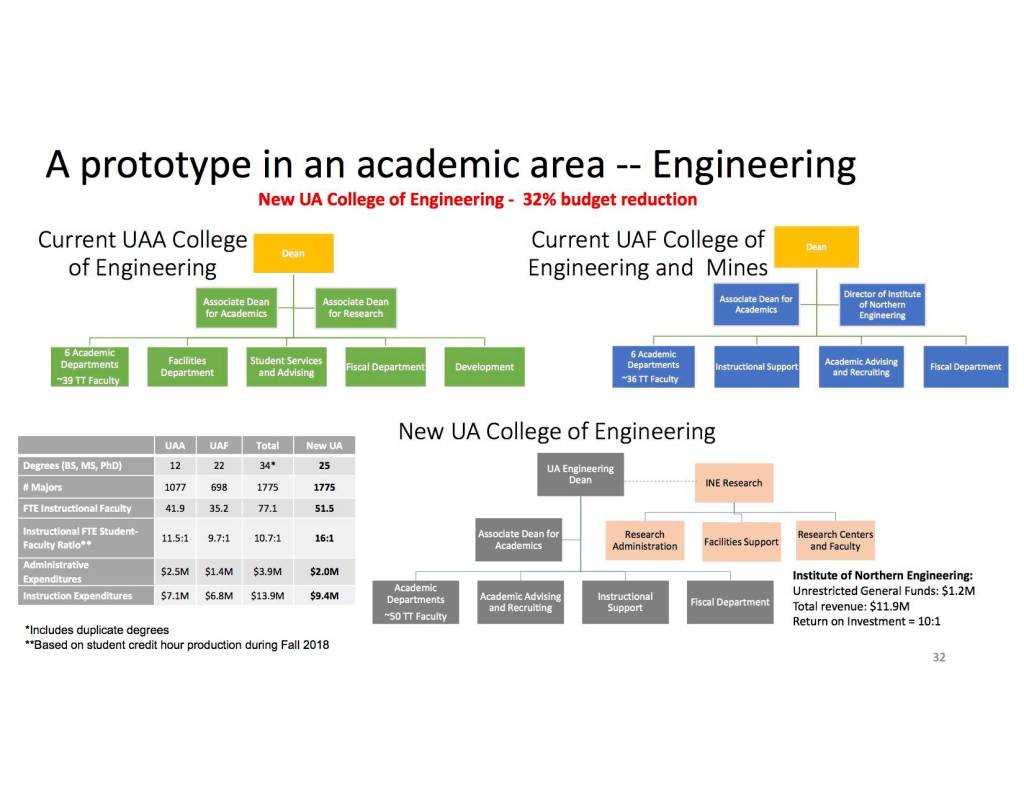
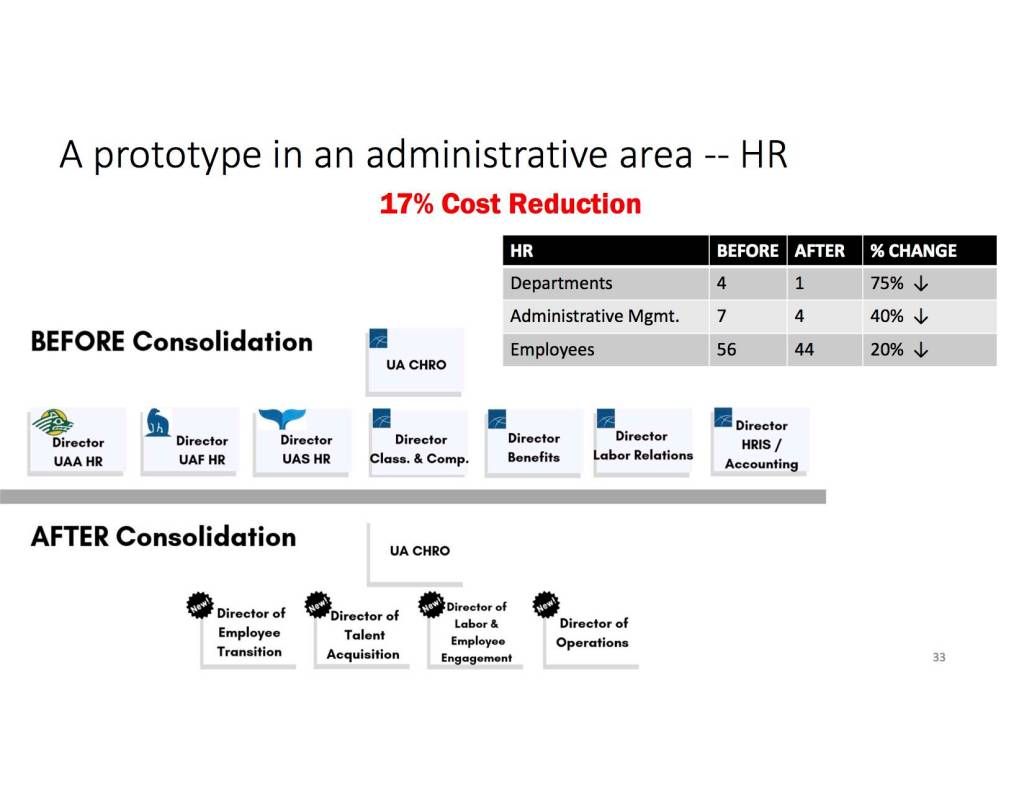




The University of Alaska Board of Regents voted to begin a plan to move the University of Alaska towards a single accreditation model. The Board met in Anchorage Tuesday to discuss what the future of the university would look like, joined by the chancellors of the three universities, students and representatives from the Office of Management and Budget.
After nearly six hours of deliberation, the Regents voted 8-3 to authorize University of Alaska President Jim Johnsen to begin creating a plan to convert the university to a single accreditation model.
Johnsen said that in his view, “the house is on fire,” due to state budget cuts and when looking to remodel, you have to know how many rooms you can afford.
Examples of other single accreditation models include the University of Washington, Pennsylvania State University and Kent State University.
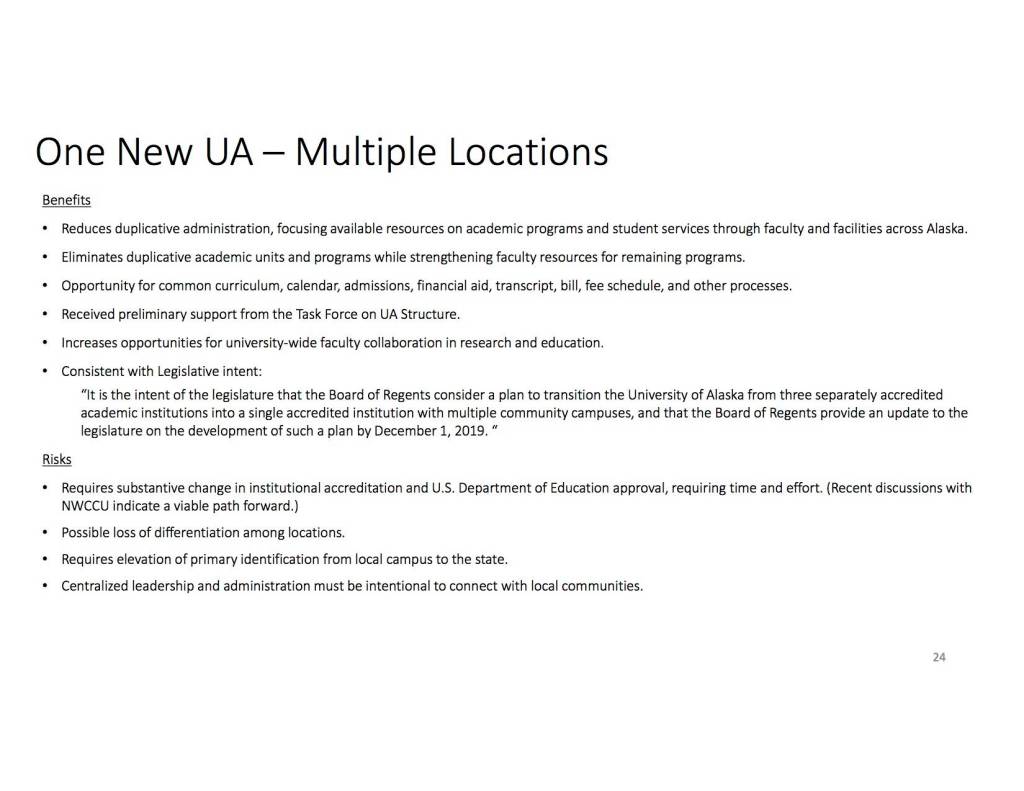
The advantages of the single accreditation model, according to a presentation created by university officials, provides the advantage of directing more resources to academics and less to administration. Research institutes would be able to operate with a systemwide scope.
[See our live coverage of today’s Board of Regents meeting here]
The motion passed by the Board of Regents authorized Johnsen, with the help of the sub-committee, to create an alternative administrative structure, reduce duplicative services and prepare a plan to move to a single accreditation university and to consult with student representatives.
However, the system runs the risks of losing differentiation between the various locations and diminishing connections with local communities.
One major reason for arriving at this decision was accreditation. If UA had kept its current structure and implemented cuts across the system, the financial viability of an individual location could be threatened and there could be a loss of accreditation, according to a presentation from university officials.
University officials have been in discussion with the Northwest Commission on Colleges and Universities, the organization recognized by the U.S. Department of Education to accredit universities in several western states.
In a letter to the Board of Regents, the Northwest Commission said that it was eager to work with the State of Alaska to find the best path forward and maintain educational standards for Alaska’s students.
In conversations with the commission, Johnsen was told that the most efficient way forward was to use one of the state’s current university’s accreditation as a “scaffold,” under which other units could be brought in to.
This option would be far more cost effective that attempting to create a whole new accreditation or risking the accreditation of current universities.
The single UA model would reduce administrative overhead by creating one office for the entire system rather than one for each university.
However, UA Anchorage Chancellor Cathy Sandeen said that in certain cases having regional bureaucracies can save money because they are more agile and responsive to the needs of students and faculty in a given location.
Forcing their hand
The regents have been considering three alternative structures for the university system since the announcement of Gov. Mike Dunleavy’s line item vetoes of state budget items in early July.
The first of those options, leaving the university system as is but with proportional cuts made across each institution, didn’t gain much traction with the regents. That model, while retaining a familiar structure and maintains local service missions, risks the financial viability and accreditation of each university. Furthermore that option retained the high administrative costs which are a significant drain on the university budget.
A slideshow presentation of the risks and benefits of each option, as well as other financial information can be found here.
Office of Management and Budget Policy Director Mike Barnhill gave a presentation to the board following a brief phone call from the governor.
The governor said during his phone call that as a graduate of the University of Alaska he has nothing but respect for UA. But the state has a fiscal problem, Dunleavy said.
“Some of us are living with the belief that oil is still $84 a barrel,” he said.
The university had been the beneficiary of extensive funding over the years but that the university’s “outcomes” haven’t always been that they should be, the governor said.
Dunleavy said that he had been in conversation with university leaders over the past several weeks about how to achieve a step-down approach that can get the university, “where it needs to be, funding wise.”
OMB weighs in
Using information provided to him by university officials, Barnhill provided a line-item list of university expenses both statewide and at each individual unit. He said that administrative costs accounted for roughly 45 percent of the university’s budget.
Barnhill acknowledged there are reasons behind the significant differences in university administration costs but that the University of Alaska Fairbanks was the largest driver of administrative overhead.
Barnhill suggested that universities consider other revenue sources besides the state for funding. He noted that the research conducted at UAF was indeed important and suggested that other beneficiaries of that research, perhaps in the private sector, be reached out to as a source of funding.
Board of Regents Chair John Davies said that UA had been looking at outside sources of revenue including alumni donations and philanthropic efforts. He was skeptical of the thought that those sources could provide the same level of funding as state support.
Davies called the reduction in research money “reckless,” and said that the university wasn’t, “going to run bake sales,” to fund research.
While there was acknowlegement amongst the Regents that the university was a vital asset for the state, it was also understood that there was no easy path forward. The analogy that “the house is on fire,” was brought up many times.
It was made clear during this and previous discussions on the university’s budget that any delay in action regarding financials would cause funds to run out even faster.
When the board finally made its decision there were eight yeas and three nays. It was noted that Johnsen had been authorized to make a plan, not to take any drastic action just yet. A sub-committee was created to act as a “sounding board” for the president as he crafted his plan. Included in the motion was the stipulation that Johnsen consult with representatives of the student body.
Johnsen will bring his plan before the Board of Regents at a meeting in September.
• Contact reporter Peter Segall at 523-2228 or psegall@juneauempire.com.