Big list of critical needs means mill rate increase is inevitable, Juneau’s leaders say at annual retreat
Published 9:30 pm Monday, December 9, 2024



Juneau’s leaders agree the mill rate is going up next year because there’s too many flood-related and other urgent needs to cover at the current rate. But exactly what those needs are and how the full cost of them will be paid is going to be a much, much longer discussion.
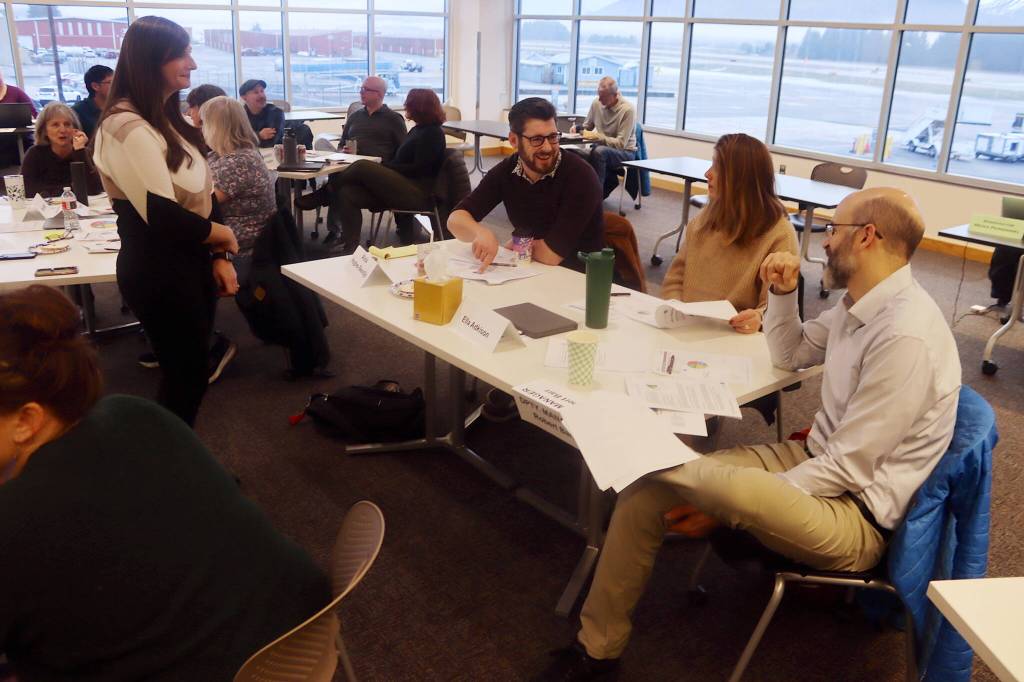
Elected leaders and top city administrators spent about eight hours Saturday reviewing and setting goals for a wide range of issues during the Juneau Assembly’s annual retreat in the main conference room at Juneau International Airport. Among the issues discussed were developing additional and affordable housing, negotiating further operations agreements with cruise ship operators, resolving numerous budget-related matters, and improving sustainability in areas such as waste reduction and electricity.
The retreats are intended as a brainstorming exercise rather than a meeting where official action is taken, which is why one of the ideas floated was “we should smoke weed for kids” (which, when further explained by Assembly member Wade Bryson, referred to a dedicated tax on marijuana/tobacco products to boost funding for school activity programs).
“A ‘retreat’ for us means we’re in casual clothes and we’re going to call each other by first names…and we’re going to be given food,” Mayor Beth Weldon said at the onset, noting the gathering’s differences from the stereotypical image of a retreat taking place at a luxurious beach or mountain resort. “So again today is just a day that we’re throwing out ideas there, make sure that everybody is providing everybody else a safe place and we’ll squash all the ideas at the end if we need to.”
Much of the morning was spent revisiting the city’s financial situation, continuing an overview Finance Director Angie Flick provided Assembly members last Monday. During that meeting she noted the city ended the fiscal year on June 30 with an unrestricted fund balance of about $32.4 million — $10 million more than expected due largely to higher-than-expected interest earnings — but the Assembly has already approved $6.5M in extra spending during first five months of FY25 and “there’s well over probably $30 million worth of requests that are headed your direction in various forms.”
Among the big-ticket items are flood-protection measures following two record years of glacial outburst floods that damaged hundreds of Mendenhall Valley homes, maintenance on aging municipal buildings and infrastructure, and supporting a wide range of struggling city-owned operations ranging from healthcare services at Bartlett Regional Hospital to Eaglecrest Ski Area.
Assembly members are already making it clear to many entities that requests for extra money will be treated dubiously due to, above all, costs for flood measures that are a top priority by next summer in case another disaster-level incident occurs. They also generally agreed among themselves on Saturday the current 10.04% mill rate approved by the Assembly this spring — the lowest in decades — is going to go up during the coming fiscal year that starts next July 1.
“I know there’s no way we’re going to do a 10.04 rate again,” said Weldon, who proposed that rate during the last budget process. The previous rate was 10.16 mills and the city manager was recommending an increase to 10.32 mills to pay for extra cost needs such as covering school district and hospital shortfalls.
There was also general agreement raising the mill rate — which generates about $1 million per 0.1% increase — won’t be enough to address expected funding needs, prompting a more divided discussion about other possible revenue sources.
Among the options are voter-approved bond measures, but Assembly member Christine Woll said residents might be reluctant to support a bond for utilities after just approving a $10 million bond for wastewater treatment plant updates in the Oct. 1 election. Also discussed were previously proposed policies to increase Juneau’s sales tax, possibly on a seasonal basis during the six-month cruise ship season.
The discussion about raising the sales tax prompted Bryson, who opposed the idea as a hardship to businesses, to declare “I’m going to say the craziest thing you’ve ever heard me say and then you’re going to agree with me that we should do it. We should smoke weed for kids”
Policywise, that means increasing the excise tax on marijuana and tobacco products by 1%, with the revenue dedicated to travel for Juneau School District programs, he said. He said the idea was suggested to him by Zach Bursell, a local high school cross-country coach, and a similar tax already exists in Skagway.
“Increasing the excise tax by 1% could actually have a significant impact on the school district’s finances because we could help them with their travel part and then that would be money that would then go to other things,” Bryson said. “And the lowest socioeconomic rungs — the students in those rungs — would have better access to school travel and be able to participate more in the different school activities.”
The tax would likely need voter approval, but might find more favor than a more general tax, he said.
The suggestion didn’t get much further discussion during the retreat, but is among the numerous items that could resurface during the coming months as a formal proposal.
• Contact Mark Sabbatini at mark.sabbatini@juneauempire.com or (907) 957-2306.