Ban on homeless sleeping outdoors upheld by U.S. Supreme Court in case watched by Juneau leaders
Published 9:30 pm Thursday, June 27, 2024
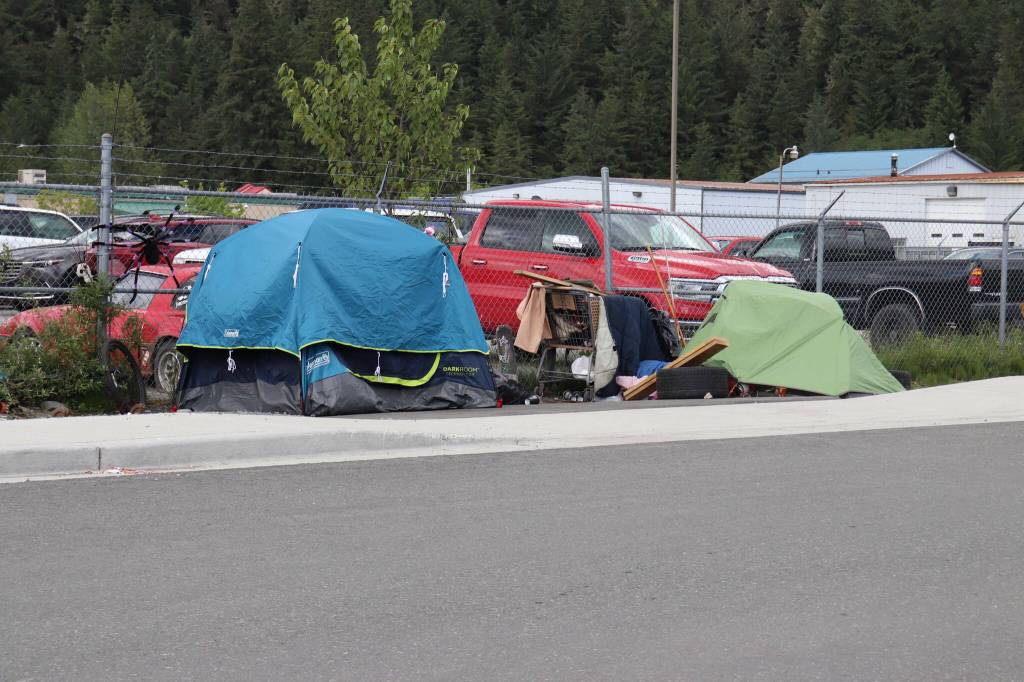
WASHINGTON — The Supreme Court on Friday upheld an Oregon city’s laws aimed at banning homeless residents from sleeping outdoors, saying they did not violate the Constitution’s prohibition on cruel and unusual punishment.
The decision is likely to reverberate beyond Oregon, altering how cities and states in the West police homelessness. The Juneau Assembly recently postponed a proposal to enact such a policy via a “safety zone” near a group of social service agencies, including the Glory Hall and St. Vincent de Paul Juneau, pending the outcome of the court case.
The ruling, by a 6-3 vote, split along ideological lines, with Justice Neil Gorsuch writing for the majority. The laws, enacted in Grants Pass, Oregon, penalize sleeping and camping in public places, including sidewalks, streets and city parks.
In her dissent, Justice Sonia Sotomayor, joined by Justices Elena Kagan and Ketanji Brown Jackson, wrote that the decision would leave society’s most vulnerable with fewer protections.
She added that the laws, which impose fines and potential jail time for people “sleeping anywhere in public at any time, including in their cars, if they use as little as a blanket to keep warm or a rolled-up shirt as a pillow,” punished people for being homeless.
“That is unconscionable and unconstitutional,” Sotomayor wrote. She read her dissent from the bench, a rare move that signals profound disagreement.
The Supreme Court agreed to intervene after an unusual coalition urged the justices to consider the case. State legislators in Republican-led states such as Arizona and liberal leaders such as Gov. Gavin Newsom of California alike have pointed to a crucial court ruling in 2018 that they say has tied their hands from clearing encampments and managing a growing, and increasingly visible, crisis.
The decision, by the 9th U.S. Circuit Court of Appeals, which covers Western states, first declared it cruel and unusual punishment for cities and states to penalize someone for sleeping outdoors if no shelter beds were available.
In California alone, an estimated 171,000 people are homeless, or nearly one-third of the country’s homeless population. There are now 40,000 more people who are homeless in the state than there were six years ago, and tents and encampments are common in many parts of the state.
The dispute arose from Grants Pass, a town of about 40,000 in the foothills of southern Oregon. After residents complained of people sleeping in alleyways and property damage downtown, city leaders enforced a series of local ordinances that banned sleeping in public spaces. The town had no homeless shelter, aside from one run by a religious organization that required, among other rules, attendance at Christian services.
A group of homeless residents sued the city, challenging the ordinances and contending that the local laws essentially criminalized homelessness. The laws, although civil penalties, could eventually lead to jail time, they said.
A federal judge temporarily sided with the homeless plaintiffs, finding the city had no shelter that met the requirement from the 2018 decision.
A divided three-judge panel of the 9th Circuit upheld the lower court and the city appealed, asking the Supreme Court to weigh in.
In Grants Pass, tents and temporary camps continued to line many of the city’s public parks, a particular point of tension for residents of a city reliant on tourism dollars. Local law enforcement officials enforced property ordinances but said they could do little else to clear tents from the parks.
In a lengthy and, at times, contentious oral argument in late April, questioning from the justices reflected the complexity of the debate over homelessness.
They wrestled with what lines could be drawn to regulate homelessness — and, crucially, who should make those rules.
Chief Justice John Roberts appeared to encapsulate the views of the conservative wing, suggesting that the matter was an issue best solved by lawmakers and cities and states themselves: “Why would you think that these nine people are the best people to judge and weigh those policy judgments?”
Kagan, for her part, summed up the stance of the court’s liberal justices, forcefully questioning the city’s argument that homelessness was not a state of being and was therefore not protected by the Constitution.
“Could you criminalize the status of homelessness?” Kagan asked a lawyer for the city, Theane D. Evangelis.
“Well, I don’t think that homelessness is a status like drug addiction,” Evangelis responded.
“Homelessness is a status,” Kagan replied. “It’s the status of not having a home.”