Alaska Legislature passes landmark bill spending Permanent Fund
Published 7:02 pm Tuesday, May 8, 2018


In a pair of landmark votes Tuesday, the Alaska Legislature agreed to harness the Alaska Permanent Fund to the needs of state government.
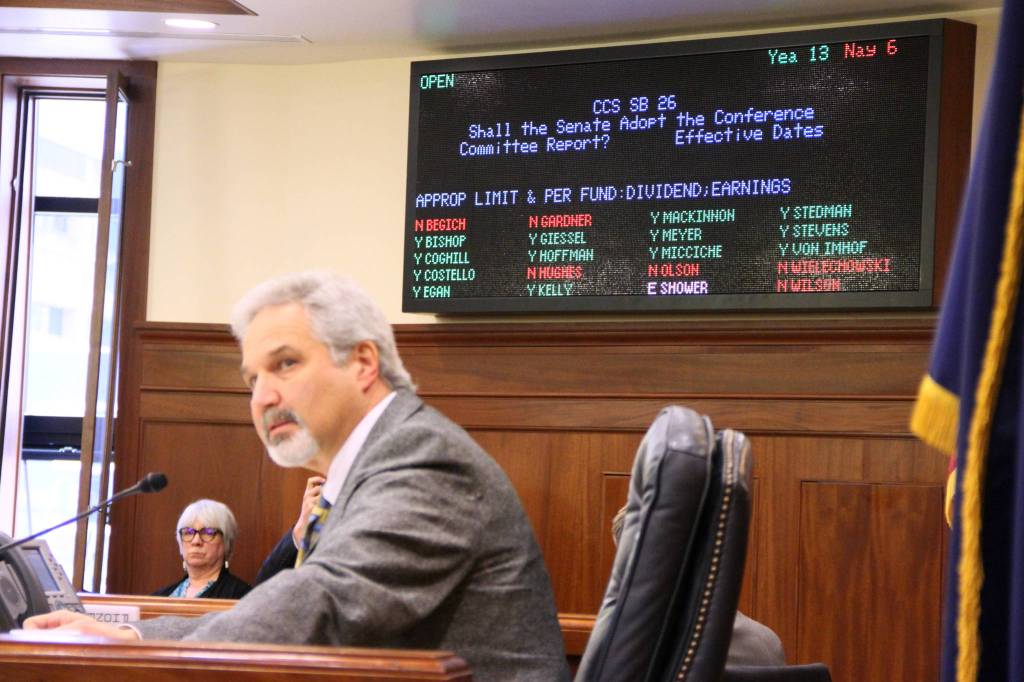
In separate actions, the Alaska House and Alaska Senate approved a compromise version of Senate Bill 26, a measure that allows the Legislature to spend up to 5.25 percent of the fund’s average five-year value. That average drops to 5 percent in 2021.
This year, that will amount to $2.7 billion transferred from the Permanent Fund: $1.7 billion to partially offset the state’s $2.4 billion deficit, and $1 billion for the Alaska Permanent Fund Dividend.
Some lawmakers hailed the bill as a grand compromise fulfilling the 40-year vision of former Gov. Jay Hammond, who said his vision for the Permanent Fund was to “transform oil wells pumping oil for a finite period into money wells pumping money for infinity.”
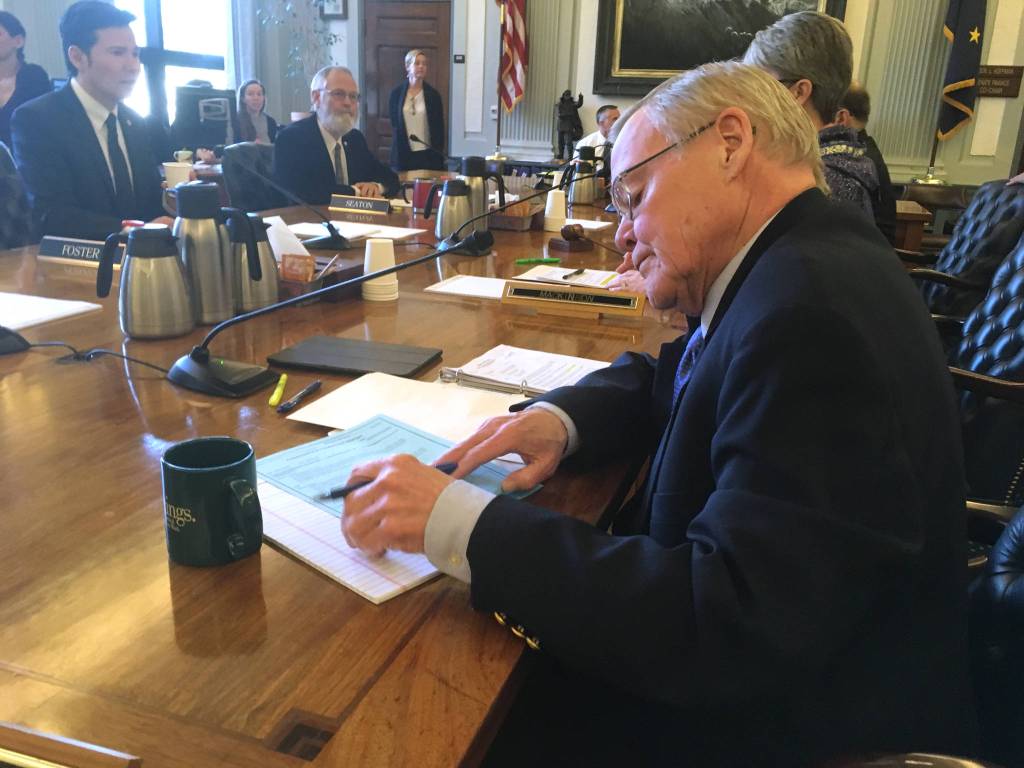
“I think we’ve done an incredible amount to close almost 80 percent of Alaska’s budget (deficit) should both bodies agree to the bill,” said Sen. Anna MacKinnon, R-Eagle River and the lead Senate negotiator on the bill.
Others lambasted the measure for failing to adequately protect the dividend and for lacking the binding power to do what its text says it will do.
“I think this is the beginning of the end of the Permanent Fund Dividend,” said Rep. Scott Kawasaki, D-Fairbanks.
In either case, SB 26 now goes to Gov. Bill Walker.
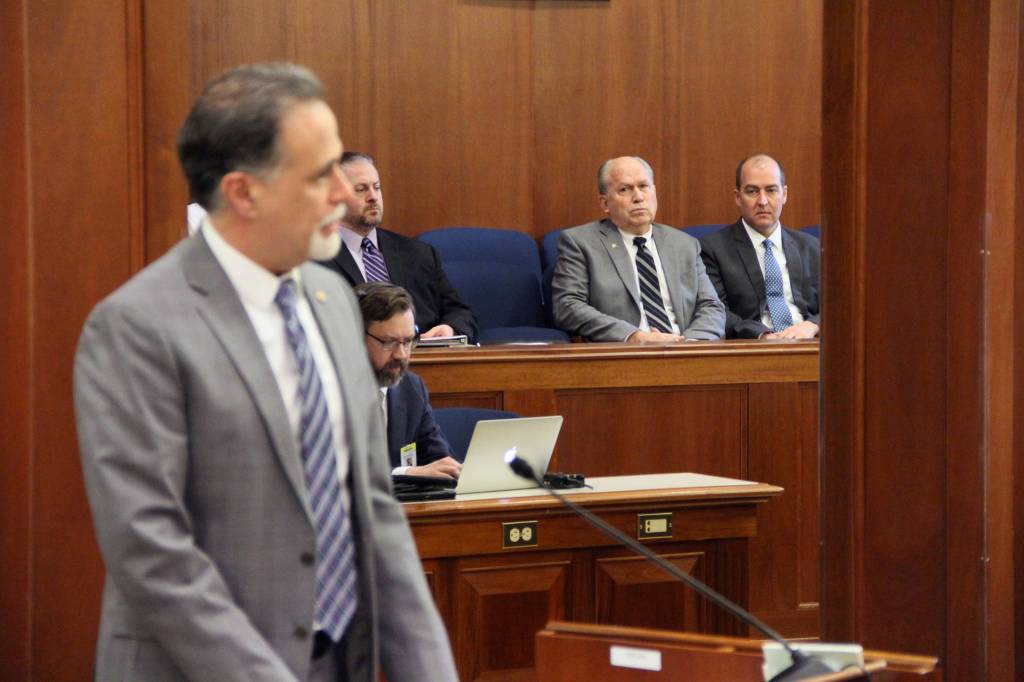
“I will sign it,” he told the Empire after watching from the House gallery as lawmakers approved it.
Tuesday’s actions come after a year of debate within the Legislature over the role of the Permanent Fund, the last remaining savings account after years of budget deficits.
Even before oil prices declined in 2015, the state had been running a deficit. After the plunge, the deficit exploded to more than $3.5 billion per year. The state exhausted the Statutory Budget Reserve, then drew down the Constitutional Budget Reserve.
At the end of this year, the CBR is expected to hold only $2.2 billion — less than the amount needed to balance the deficit.
That leaves only the Permanent Fund. While much of the $65 billion fund is protected by the Alaska Constitution, any money earned by the fund’s investments is not protected. That money is kept in the fund’s earnings reserve, which has a value of $17.6 billion and may be spent by a simple majority vote of the House and Senate.
While lawmakers agreed that the Fund must be used to pay for government services and prevent the state from running out of money, many demanded that it be protected, both to give some surety to the Alaska Permanent Fund Corporation’s managers and to reduce the danger that a single Legislature could spend all of the earnings reserve in a single year.
The House and Senate passed different versions of SB 26 last year, but a compromise didn’t materialize until Tuesday morning, when a committee of six legislators — three from the House, three from the Senate — approved it.
Within hours, the compromise advanced to the full House and full Senate for approval.
The key behind its rapid advancement is that it makes no mention of how much the Legislature should appropriate for the annual dividend. Instead, it simply sets a limit for the total amount taken from the Permanent Fund each year.
Until legislators address that issue in a systematic way, they will set the amount of the dividend — anything from nothing to more than $4,000 at current fund levels — on a year-by-year basis.
“We’ll be able to narrow down on that dividend issue at the next Legislative session,” said Rep. Neal Foster, D-Nome and the lead House negotiator on the committee drafting the compromise.
Speaking on the Senate floor, Sen. MacKinnon said the issue will come up “hopefully in better times.”
SB 26 is not a hard cap. One legislature cannot bind a future legislature with a simple law. Only a constitutional amendment can do that.
“This is a piece of paper,” said Sen. Bill Wielechowski, D-Anchorage. “We can ignore the rules.”
In the House, Rep. Sam Kito III, D-Juneau, pointed out that the bill was passed on the 113th day of what, according to law, is supposed to be a 90-day legislative session.
Speaking Tuesday, MacKinnon said “there is great consideration” in the Senate of a constitutional amendment enshrining a Permanent Fund spending limit, but lawmakers want to see how well the statutory limit works before writing into the stone of a constitutional amendment.
The Alaska Permanent Fund Corporation’s board of trustees urged the Legislature earlier this year to come up with some kind of rules for limiting spending from the fund.
The amounts within SB 26 are greater than those suggested by a 2017 “stress test” performed by outside analysts hired by the corporation. That stress test found that at spending levels allowed by SB 26, there is a 52 percent chance that there will be at least one year where more money is taken out of the fund than is earned by the fund’s investment.
The same test found a 30 percent chance that the entire earnings reserve could be exhausted.
The analysts had recommended a 4.5 percent limit instead.
Angela Rodell, executive director of the Permanent Fund, said that the bill nevertheless gives investors the guidance they needed.
“We are encouraged by the efforts made by the Legislature to reach an agreement on tapping the Permanent Fund. The amounts are consistent with what has been discussed and debated over the last two years and this gives us our needed expectation in order to set an appropriate investment strategy,” she said in an emailed statement provided by a spokesperson.
• Contact reporter James Brooks at jbrooks@juneauempire.com or 523-2258.