Healing is collective: Reflections on a family healing camp
Published 10:30 am Friday, August 7, 2026
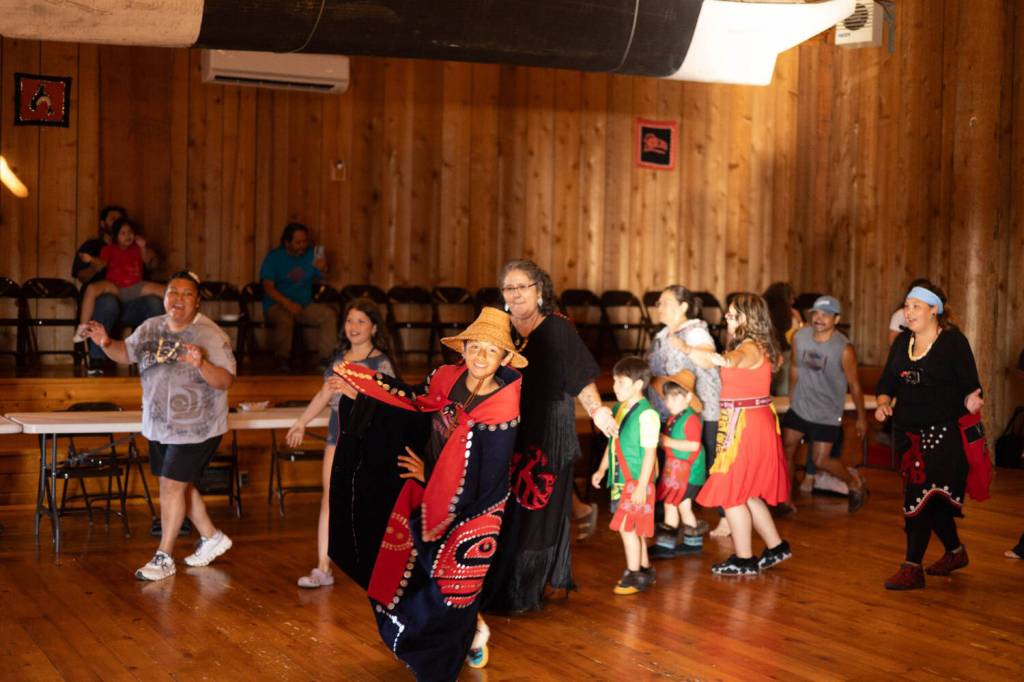
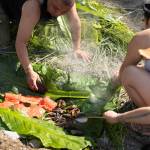

This July, Haa Tóoch Lichéesh held Ha’li Moatk, a family healing camp. The following story, published in the third edition of the Sustainable Southeast Partnership’s annual print publication Woven: Peoples and Place, describes the inception of the 2025 camp that inspired this year’s Ha’li Moatk.
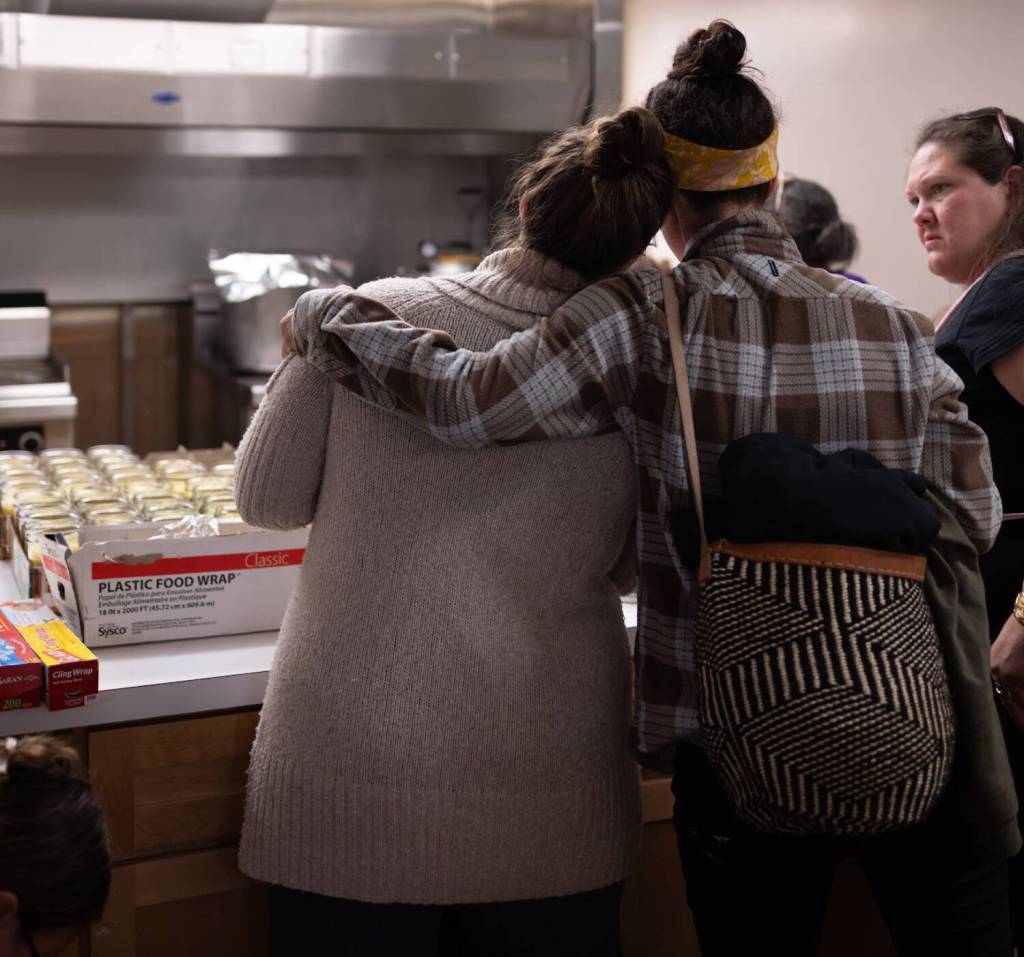
In recent years, the communities of Ketchikan, Saxman, and Metlakatla have faced the great pains of suicide, systemic racism, and addiction. This deep grief led Haa Tóoch Lichéesh coalition partner Heather Evoy to a call to action: bring an intergenerational space for healing directly to community. The goals of Áa yei kunéxch yé, a family day-camp held in Saxman June 14-18, 2025, were to facilitate passage through grief, celebrate cultural strengths, and foster inter-community connectedness. Attendance was free to participants, with travel stipends and transportation assistance available. Established partners and new connections supported with donations of food, facilitation, and knowledge. Participants and their families walked away with boxes of food and medicines, grounded in the good work of healing and upholding each other.
“You’re only as rich as you can give away”: Preparing for Camp
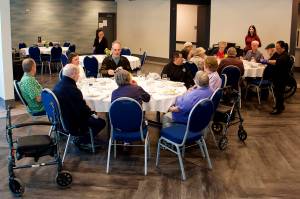
In the sun and rain of early summer, 12 families from Ketchikan, Saxman, Metlakatla, and Juneau gathered in the Saxman Community Center. Embraced with care by Haa Tóoch Lichéesh, partners, and volunteers, they processed fish, herring eggs, seaweed, and grief.
Heather Evoy has lived in Juneau for 14 years, and dreamed up the camp to bring energy they’ve experienced in Juneau, back to her home communities Ketchikan and Metlakatla. She noticed a gap in opportunities across the region, and felt the impact of the opioid epidemic, mass incarceration, and colonization on Ketchikan. “We really wanted to provide a safe place and catch people, just share with them that giant, loving, auntie-uncle embrace.”
As Heather pitched the camp to Haa Tóoch Lichéesh, Hana’ackm Ggoadm ‘Tsoal Naomi Leask was stepping back from her work as a teacher.
“When my son passed away, I just kept on going.” Hana’ackm Ggoadm ‘Tsoal shared with me, “I kept on going and drowning myself in work and creating more opportunities for my community which came at the expense of my family. When I realized this is not healthy, that’s when I stepped away and tried to re-evaluate everything.”
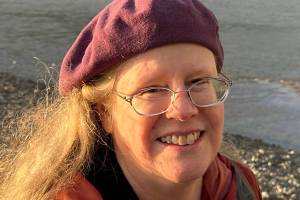
Hana’ackm Ggoadm ‘Tsoal was born and raised in Metlaktala, and in 2024, she was raising her family there with the same principles her grandmother instilled in her. To her, healing is reconnection. Reconnection to self, others, and the land. “It existed before,” she shares, “it was built into the culture.” When she stepped away from teaching, Hana’ackm Ggoadm ‘Tsoal found more opportunity. “To teach my girls about cultural coping, grief, fire dish, ceremony, ocean dipping. And not just talk about it, but create space and time for it so that they know that it’s just as important as other forms of healing.”
“Food is medicine.” Hana’ackm Ggoadm ‘Tsoal shares.“It’s more than just putting food on a plate and feeding yourself. It’s protocol, it’s ceremony, it’s values, it’s traditions that either foster or reinforce those connections to ourselves, to each other, to the land. Your first harvest of the season, you can’t keep any of it to yourself. Your first deer, your first salmon, even your first salmon berries, you’re supposed to gift it away. That’s taking care of each other. That’s reciprocity and also practicing restraint.”
Heather Evoy was working to embed those same values into camp. Born and raised in Ketchikan, Heather was able to leverage her network. In total, 12 organizations and 14 individuals donated or partnered with Haa Tóoch Lichéesh. The one challenge: finding fish. “I felt that working on fish was important to do across generations and families. There was so much abundance in all other ways, but every avenue I tried with salmon was a hard no.” All salmon were out of season other than king, and with the impacts of climate change, over fishing, and high cost of living, none of Heather’s contacts were able to donate king salmon. “It wasn’t for a lack of wanting to help,” Heather explained.
And then, Heather went to the airport.
“I saw all of the outside sport tourism people at the airport, pushing pallets of boxes, and I broke down, I really did. I’m thinking, how wrong are things if I’m seeing hundreds and thousands of pounds of our salmon being taken out of here? I’ve got 20 families. I need 20 fish. Why can’t I get 20 fish?”
It was with one of the camp participants where she found the answer. “She said, ‘Well, why don’t you ask Albert? That’s my brother.’ And my jaw just dropped to the floor.” Albert Smith is the mayor of Metlakatla, a community that owns its own fish processing facility, Annette Island Packing Company, and partners with another, Circle Seafood.
“To me, it shows an exercise in Metlakatla’s sovereignty. Mayor Smith didn’t even bat an eye, he got back to me within 30 seconds and said, ‘What do you need?’ To have a request answered like that was everything. Our food is our way of life.,” says Heather, who cried when she got the news.
“You’re only as rich as you can share and give away. One of my prized possessions is my grandmother’s giant metal mixing bowl that still has a piece of tape with her name written on the bottom of it. I’m just thinking about how much food she put up, how much love went into that bowl over the years, how many mouths were fed, and how much of an honor it is for me to be able to pass down those values and those traditions.”
Áa Yei Kunéxch Yé, Ha’li Moatk: Place Where the People Heal
The first two days of camp brought bright sun. Heather spoke to the vision for the camp and the name given by Xunei Lance Twitchell, Áa yei kunéxch yé — Place Where the People Heal. Hana’ackm Ggoadm ‘Tsoal spoke up and offered a Sm’algyax name: Ha’li Moatk. The group gathered around plantain and hemlock trees to learn from Hana’ackm Ggoadm ‘Tsoal. When everyone arrived at the beach for an ocean dip, Seiltin Jamiann Hasselquist shared a new tea blend, Standing Tall, that she created to remind us of our strength and honor our endurance. A group entered the water together.
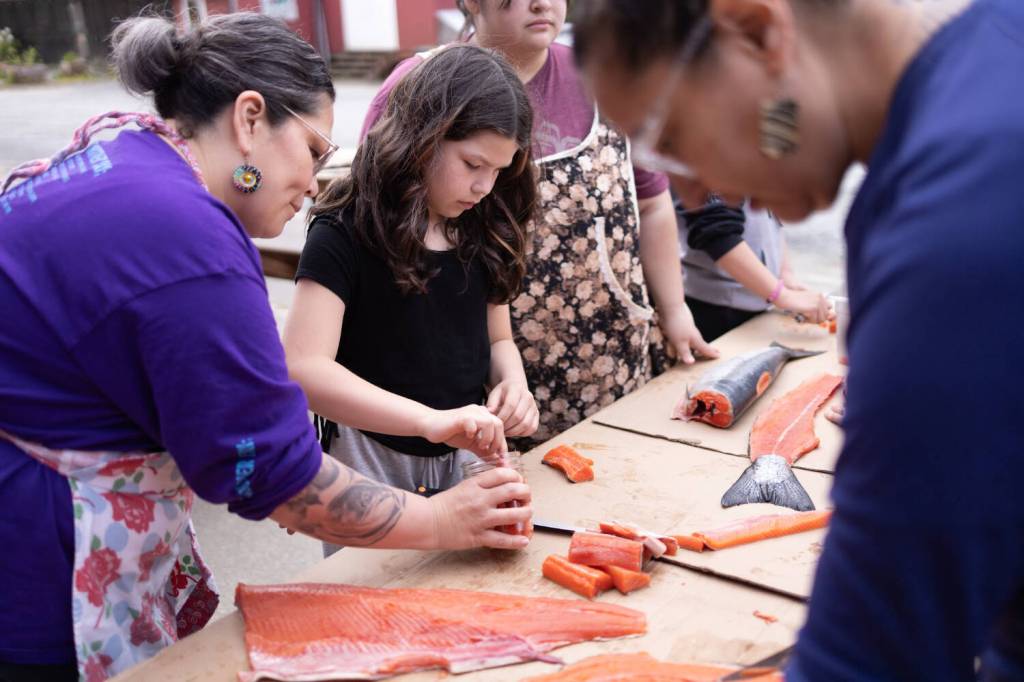
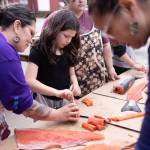
Tony Christianson of Tlingit & Haida’s Traditional Foods Department began the second morning activity, moving salmon and seaweed into the hands of campers. Together, they filleted and canned 60 salmon, scraping backbones and separating skin to make fish loaf and salmon leather, using the whole of our relatives. Seaweed dried on the tables beside them, tended to by careful hands and a warm sun. Inside, more campers picked hemlock out of herring eggs, sharing stories along the way. Hana’ackm Ggoadm ‘Tsoal loved all of it. “Those are all the things that my grandmother taught me, working on seaweed, keeping her hands busy, and then fileting the fish, and teaching people how to filet fish.” By the end of the day, each table was covered with salmon scales, drying seaweed, or jars of salmon and herring eggs.
As the week moved on, campers tended to grief, made art, and ran outside with the kids. Using medicine gathered in Juneau and Ketchikan, they made salve, oil rollers, and sprays; and steamed themselves with cedar. They sang and danced their joy. Local language leaders shared introduction and clan information. Adults walked through a ‘gates of grief ceremony’, shared experiences in talking circles, and created an altar of plants for ancestors and self. Youth made art from the flowers on the altar, signifying new growth into future generations. Together they crafted wooms, or protection sticks, to gift to loved ones. Throughout their time together, community young and old came together to play, teach, and wonder. Older children looked out for the young, and parents were given the opportunity to rest.
As she remembers the week, Hana’ackm Ggoadm ‘Tsoal emphasizes the sense of community she felt, “I think that’s traditionally how things were held. The clan system, your house group, everything was collective. And coming together like that was really neat, because it reminded people that they don’t have to carry loss and grief and all those heavy things alone.”
Camp came to a close on a cloudy morning. As facilitators and campers circled up and shared experiences, a wall of gifts stood behind them, enough for each family to take home — cases of salmon, salmon loaf, herring eggs, black seaweed, salve, rose spray, and wooms protection sticks.
“It was just really, truly an honor for me to have that opportunity to be able to bring some of this work home,” Heather says when asked what she took from the camp. “I think that people really appreciated what we brought to the community, it wasn’t a space that I feel like people always experience in Ketchikan. I think they’re very eager for more opportunities like that. I heard a call from multiple folks in particular who came over from Metlakatla, who said, ‘Hey, next time do it over our way.’”
Hana’ackm Ggoadm ‘Tsoal shares a similar sentiment. “It reaffirmed that turning to my culture for the past year after losing my son, was good, important and healing. And also, gosh, how do we keep this going? How do we keep providing these opportunities for other communities and people who might need that experience?”
Repairing Disconnect: Hana’ackm Ggoadm ‘Tsoal Becomes a Catalyst for Healing
Just a couple months after saying goodbye at camp, Hana’ackm Ggoadm ‘Tsoal accepted an offer to become the Sustainable Southeast Partnership’s Regional Healing Catalyst hosted with Haa Tóoch Lichéesh in Juneau. When her kids visit the office, they fill the space with light, and she often visits Juneau’s schools to share plant medicine.
“Some of my very first childhood memories were of grief and trauma, and it hasn’t seemed to really stop. We still have suicides and substance abuse, all of these things that are a manifestation from multi generational trauma. I think that’s what drew me into being a culture and language teacher, because I know culture and language is healing. A lot of the regional healing catalyst work, and Haa Tóoch Lichéesh mission, tie into things that are near and dear to my heart: to shift that multi generational trauma into multi generational healing opportunities by creating culture camps and harvesting classes, and becoming a teacher. I think it’s just a really good opportunity to repair all the disconnections that have happened through colonization.”
There’s lots of hope out there, and Hana’ackm Ggoadm ‘Tsoal sees it in reconnection.
“To see all these things like singing and dancing that used to be, well, outlawed, on my Canadian side, through the Indian Act, now normalized by my previous students. When I went home to the high school where I was a teacher, they have this no cell phone policy now, and the kids, instead of grumbling and being mad about it, what they do is they sing songs during the passing periods, Sm’algyax songs, really loud in the hallways. Hearing that gives me hope.”
Today, and through many moments of our lives, we can find it difficult to hold onto hope. When the path ahead becomes unclear, our Regional Healing Catalyst Hana’ackm Ggoadm ‘Tsoal has a message:
“Remember our connections to each other, know that we need each other, and remember our shared histories. Healing isn’t an individual project, it’s collective.”
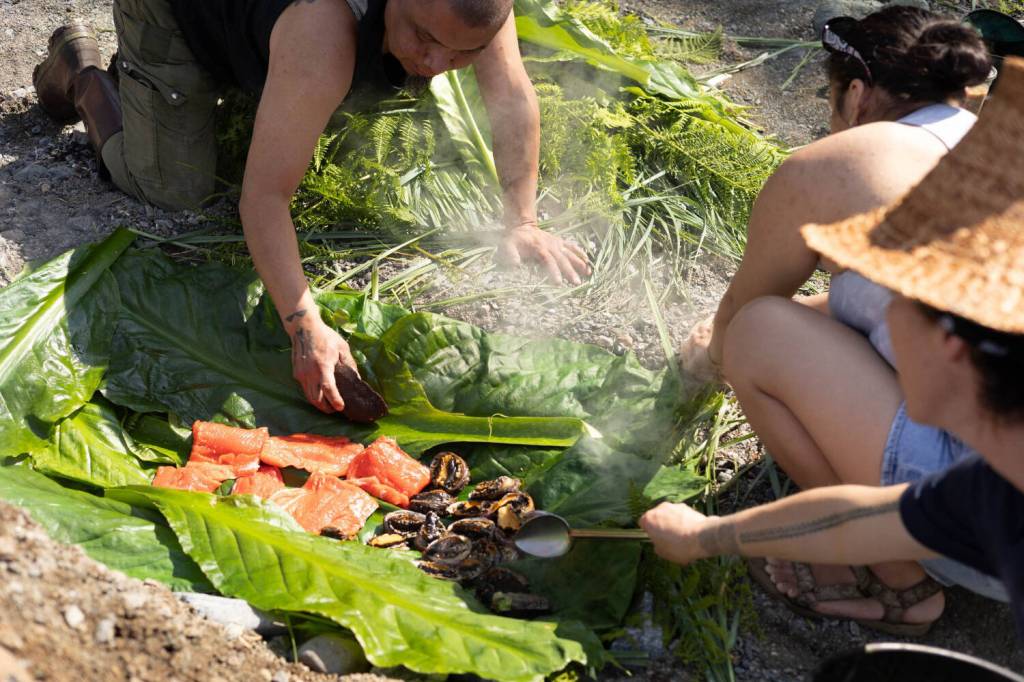
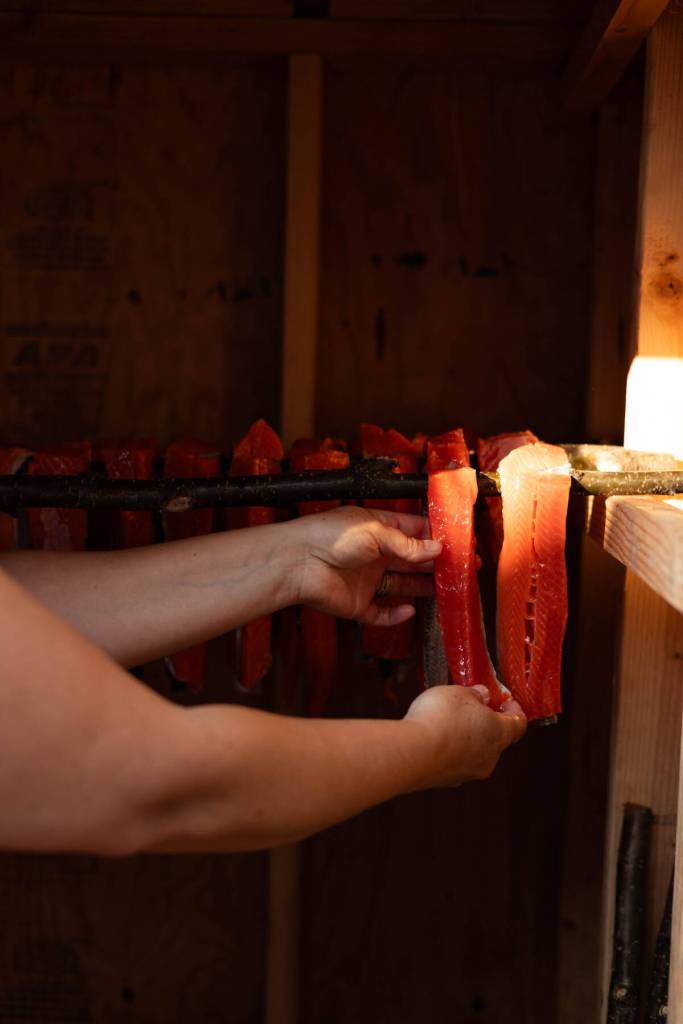
After attending Áa yei kunéxch yé – Ha’li Moatk, Chelsee Cook asked Haa Tóoch Lichéesh to bring the camp to Metlakatla. In July 2026, Ha’li Moatk was held a second time, with new additions of song, harvesting, pit-fire, and an end-of-week celebration. Once again Metlakatla Indian Community and Annette Island Packing Company donated sockeye, and the salmon families processed at camp was the first to enter the Teen Center’s new smokehouse.
Ḵaa Yahaayí Shkalneegi Muriel Reid assisted in the facilitation of Áa yei kunéxch yé and Ha’li Moatk and is a Storyteller with Haa Tóoch Lichéesh.