I Went to the Woods: The log
Published 5:30 am Wednesday, June 10, 2026
Conflict drives plot and develops character so protagonists need antagonists and grow and to make the story interesting.
The same goes for real life, but it’s a lot less formulaic, not to mention entertaining.
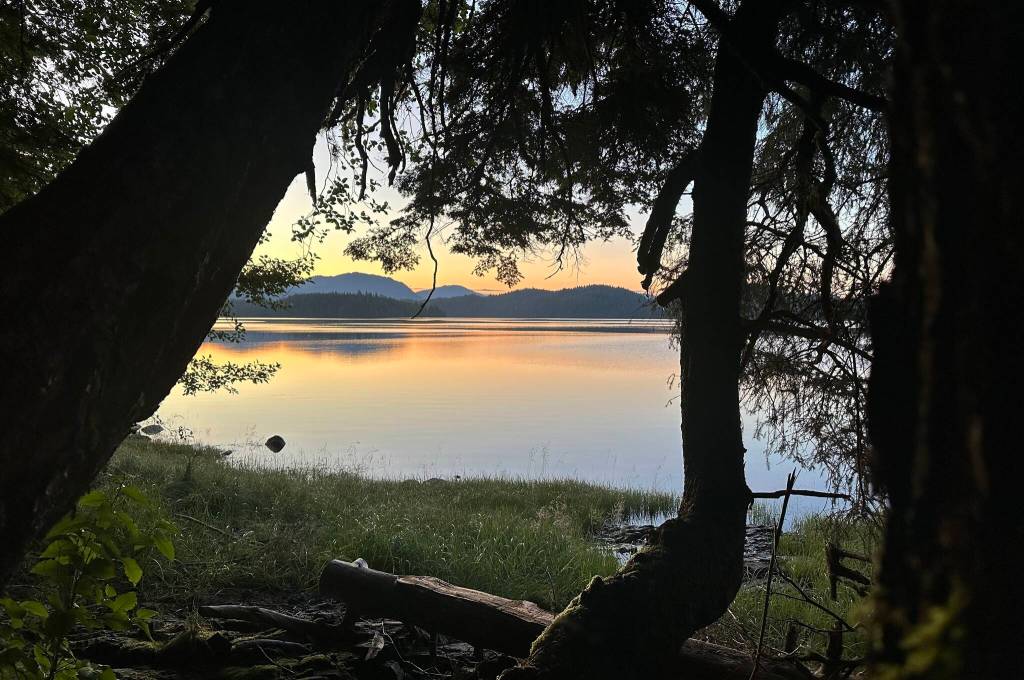
I’ve got an 11 foot log in the middle of where my cabin will go. I do not have the luxury of avoidance since it’s the best section of the lot on the beach and the best spot to support a structure. There’s no choice but for me to engage.
The log rests where the left front footing will go and extends to the middle of our unbuilt sixteen by twenty-two foot cabin. It is what’s left of a tree that was cut, mostly salvaged, then left to rot after the area was logged. Years later the land was divided up into remote lots and sold. Then resold to people like my wife and me. Since the best trees were taken from the area decades ago, new trees have taken root, while others that survived the logging, didn’t survive without the wind break of the older generation.
It’s a bit of a tangle, but with some selective thinning, it’s going to be the escape I always dreamed of and an incredible place for our daughter to spend time growing up.
My wife and I would never be mistaken for real estate collectors who price locals out by purchasing massive plots of land and erecting exclusive ranches or vacation properties.
We just want a nice little cabin inspired by the small forest service cabins I’ve enjoyed from my youth.
That brings me to the log.
The first of many bosses I’ll have to confront before the cabin is complete. The log has been there over 20 years so my first step was to take off the detritus of decay. But the core is resilient and defiant. Solid against the teeth of my Stihl. It takes trees a long time to rot, half centuries when motivated. The bottom section has a twist that, on its side, provides a nearly square step up to the top of the log.
These types of deformities are typically caused by exposure to high winds.
The commercial price suffers which is likely why such a large chunk was left. Inanimate objects are the most frustrating of antagonists. Worthy adversaries should provide active resistance.
Not simply be in a state of immobility. It’s on a slow decline toward living on only as part of the forest at a molecular level, not a tangible feature. In the meantime, there’s no way around it. It’s unavoidable.
It’s inevitable and it’s only the beginning of my problems, because I haven’t started with the serious math yet. Reading plans is easy. Making calculations on paper in the office gives me little problem. But I know tiny variables will conspire against my computation skills when holes need to be dug in specific locations so that footings are accurate enough to put the posts right on the money. A degree here, a degree there and all of a sudden we’re talking inches out of square. I sense this.
The reason this is such a big deal is mostly because my building program is the “convenient weekend” method which has allowed the log to linger. When I think about it before bed on a Tuesday it’s a behemoth and it keeps me up, though it shouldn’t.
It will be dealt with the next time I am out there with brute force, gasoline and RPMs, then a maul and wedge.
When the cabin is eventually finished, the log will be a distant memory. Just the central conflict of the first episode. But right now, it’s driving the plot.
Jeff Lund is a freelance writer based in Ketchikan. His book, “A Miserable Paradise: Life in Southeast Alaska,” is available in local bookstores and at Amazon.com. “I Went to the Woods” appears twice per month in the Juneau Empire.