I went to the Woods: Big deal or little deal?
Published 4:30 am Saturday, July 25, 2026
Lately I’ve been thinking a lot about catastrophic failure.
Catastrophic is a favorite among fear mongers and those who use it in dramatic storytelling or casual embellishment.
We’ve experienced things that, at the time, seemed catastrophic but in the end, are eventually classified as unfortunate events.
I think about the catastrophic risks entrepreneurs took in Southeast Alaska that led to innovation, not to mention riches. I also think about those with ideas that seemed foolish. Outrageous. So obvious in their inevitability.
The potential catastrophe is a scary one because it’s so malleable and manipulative. Especially when used politically.
“This could be catastrophic…” Really? Could it also end up not being a big ideal? Donald Miller wrote “Fear is a manipulative emotion that can trick us into living a boring life.”
I have certainly mentioned that I struggle with catastrophizing. I fixate on the worst possible outcomes rather than manage risk and understand that setbacks are inevitable. Certainly while constructing the cabin, but also with regards to my Bristol Bay fishing experience.
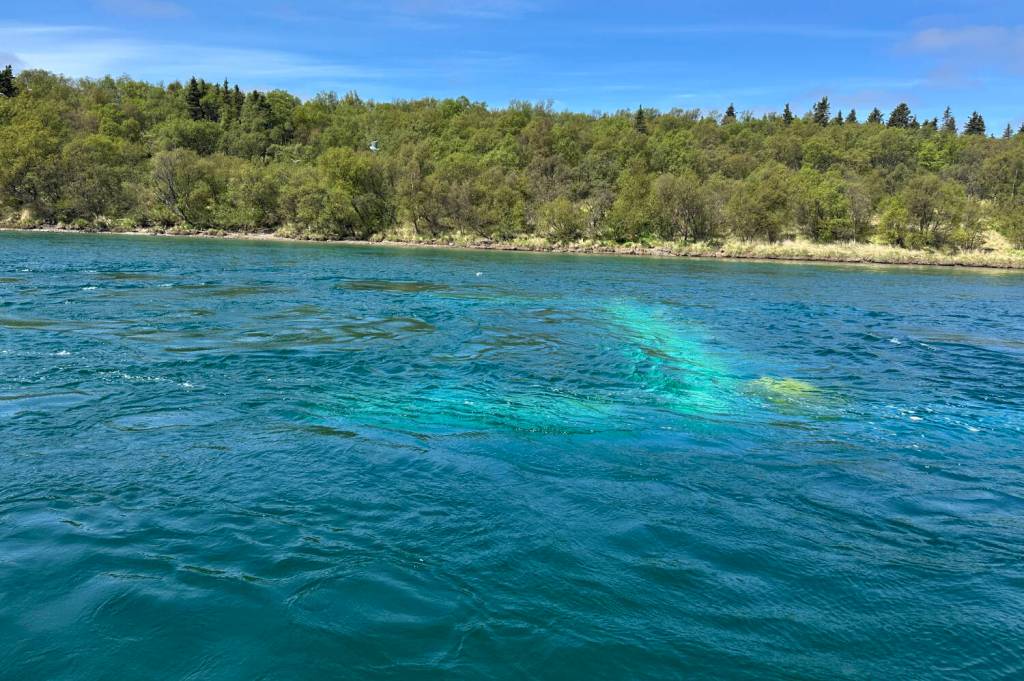
I’ve thought about the trout, village life, the underwater machines that are turning the current of the Kvichak River into energy. From the surface, the structures look like the Roman Numeral I. It’s not menacing but it’s not exactly soothing to see it looming beneath the surface. Does it chop salmon fry to bits? Probably not.
The water was low when I was there but we safely passed close to it. Never over it. There was space, but making contact would surely do catastrophic damage to the lower unit of Dagen’s motor. So the solution is easy. Just don’t do it. Avoid driving over the machine, not the entire river.
When I lost the Dolly Llama that was catching all the fish that first morning, I switched to a green-headed articulated leech and there was a noticeable lull in the fishing. This is the Kvichak…on opening day…how can these fish be so picky?
Minor setback. Not a big deal.
I thought a lot about Dagen’s family and how they bought “ten acres with a lodge on it.” A funny way of saying the structure was 50 years old and looks 50 years old. When I arrived, we set off into the surrounding woods to clean up the remnants of canned goods and jars that a brown bear claimed while the family was gone. It shattered a glass door to enter the main room of the lodge and raked its claws against the television on the wall for good measure. They got off easy compared to the place down river in which a bear decided to take up residence for weeks. Utter devastation. A real catastrophe.
But I think mostly about the financial decision to get the land.
Land in Bristol Bay would evoke a “must be nice” from plenty, but getting their spot is the culmination of over 40 years of work. Dagen’s grandmother bought a setnet permit in 1982. Her son, Dagen’s father, bought his own permit at 21 years old. Dagen started fishing before he was a teenager. The family has commercially fished for generations and has been able to leverage that work into a financial situation that allowed them to take advantage of the opportunity.
I thought about the long game and crock pot economic success and stability. There have been economic crashes and fishery disasters over the last 40 years, but people come through it.
We can’t catastrophe-proof our lives so we might as well take calculated risks in the short term with the long term in mind.
Jeff Lund is a freelance writer based in Ketchikan. His book, “A Miserable Paradise: Life in Southeast Alaska,” is available in local bookstores and at Amazon.com. “I Went to the Woods” appears twice per month in the Juneau Empire.