I went to the Woods: Cooping with loss
Published 4:30 am Saturday, August 8, 2026

“Don’t name your chickens.”
It was good advice. Having chickens is a transactional relationship. They lay eggs, we eat them. Simple.
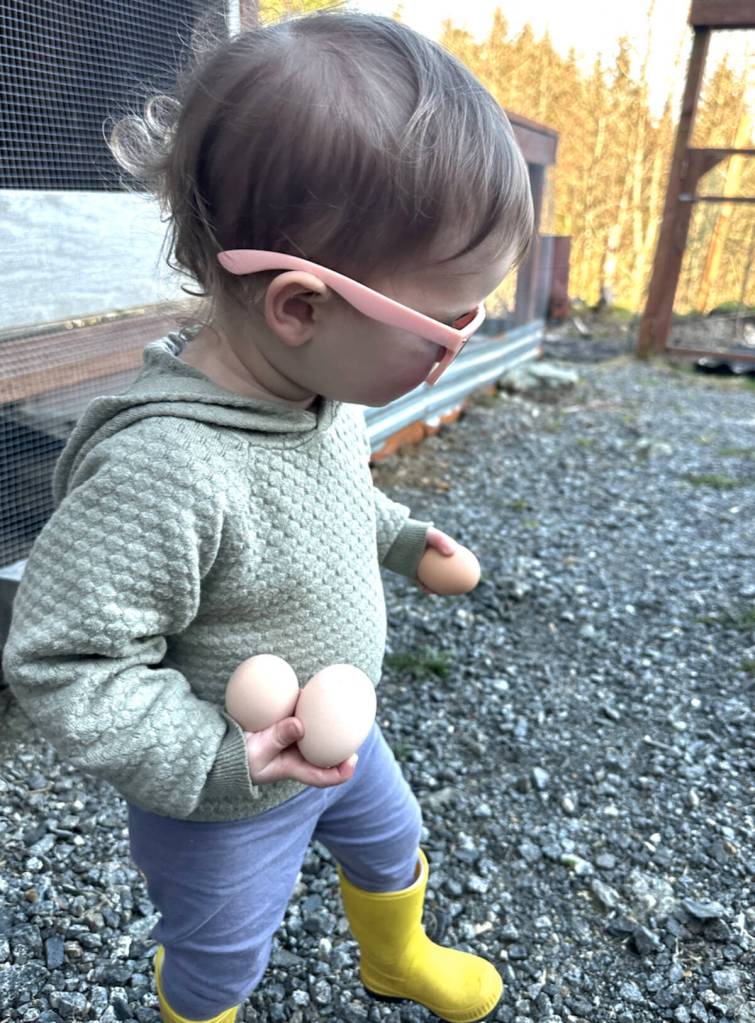
No names. The first four Orpingtons all survived chickhood and became reasonably well-mannered adults. We added six more. Different varieties, no names. One of the four originals would simply squat and tolerate our toddler running over to pet it, which was a violation of the bargain.
When I looked out the window one afternoon and saw a Rhode Island Red bedded at the bottom of the entry to the hen house, I knew. A bold attack had commenced while I was at the cabin and chickens were dead.
I was enraged that something had killed a chicken, but I was also sad. Way more sad than I expected. It’s Southeast Alaska. There are mink, marten, bears, neighborhood dogs, cats, but we had an agreement. We’d keep them alive, outside, in a predator-filled ecosystem in exchange for eggs. I was sad that I had failed our birds. Those nameless chickens whose eggs my daughter loves to collect.
I went out to investigate. Another body, one of the original Orpingtons that made my daughter giggle and want to stay out in the garage to hear their delicate chirps as chicks. The feathers of a Barred Rock were scattered in the yard outside of the run.
Two dead, four gone. One survivor looked bewildered, one sad, and two OG Orpingtons were broody as ever in their laying boxes.
They are chickens! Just chickens! They weren’t pets, aren’t pets. They didn’t eat from my hand.
This isn’t Act I of a three-act play that ends in my selling my hunting gear. Not at all. I can’t wait to get up into the alpine with my rifle when I finish the cabin.
The difference is, my intent is to transition a deer from living to dead without the deer knowing. These chickens weren’t captured from an idyllic prairie in which they lived with no fear of pain or predators. They were bred to be food or give food. They are the modern, gray-area iteration of domesticated livestock that you wouldn’t think to snuggle up with on a couch, but you still care about. Yet they aren’t pets, and they don’t roam free. They are free range when we let them roam, but they are confined to our property. We’d steal their eggs, but throw them weeds, ferns, and strawberries first hit by slugs.
Still, we looked after them, and though we did not seek attachment, there is a level of guilt that comes with allowing nature to run its course on our watch. Chickens can’t exist without some sort of protection. Everything was fine until I decided to expand their run and instead of doing it with treated lumber framing for hard mesh, I went with garden posts and fence. They pecked and clawed at their new square footage and soon reduced it to dirt.
Then came the opportunistic beast.
We had money in this, but that’s secondary. The contemporary farmer/sustainable family angle is another tricky one to get too devoted to. We prefer to have chickens, grow, and hunt our own food. It’s a choice more than a necessity.
Over the course of the next few hours, a Rhode Island Red returned, as did an Ameraucana. I hoped another one would find its way back, but as I cut away the salmonberry bushes that likely provided the cover for the murderer, I found a trail of Ameraucana feathers.
Four chickens gone.
You can’t get too sentimental about these things, but it’s probably good to feel something.
Jeff Lund is a freelance writer based in Ketchikan. His book, “A Miserable Paradise: Life in Southeast Alaska,” is available in local bookstores and at Amazon.com. “I Went to the Woods” appears twice per month in the Juneau Empire.