Woven Peoples & Place: Traveling greenhouse supports local food movement
Published 9:30 am Saturday, July 4, 2026
Since time immemorial, the rich lands and waters of Southeast Alaska have provided an abundance of seasonal wild proteins, traditional foods, and plants that continue to sustain communities. Yet as lifestyles shift and access to wild foods grows more restricted, rural Alaskans also rely heavily on supply chains that depend on barges bringing food from thousands of miles away. While grains have a long shelf-life, fresh produce does not. Even canned and frozen vegetables can be seriously delayed to communities during major disruptions such as after the 9/11 terrorist attacks and during the COVID-19 pandemic.
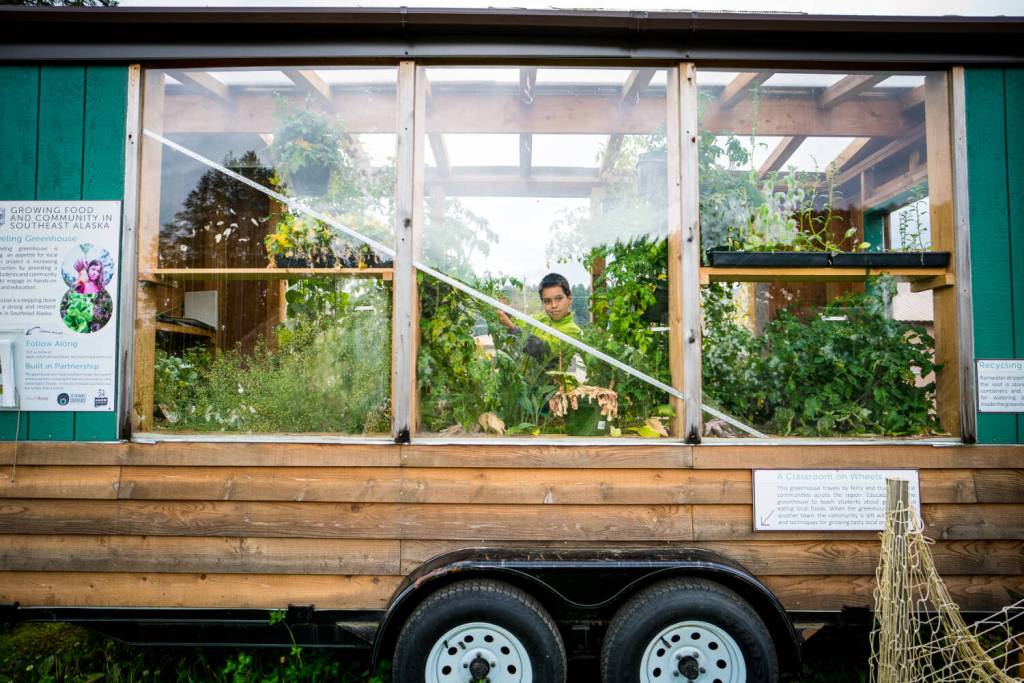
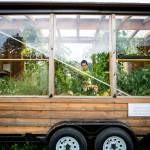
The Sustainable Southeast Partnership (SSP) has long supported community-based approaches to self-reliance and access to affordable, healthy, local foods. In 2015, Moby the Mobile Greenhouse was dreamed up as a catalyst to support community-led efforts in building local food systems by providing hands-on experience, fostering collaboration, and facilitating knowledge exchange among local leaders.
While Moby traveled across rural Alaska, the real work of cultivating food security was led by each community, which adapted strategies to local conditions and priorities and assembled a unique mosaic of partners, volunteers, and funders to suit their town’s strengths.
Ten years since Moby hit the Alaska Marine Highway, we look to three isolated communities, whose journeys to building place-based food systems were helped along by this humble vagabond greenhouse. For each, a community champion shares how a long-held vision for holistic food production became a reality in their town.
Yakutat: Yakutat Tlingit Tribe Community & Market Gardens
The Yakutat Tlingit Tribe’s (YTT) local foods program includes a community garden for the public to grow produce for their own household and a market garden campus where Tribal staff grow produce on a larger scale. YTT also hosts a compost facility manager and a food security manager, whose focus is on wild subsistence foods. These holistic efforts grew from the Tribe’s deep commitment to building food security, bolstered by partnerships and collaborations from across the state. When Moby the Mobile Greenhouse visited in 2018, it helped catalyze a small group of community leaders to imagine and plan an expansion of the local community garden. The COVID-19 pandemic further accelerated YTT’s commitment to fundraising, planning, and constructing broader food system infrastructure and programming.
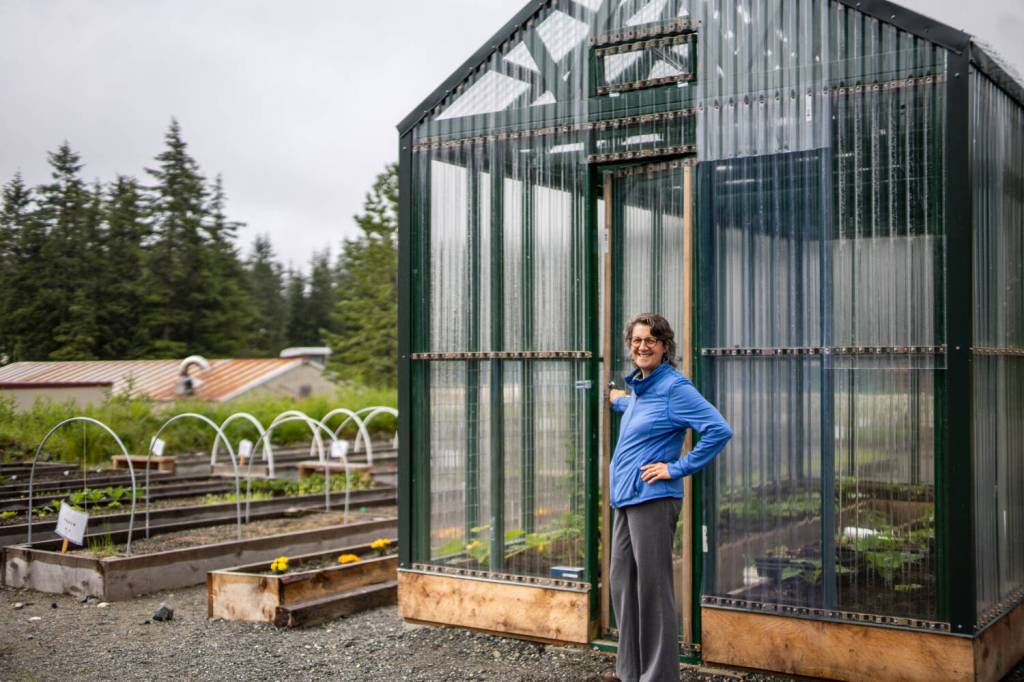
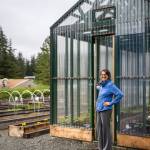
Today, the market garden includes a large greenhouse, five 96×20-foot hoop houses, fruiting rows of berry shrubs, and a community-scale composting operation.
The community garden is a bustling shared space. The City & Borough of Yakutat manages the land, while YTT oversees the garden itself. Over the years, the site has expanded to include 44 raised beds (4×20 feet), each named for a virtue — love, loyalty, hospitality, resilience, benevolence, patience, honesty — along with two 10×20-foot greenhouses and an 8×20-foot compost house. The garden also offers classes throughout the year for both aspiring and experienced gardeners.
Penney James
Former Human Services Director Yakutat Tlingit Tribe
What is it?
The infrastructure at the market garden campus is unique and designed specifically for Yakutat’s climate, especially our heavy wind and snow loads. The main greenhouse is south facing and includes a ground to air heat transfer system that circulates hot air and regulates temperature.
Although we are not certified organic, we follow organic principles. Our growing season starts with preparations in February and runs from March through October. Outside, we start in mid-May with potatoes and June for leaf vegetables. Plants like kale can be overwintered in the greenhouse. In February, the greenhouse functions as a nursery for seed starts for the greenhouse, hoop houses, and community garden. We grow zucchini, summer squash, tomatoes, basil, cucumbers, bok choy, herbs, and a wide variety of greens.
Last year, the first operational hoop house was planted entirely in greens — three types of kale, green and rainbow chard, five kinds of lettuce, and bok choy. This year with three going into production, we want to expand to include squashes, cabbage, peas, garlic, and carrots.
Produce is sold directly to community members and the senior center, and the Yakutat Seafoods lunchroom has purchased from us in the past. Our goal between the market and community gardens is to feed local people, not to export food out of the community. Alongside growing food, we focus on education — helping people understand the benefits of fresh produce and how to prepare and preserve it.
Why does it matter?
We are last on the barge route. COVID-19 was a wake-up call. During the pandemic, our stores were not getting food. We realized that when systems don’t work down south, we can’t rely on getting our food from there.
Gardening is a long-haul thing. Nurturing the soil takes time. Historically, there was a rich gardening culture in Yakutat. Residents were gardening on the islands and near rivers. They grew potatoes, turnips, and other root vegetables and had “kitchen gardens” with greens. Using seaweed for nutrients, they would put alder branches over the top to keep the animals off it. You didn’t have to tend to it. Colonialism and the forced movement of families from their homes, fish camps, and grow sites into Yakutat disrupted that culture. We want to build opportunities for people to participate in their own food security, reclaim food knowledge, and life skills.
The garden fosters collaboration. Different departments within YTT work closely to make it work. The Natural Resources Department operates the composting program to reduce food waste in the landfill, while Human Services and Education departments focus on feeding people and increasing knowledge. Community members with relevant skills are invited to share them. In the winter, gardener gatherings focus on food preservation and storage. In the growing season, people learn by doing. It strengthens both individual households and the broader community.
The YTT Human Services Department also contributes through a program designed to help people who are underemployed or unemployed build skills, get something on their resume, and have income. Interns built the community garden and have worked at the market garden and compost. All along the way we are building capacity. We now need to make the transition from program development to being self-sustaining.
What are some ingredients for success?
Collaboration has been essential — across Tribal departments, with the city, and with outside partners. We’ve also had to be willing to learn as we go, designing systems that work for our community and climate.
Another key ingredient is shared leadership. I see myself as a facilitator. Community members, gardeners, and staff do the hands-on work and teach one another. That shared ownership is what keeps the program going.
The composting program is also a critical piece. Community members and businesses contribute food scraps, which are processed using an in-vessel composter housed in a shipping container, along with conventional compost bins. The goal is to return compost to the people who provided the scraps so they can use it in their own gardens, closing the loop.
We have a lot of blessings here in Southeast Alaska. We have this amazing local ecosystem that fed people for thousands of years. We can garden and we can eat wild foods.
What’s next?
We want to continue expanding local food production and strengthening the connections between growing, composting, and education. That includes refining what we grow based on what people in the community want to eat, exploring culturally relevant foods, and increasing opportunities for hands-on learning. We need funding to pay the labor. We are planting berries with the plan to propagate them for community members. At some point, we hope to do a subscription based Community Supported Agriculture program. I love to say, ‘these vegetables were harvested this morning.’
The long-term vision is a resilient, community-centered food system where people have the skills, infrastructure, and confidence to grow, prepare, preserve, and share their own food.
Core Partners: Yakutat Tlingit Tribe, City of Yakutat, Alaska Village Initiatives, Alaska Community Foundation, USDA Southeast Alaska Sustainability Strategy Initiative, UAF Cooperative Extension Service.
Sitka: Pacific High School Greenhouse and Gardens
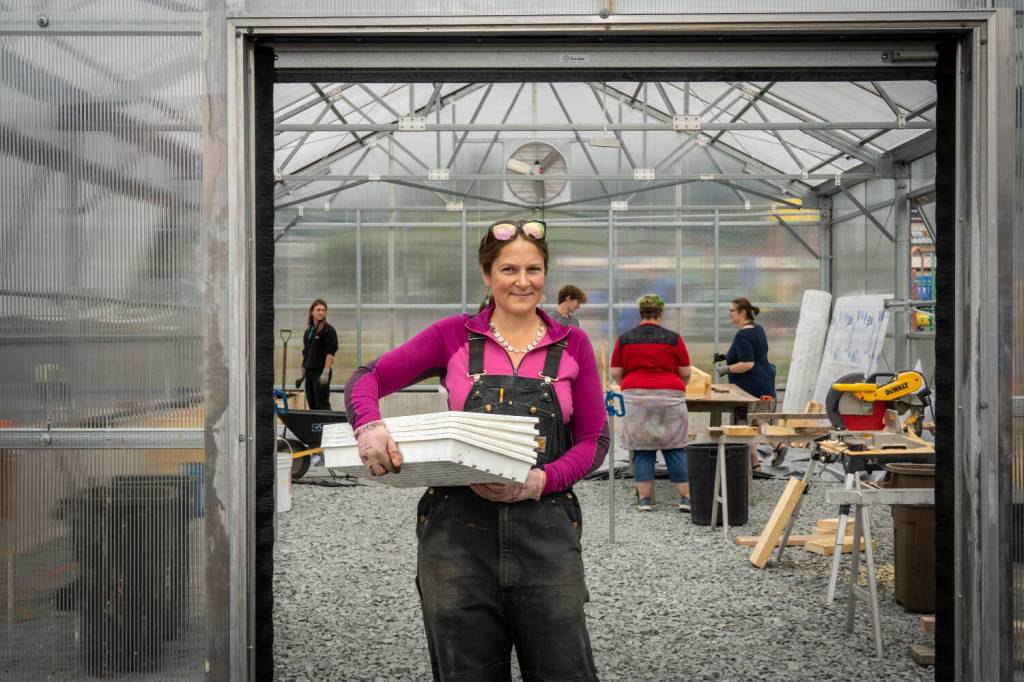
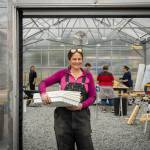
Pacific High School (PHS) is an alternative high school that supports authentic, experiential, and place-based learning with an emphasis on community and culture. For many years, the campus has grown vegetables in raised beds for school lunches. In 2019, Moby the Mobile Greenhouse arrived at Pacific High School, helping to catalyze local efforts. After years of fundraising, construction, and coordination with partners and volunteers, PHS celebrated several major milestones in 2026: the completion of a 24×48-foot greenhouse; the addition of more than 22 raised beds built with locally milled lumber and expanded composting capacity. Pacific High Garden produce is now being used in-from scratch school meals district wide.
Andrea Fraga
Middle Island Gardens, Co-owner/operator
Sitka Conservation Society, PHS Garden Coordinator
What is it?
The garden is designed to maximize learning space so it can fit groups of people as an outdoor classroom. Spring Garden classes run from March through May. In the fall, weekly stewardship activities run every Friday through November. Younger kids get involved too — neighboring Xóots Elementary kindergarteners plant Lingít potatoes, then return as first graders to harvest. Pacific High students also mentor preschoolers in gardening activities.
Part of the spring garden class includes constructing something each year — greenhouse benches, sifting tables, garden beds — simple projects that teach valuable skills while leaving youth proud of their work.
In the summer, there’s garden maintenance, volunteer contributions, and programs hosted by Sitka Native Education Program and Sitka Conservation Society, with plans to expand programming in the future once construction is complete.
Each year, the school hosts a big spring plant sale for the wider community. Last year, nearly 300 people attended, and approximately 1,500 seedlings were sold. It’s a fundraiser and public service since we don’t have many garden centers in Sitka.
Why does it matter?
At PHS, a guiding principle is to teach students life skills they can use outside of school. The garden teaches hands-on healthy food cultivation, simple wood construction, and from-scratch cooking. But it’s also inspiring and cultivates leadership. Students get a lot of choice — they helped design the garden site and continue to help plan what we grow and align it with what they want to eat.
We grow staples like kale, cabbage, potatoes, beets, carrots, garlic, herbs, and even broccoli raab and edible flowers. We like to try new things and for there to be variety to keep the kids interested. We also grow kúnts’ (Tlingit potatoes) in partnership with the U.S. Forest Service and Sitka Tribe of Alaska. Students learn the origin story and Tlingit language from elders and participate in planting and harvesting at both on site and off site patches.
Produce is used in the culinary program for school lunches and distributed to students, families, and volunteers. It’s about connecting students to their food, culture, and community.
What are some ingredients to success?
Having a dedicated community partner has been key. Sitka Conservation Society plays an important role in looking out for funding opportunities, handling grant reporting and budgeting, managing the project, and employing the garden staff.
We also rely on volunteers, from Outer Coast College students to AmeriCorps members and community gardeners.
We have worked to build a simple and easy to maintain program and infrastructure. If you have specialized, complicated equipment that’s expensive to run, it’s accessible to less people.
Supportive school leadership has made a big difference, and strong volunteer engagement keeps the program thriving.
What’s next?
We hope to one day be able to provide summer employment opportunities for youth in the garden. There are also plans to build beds around the learning shelter for traditional and medicinal plants, and to expand the reach of our program across the district. There’s plans to build beds for raspberries the public can eat.
Currently, the school is constructing a 24×30-foot open air pavilion, using local young growth wood to serve as a learning shelter and cultural space for community gatherings to butcher deer, fillet and smoke fish, and host a variety of other educational activities.
We want to keep growing both food and learning opportunities for the youth of Sitka.
Core Partners: Sitka School District, Pacific High School, Sitka Conservation Society, Sitka Native Education Program, Outer Coast, Sitka Tribe of Alaska, Crossett Foundation, Patrick Leahy Farm to School (USDA), DNR micro-grants for food security (via USDA), AgWest, Philanthropy Northwest Thriving Communities grant, Whole Kids Foundation, and special recognition to Mandy Sumner and Chandler O’Connell, and many dedicated volunteers
Hoonah: Hoonah Indian Association Greenhouse, Gardens, and Farmers Market
The Hoonah Indian Association’s (HIA) greenhouse and gardens is the result of long-term planning and partnership focused on strengthening local food systems in Hoonah, a community of about 800 people. Early groundwork began in 2016, when community members traveled to Prince of Wales Island to visit innovative, place-based, community greenhouses. While initial funding attempts were unsuccessful, momentum grew through engagement with the Sustainable Southeast Partnership and philanthropic partners.
Demonstration visits from Moby the Mobile Greenhouse in 2017 and again several years later helped build local interest and provided hands-on learning opportunities for students.
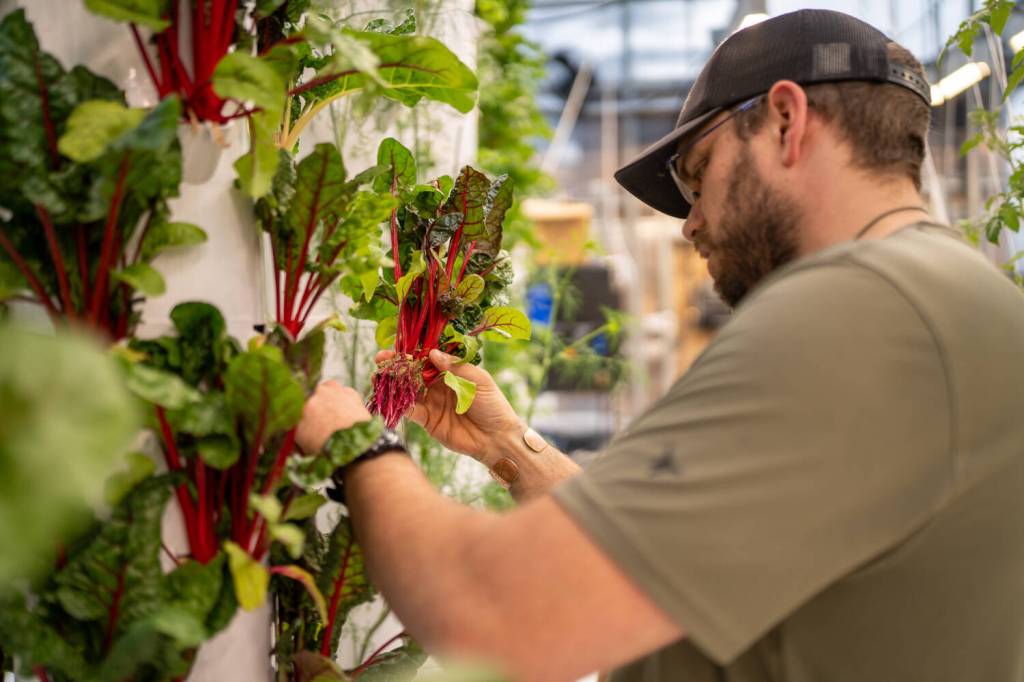
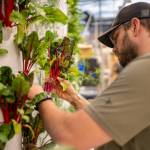
Completed in 2025, the 30×60-foot heated greenhouse is massive. It includes 90 hydroponic towers capable of producing up to 4,680 heads of lettuce, leafy greens, or herbs at a time, along with space for approximately 100 vine crops.
The greenhouse adds to the strength of HIA’s existing growing programs, which includes a community garden with raised beds for the public. For many years, HIA has grown kúnts’ (Tlingit potatoes) and hosted planting, harvesting, and other community engagement events with the school and the community. Seed potatoes are saved each year, expanding the patch. HIA has a hoop house for extending the season of outdoor soil crops. Also in the works are a community kitchen and a shipping container buried in the ground to become a root cellar for winter food storage.
Ian Johnson
Hoonah Indian Association, Hoonah Community Catalyst
Steering Committee, Sustainable Southeast Partnership
What is it?
We’re growing for the community of Hoonah, including through a formal partnership with the school, increasingly with the senior center, through restaurants and local businesses. Once a week we sell directly to local families through a Farmers Market we started, which is serving as a new opportunity for other entrepreneurs to participate in as well.
The greenhouse operates year-round and is structured like a business, even though we run it as a service to the community. We have one full-time manager overseeing production. Sealaska, the regional Alaska Native Corporation, is sponsoring a marketing position to help connect our produce with buyers. Students are regularly in the greenhouse. High school interns are paid to work there. Elementary classes help harvest or assemble grow towers. It’s a working facility, and it’s also a learning space.
Why does it matter?
The first piece is cost of living, community health, and food security. We can provide healthy produce cheaper and more reliably. In winter, we might go weeks without lettuce or spinach. Two winters ago, I paid $18 for a head of cabbage. That’s the reality in rural Alaska. We’re strong in wild protein from deer and local fish, but for fresh greens, vegetables, and produce, you need to supplement your harvest with what you grow or buy.
COVID really laid bare how vulnerable our food system is. You can talk about supply chain risk all day, but when shelves are empty for months — when refrigerators were shut down because there was nothing to stock — it changes how people think. By 2021 it was clear: we can’t go through that again. We need to fortify Hoonah and have actual food security.
The second piece is economic. Every job matters in a town of 800. We’re hiring youth, creating management and marketing roles, and giving students workforce experience. Through the Farmers Market, we’re also creating space for other entrepreneurs to show up — selling prepared foods, like jams, or even crafts. We have one local family who is selling really top-quality Chinese food in that space. In a lot of ways, this greenhouse is helping start a whole new industry in Hoonah.
What are some ingredients to success?
This greenhouse is a really strong example of how continued investments from a collective impact network like Sustainable Southeast Partnership can add up. From early efforts like sponsoring interested community members to tour innovative greenhouses on Prince of Wales Island, to resource guides that compiled best practices from across the state, to years hosting Moby the Mobile greenhouse, facilitated philanthropic visits, and the support for my position as community catalyst, all of that was huge.
This took eight years. Not having turnover in my role mattered — just being able to keep championing it. Strong grant management behind the scenes was huge — piecing together multiple funding sources and separating the project into fundable components. Local contractors willing to work within our budget made construction possible.
And ultimately, continued community support, reignited during COVID, pushed it across the finish line.
What’s next?
We’re exploring renewable energy options to reduce reliance on a majority diesel-powered grid. In Hoonah, we pay five or six times the national average for energy. A greenhouse is energy intensive. If we can figure out a solar or small-scale, fish-friendly, hydro option, we could grow all year round while decreasing the vulnerabilities of shipping your energy in.
We hope to expand the Farmers Market to twice a week and explore a subscription produce box. A greenhouse-linked recipe book is in development to help families use what’s grown. Youth engagement will continue to grow as we refine year-round operations and build on lessons from our first year of full production.
Core Partners: Hoonah Indian Association, Ecotrust, Southeast Alaska Watershed Council, Renewable Energy Alaska Project, Hoonah City School District, The City of Hoonah, Mott Foundation, Rasmuson Foundation, The National Park Service, SEARHC, Newman’s Own Foundation, Bureau of Indian Affairs, US Forest Service, Spruce Root, Southeast Conference and more.
Jennifer Nu is a freelance writer and photographer specializing in wellness, the environment, traditional food systems, and stories about people and community. She enjoys backcountry trekking, packrafting, home cooking, and foraging.