OPINION: A ballroom for Trump, the bill for taxpayers
Published 4:30 am Wednesday, May 13, 2026
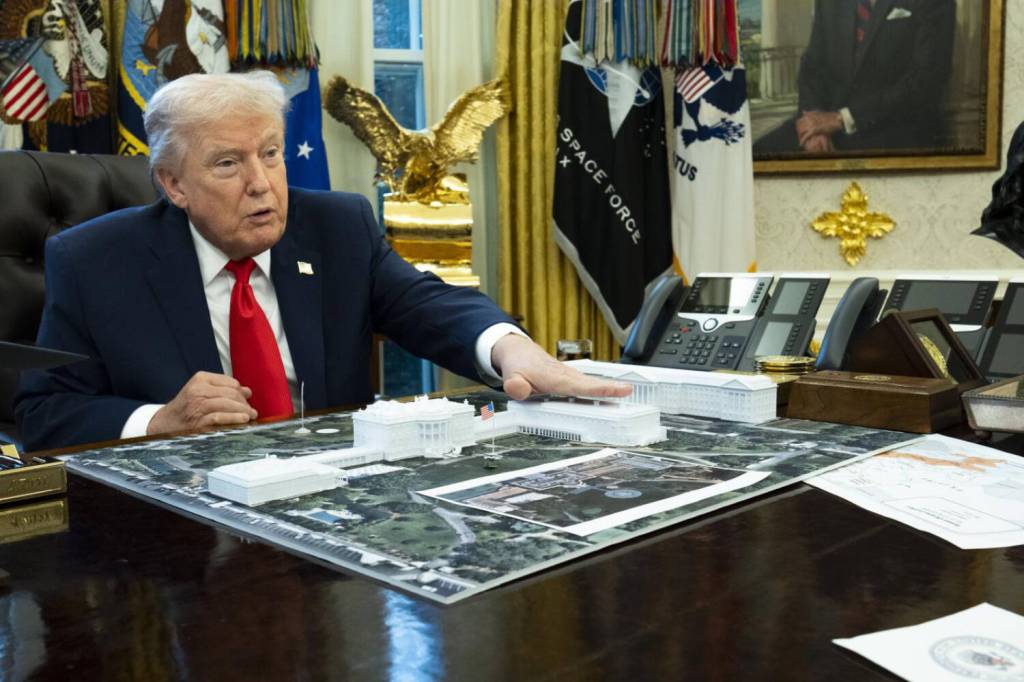



Trump wants a palace. Congress is supposed to provide restraint. Alaska’s Republican delegation is about to show whether it will defend the people’s house or submit to presidential vanity.
The proposed White House ballroom is not a harmless renovation. It is a monument to excess, a vanity project for a president obsessed with spectacle. The guests will not be teachers, fishermen, factory workers or families struggling to stretch another paycheck. They will be donors, political patrons, and the elite who never have to wonder whether the month will outlast the money. Sens. Dan Sullivan and Lisa Murkowski, and Rep. Nick Begich will each have to answer for where they stood when public money was used to build a gleaming hall closed off from public life.
Families are already strained. Gas costs more. Food costs more. Housing costs more. Debt is rising, the dollar is weakening, and tariffs and foreign conflict have added new pressure.
Voters do not need a ballroom. They need relief, stability, and leaders willing to say no. The people who keep this country running are not the people who will ever dance in that hall.
Republicans may try to rebrand the project as modernization or security, but euphemisms cannot conceal the truth. A ballroom by any other name is still a ballroom. A party that tells families to tighten their belts while funding Trump’s vanity project forfeits the right to lecture anyone about fiscal discipline. Sullivan, Murkowski, and Begich are being asked to endorse a spectacle staged in the people’s name and financed with the people’s money.
The White House has long drawn its dignity from restraint rather than glitter. Its authority came from what it symbolized: a government accountable to citizens, not a court built to flatter power.
Luxury changes that meaning. Gold signals hierarchy, not democracy. It separates rulers from the ruled. Sullivan, Murkowski and Begich must decide whether public office should reflect humility or indulgence.
Congress is supposed to distinguish between necessity and ego, public need and private appetite. If Republicans cannot make that distinction here, they are not governing. They are decorating a monarchy.
Republican leadership should bring defensible legislation to the floor. On this issue, the justification collapses under scrutiny. The numbers keep shifting. The rationale keeps changing.
The project was introduced as privately funded, then reframed, then wrapped in security language, then folded into broader spending arguments. That is not confidence. It is political damage control.
This debate is not really about chandeliers or marble. It is about whom America serves. The middle class has been hollowed out.
Wages have stagnated. Economic insecurity has become routine. The ballroom is the polished symbol of a politics that asks ordinary people to accept less while the powerful demand more.
A vote for the ballroom would be more than a policy decision. It would be a loyalty test, asking Republicans whether they serve the public or the president, constituents or the Oval Office, principle or obedience.
Sullivan is already politically vulnerable. Many voters believe he leans too heavily toward Trump. Begich still has enough political newness to claim independence, but support for this project would quickly redefine him as another reliable vote for Trump’s agenda.
Murkowski has built her reputation on selective independence from the party line.
Supporting this project would reinforce the suspicion that Republican dissent appears only when the political risk is low.
This is not governance. It is groveling.
Voters understand symbolism. They recognize when leaders ask the public to absorb hardship while approving spending for spectacle. They notice when luxury receives more attention than grocery bills.
Sullivan, Murkowski, and Begich will be judged on whether they stood with ordinary people or presidential excess.
Republicans understand the political danger, which is why the ballroom proposal keeps changing shape. One version is private funding. Another is public funding. One version is security. Another is renovation. The pattern is obvious: preach austerity, practice indulgence, and hope the public stops paying attention.
A vote for this ballroom would not merely represent bad policy. It would amount to a moral confession.
If Sullivan, Murkowski, Begich, and Republicans across the country support this vanity project, they will declare that Trump’s palace matters more than the public’s pocketbook and political survival matters more than public trust.
And once that choice is made, the question that remains will be simple: Who do they really serve?
Van Abbott is a longtime resident of Alaska and California. He has held financial management positions in government and private organizations, and is now a full-time opinion writer. He served in the late 1960s in the Peace Corps as a teacher.