OPINION: The pesky implications of the full picture of Alaska mining project
Published 1:30 pm Saturday, May 9, 2026
Win Gruening’s April 1 column asked why Juneau’s “economic naysayers” won’t connect the dots, dismissing community voices and valid concerns over the proposed easement for the New Amalga Gold Project, and going on to suggest this mining project could be the answer to all of Juneau’s economic woes, from flood mitigation to out-migration of families.
But ‘connecting the dots’ doesn’t mean ignoring some and adding others to create the image you’d like to see.
Imagining “Kensington-scale benefits,” Mr. Gruening projected 250-400 permanent jobs and $30-55 million in payroll. But interpolating Kensington-scale employment from a project still doing exploratory drilling is part of an age-old industry game; by associating with established mines, a junior mining company can project momentum and inevitability to prospective investors. Grande Portage Resources’ own estimate is 277 jobs, we learned at a Juneau Chamber of Commerce presentation on April 23 by the Canadian junior mining company’s director of corporate and external communications, Graham Neale. Mr. Neale’s estimate came from the company’s Preliminary Economic Assessment, an early-stage study — preceding feasibility and even prefeasibility studies — used to attract investors.
Even if the projected jobs materialize, who fills those roles is uncertain; Alaska Department of Labor reports show 44.2 percent of Alaska miners are non-residents. Payroll that leaves the state cannot stabilize our schools, address housing shortages, or support local businesses.
The column invokes Kensington and Greens Creek as proof of mining’s civic contributions, but Alaska’s mining license tax represents only 1.6 per cent of total production value.
That is remarkably low even compared to other extractive industries in the state (approximately 19 percent for oil and gas, the lowest rate for oil and gas in the world).
The state’s figures show mining tax revenues account for just 3.24 percent of all Alaska tax revenue.
At the municipal level, the recently capped and cut mill rate reduces the property tax paid by Juneau-area mining operations, reducing their contributions to the services that keep our municipality running and make Juneau a place people want to live.
The environmental record Mr. Gruening cites is complicated. In 2024, Kensington reported a 105,000-gallon tailings spill into Johnson Creek and a later fish kill incident in Sherman Creek.
In 2019, the EPA fined Coeur Alaska $534,500 for discharge violations at Kensington. Greens Creek faced separate EPA enforcement actions for lead contamination, with a 2023 study linking elevated lead levels in Hawk Inlet directly to mine activities.
Contaminated shellfish and seal meat were distributed and consumed by community members. These are not anti-mining talking points, but documented regulatory infractions and real environmental threats.
With any development project, we must weigh if the environmental costs are worth the economic benefits. With anadromous streams, beloved harvesting and recreation areas, fish and wildlife habitats like Berners Bay and more at stake, we need to be highly critical of unnecessary incursions and investor pitches posing as promises.
Mr. Gruening complains that 100 of the 176 public commenters opposing the proposed easement road — out of 200 total comments — submitted a form letter through an advocacy tool provided to the public by SEACC. Does the ease of commenting somehow negate the intent of the commenter or render those voices less important?
We’re proud to have helped those voices be heard. Public engagement is not obstruction; it protects communities from costly, irreversible mistakes.
SEACC, the commenters who used our advocacy tool and the commenters who opposed the easement in their own words wish to protect our home now and for generations to come, and see economic development in Southeast Alaska that is durable, environmentally sound, and built on genuine community need and input.
Communities that anchor their futures to single-commodity extraction cycles have historically fared poorly when markets shift, mines inevitably close, and the companies move on.
We’re not “economic naysayers” — the dots we see now just don’t form the simplistic vision Mr. Gruening portrays and we can’t afford to permit harm to our public lands when the New Amalga Gold Project has yet to prove its viability as a mine, let alone as Juneau’s economic salvation, as Mr. Gruening seems to suggest.
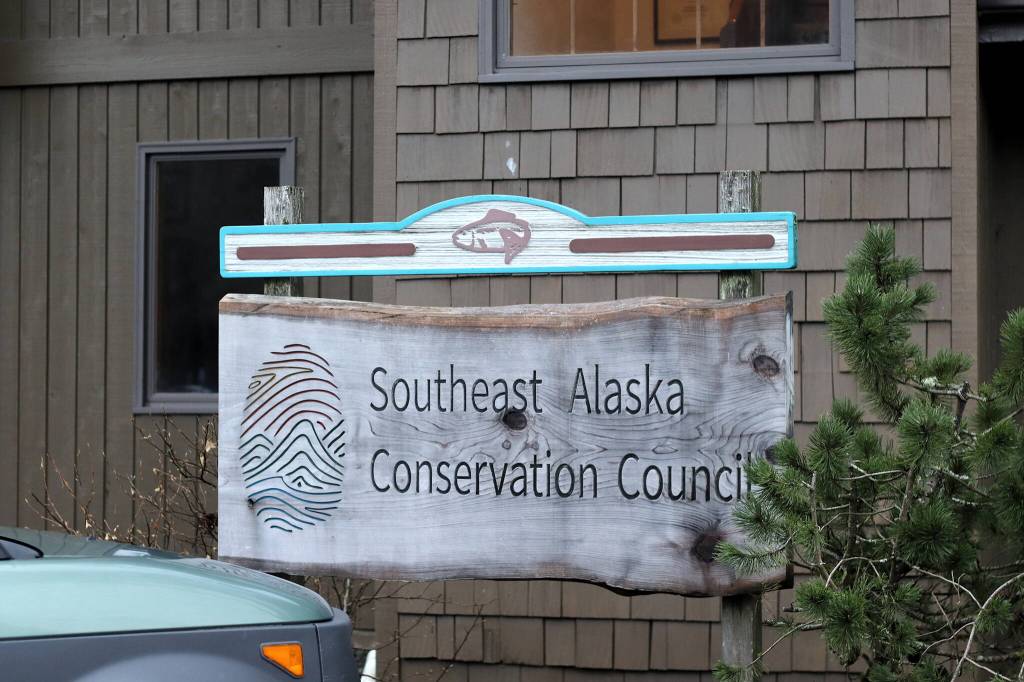
Stacy Unzicker and Tyler Breen are with the Southeast Alaska Conservation Council.