OPINION: ‘We can’t afford Medicare’ — but we can afford war
Published 7:30 am Monday, April 13, 2026
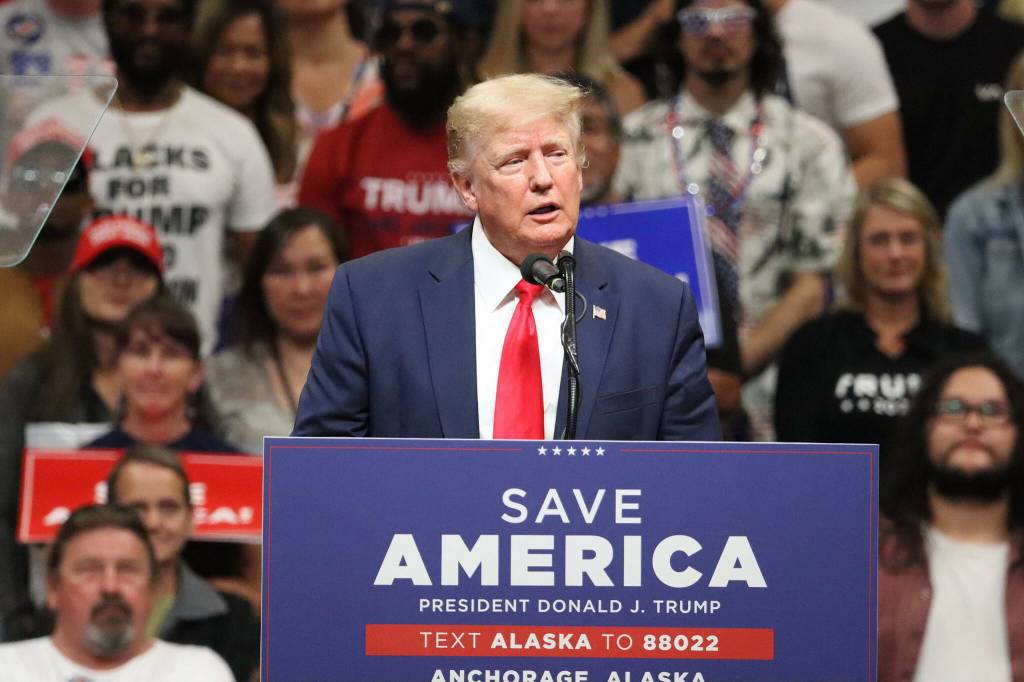
The president who once pledged to end “forever wars” now argues that the nation cannot sustain its core domestic commitments while prioritizing conflict. In recent remarks, Trump stated, “It’s not possible for us to take care of day care, Medicaid, Medicare, all these individual things… We have to take care of one thing: military protection.”
His framing presents a stark choice, placing war above support for families, seniors, and the most vulnerable.
That framing is reinforced by scale. His 2027 military budget request is $1.5 trillion, a 42% increase over the 2026 budget, signaling that this is not a rhetorical posture but a governing priority.
Taken together, the words and the numbers point to more than a policy choice. They raise concerns about judgment and fitness for office. The pattern is visible and recurring: erratic statements, shifting positions, and a rhetorical style that blurs coherence and impulse. Whether attributed to temperament, stress, age, or decline, the effect is the same. Decision-making appears less disciplined, less consistent, and less anchored in consequence or reality.
War is the most serious responsibility a president carries. It demands clarity, restraint, and respect for human cost. Yet Trump’s public conduct suggests a diminished regard for those obligations.
Recent actions inside the Pentagon reinforce that concern. The dismissal of more than a dozen senior military leaders, including the Army Chief of Staff, signals more than routine turnover. Under Defense Secretary Hegseth, experienced commanders are being replaced by figures seen as personally loyal to the president.
The consequences are institutional. The American military depends on candid advice, even when it challenges civilian leadership. When officers begin to weigh political risk before offering professional judgment, that tradition weakens. Over time, a system designed for clear assessment drifts toward conformity.
These developments persist because Congress allows them. The Constitution assigns Congress authority over war, including the power to declare it and to fund it. In practice, that responsibility has been steadily ceded to the executive. Today, a Republican-controlled Congress shows little willingness to reclaim it. Oversight is limited. Authorization is vague. Accountability is deferred.
This raises a fundamental question. When will Republicans in Congress decide they have seen enough?
One might expect that point has already been reached. The pattern is not hidden. It is visible in Trump’s public statements, personnel decisions, and the erosion of institutional norms. It is evident in the widening gap between the gravity of presidential power and the discipline with which it is exercised. It can be seen in every televised cabinet meeting.
Yet the answer, so far, is clear. Not yet.
Not after erratic rhetoric that signals inconsistency to allies and opportunity to adversaries. Not after the removal of experienced military leadership in favor of perceived loyalty. Not after indications that impulse is displacing deliberation in consequential decisions. Not after concealing corruption. Not even after the continued sidelining of Congress where its authority is explicit.
This is not passive inaction. It is an active choice. By avoiding confrontation, Congress transfers power to the presidency while preserving political cover. The result is a concentration of authority at the moment when balance is most needed.
Democratic erosion rarely arrives in a single break. It advances through accumulation and accepted exceptions. Institutions remain intact in form while standards shift in practice. Trump appears to equate personal instinct with national interest. History offers repeated warnings about that equation. When impulse replaces discipline, decisions grow less predictable and more prone to escalation. In matters of war, unpredictability is not strength. It is risk.
Equally troubling is the absence of empathy in the framework being advanced. A government that treats child care, health care, and elder support as secondary concerns is redefining what the nation values. Strength without humanity is power without purpose.
His assertion that the nation must focus primarily on “military protection” invites a basic question: protection of what, and for whom? A strategy that sidelines the well-being of citizens weakens the society it claims to defend. National strength rests not only on military capacity, but on economic resilience, public health, and social stability.
The electorate remains the decisive check. If Congress will not answer the question of when enough is enough, voters will.
In November, that question comes to a decision. A nation cannot sustain constant conflict under uncertain leadership while its domestic foundation erodes. It cannot rely on strength abroad while neglecting stability at home.
It cannot continue to concentrate war powers in the presidency while Congress stands aside. The cost of that imbalance is not theoretical. It is measured in lives, institutions, and the future the country chooses to keep. Vote.
Van Abbott is a long-time resident of Alaska and regular opinion writer for the Juneau Empire. He has held management positions in government organizations in Ketchikan, Fairbanks, and Anchorage. He served in the Peace Corps in the late ’60s as a teacher.