Woven Peoples and Places: Introducing ‘Speed of Trust’
Published 4:30 am Friday, March 27, 2026
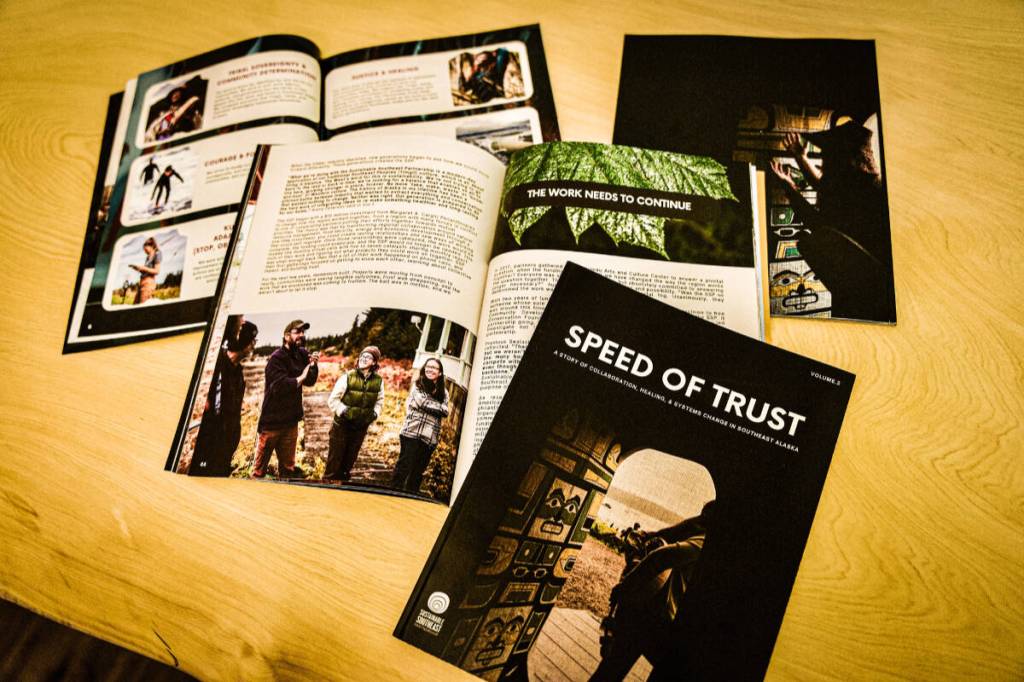

In the early years of the Sustainable Southeast Partnership (SSP), collaborators recognized the importance of documenting and sharing our stories. It was a way for us to share, advocate, and inspire the work we believed in. What came from that understanding was a desire to create a long-form story about the history of Southeast Alaska, how this history led to the formation of the SSP, and an argument that with shared values we could drive towards a different future for our region. As a result, Finding Balance at the Speed of Trust by Peter Forbes was created.
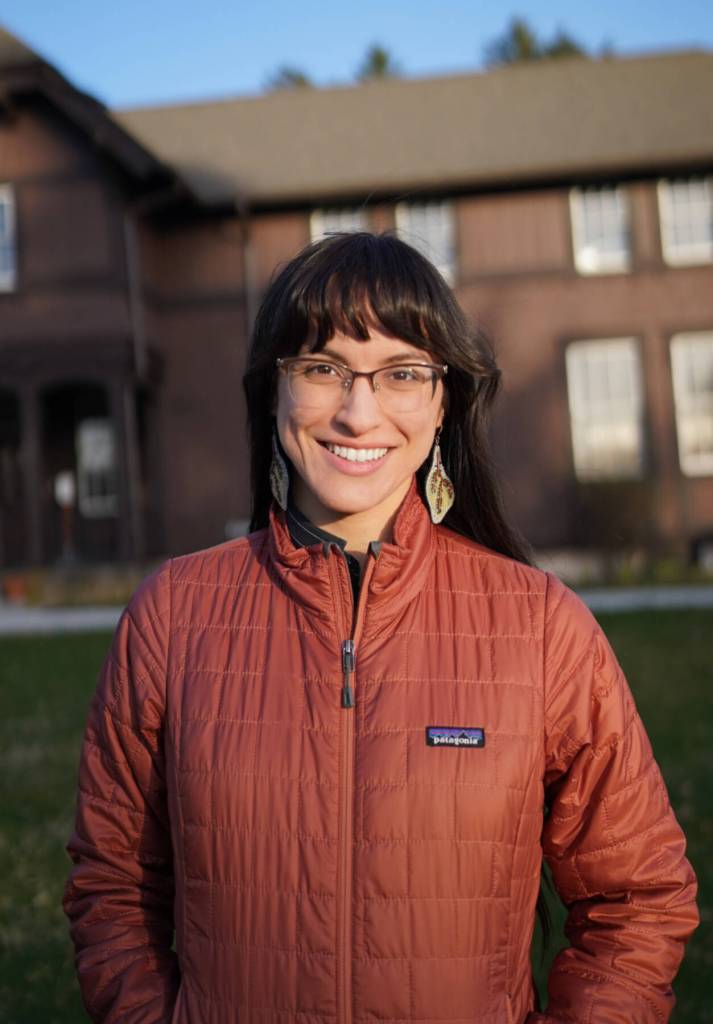
Eight years later, we are continuing that story with a retelling by current SSP Communications Catalyst Shaelene Grace Moler, offering a new perspective from a young Indigenous woman impacted by and working within the Partnership. Indigenous entrepreneur Chloey Cavanaugh amplifies the story through stunning visuals and creative direction as the graphic designer.
“I have had the gift of knowing Chloey through many chapters in my life, long before this project brought us back together. She has been in our network for many years through a variety of programs– as a collaborator, partner and voice. Her ownership of the design brought everything together,” says Moler.
Recognizing the value in both perspectives and all that has been accomplished since Forbe’s story, we see this second volume as a second chapter to all SSP has and will accomplish. This is why it is named simply “Speed of Trust.”
The SSP is a dynamic collective network program hosted by Spruce Root uniting diverse skills and perspectives to strengthen cultural, ecological, and economic prosperity across Southeast Alaska. As a network of Tribal governments, Alaska Native Corporations, community non-profits, individuals, and more, we envision self-determined and connected communities where Southeast Indigenous values continue to inspire society, shape our relationships, and ensure that each generation thrives on healthy lands and waters.
The following is an excerpt from Speed of Trust – Chapter 1: The Sustainable Southeast Partnership: Then and Now
For the full publication visit https://tinyurl.com/SOTvol2, more of our stories can also be found at sustainablesoutheast.net where you can sign up for our newsletter, pitch ideas, check out resources and opportunities, and stay in touch.
The SSP: Then and Now
“A single drop of water has begun its journey to the ocean.”
That was the final line in Peter Forbes’s story on the Sustainable Southeast Partnership: Finding Balance at the Speed of Trust. What Peter understood in his time with us is that the Sustainable Southeast Partnership (SSP) is built on the foundation of trust in ourselves and our communities – the belief that the sincerity of our process and the relationships we build are as important as the outcomes of this vital collaboration.
Finding Balance at the Speed of Trust was published at a time when our values were still being refined, when we sought an outside perspective to validate our legitimacy. The SSP has since raised a generation who can speak from the inside looking out, which is why I am now authoring this story. My name is Shaelene Grace Moler, and I have spent the last four years working in this Partnership – first as an intern, then as a fellow, and now as the SSP Regional Communications Catalyst. In some ways, I grew with the SSP and grew because of it. I have been shaped as a storyteller by the values of my Tlingit People, by the values we hold in the Partnership, and by the many people I have had the privilege of learning from over the years. It is my hope that this story not only documents the Partnership’s evolution, but practices Haa Shuka by honoring and expressing gratitude to who and what came before me, while tending to those who come after. This is the story of the SSP, over fifteen years after its inception, and how the program is creating the story from conflict to collaboration, towards healing with purpose.
To me, the metaphor that shaped the first volume spoke to the journey from individual power to collective power within the Partnership. Each person, each community initiative, each act of trust is like a single drop. Alone, it seems small, but water always seeks water. The drop joins a trickle, becomes a stream, flows into a river, and eventually reaches the ocean. In the SSP, we recognize that individual efforts, when connected, cultivate systems change. This metaphor also speaks to how in the rainforests of Southeast Alaska, water is a lifeline—it carries salmon, connects communities, and shapes our landscape. The metaphor suggests that the movement toward collaboration and balance isn’t forced, but more like water finding its course following the natural laws of connection and accumulation, starting small, but inevitably growing into something vast and powerful.
Growing from an idea among a few people into a systems-change approach inspiring people around the world, the SSP is rooted in the Indigenous values of this place and in communities’ self-determination. In the early years, we had a handful of catalysts and core partners with gatherings of less than 20 people. Since then, the SSP has grown significantly to include 20 catalysts, over 130 partners, and more than 80 region-wide projects, proving time and time again that throughout growth and change, what strengthens and makes our network operate remain the same: our commitment to working together, centering relationships, and building trust.
Those we call “catalysts” are industry- or community-specific positions hosted by Tribes, non-profits, local organizations, and businesses. These “partners” are community-minded entities that have joined the SSP and committed to working together. With growth over the years, more members have joined who don’t all hold official “catalyst” roles, but still catalyze projects, while the catalysts still hold a specific role in connecting communities to the Partnership. Within the first issue of the Sustainable Southeast Partnership’s annual publication Woven, then SSP Director, Marina Keli’ikuli said of our partners and catalysts:
“They are retired teachers, aunties, artists, and business owners. They sit on local boards, fill buckets with berries, put up fish, check in on Elders, and write their local assembly members. We have young people who just graduated from college, others starting new families and building homes with their own hands. Our catalysts are often seen as leaders within their communities and the diversity of backgrounds they bring, as well as the collaborating partners they work with, gives us our strength as a Partnership.”
In the second chapter of Speed of Trust, we explore the complex histories of Southeast Alaska that has led to the formation of the SSP, and our formative beliefs building trust and putting relationships first. Since SSP began, we have understood that trust is what ties us together and allows us to work well. As we learn in chapters 2 and 3, trust can flow through generations, carried by stories and sincere efforts to connect, understand, and heal. It is, in some ways, an act of becoming whole. This is true everywhere, but especially in Southeast Alaska, where the waterways that separate our communities foster intentional connection uniting us. Engaging in the Partnership is having faith in both where trust can be found and where it can be built: in the areas where people and communities overlap such as efforts in healing and climate adaptation. Trust begins with honesty, and understanding where it is broken, it lives in taking the time to understand the histories of Southeast Alaska and commit to a better, more connected future. Without trust, you find friction.
Over the years, we’ve watched relationships and partnership priorities evolve to reflect the needs and visions of our communities. Where national entities once uprooted Indigenous presence from summer harvest grounds, they now invest in community-led priorities and seek Tribal and local leadership in reshaping priorities on the Tongass, an example being the Southeast Alaska Sustainability Strategy (SASS) in chapter 4. The US Forest Service being one of these entities, now seeks government to government relationships with Tribes, as well as Tribal and local voices in reshaping the Tongass Forest Plan with guidance from SSP partners. This has looked like working with Tribal governments to build careers in land management through programs like the Alaska Youth Stewards (AYS) and community forest partnerships across the region.
We have also seen stewardship and leadership of initiatives and programs change hands. Projects catalyzed through the SSP have shifted in ownership from one organization to another, but have been carried forward thanks to the power of collaboration we have built together. As Sitka Community Catalyst Chandler O’Connell eloquently describes it, “the SSP shifts our work from a marathon to a relay,” allowing us to carry the immense weight of our work through many hands, across generations and through to the finish line. Regional Catalyst for Community Forestry Bob Christensen emphasizes the importance of inviting new leadership to engage in this process. “This network functions the best through collaboration, and that includes leadership,” says Christensen, “We need individuals to step up at various times, but we also have to be able to step back.”
From the beginning, we understood a hard truth: that federal funding and philanthropy have rarely aligned with the priorities of Indigenous communities, and trust in its permanence was never ours to hold. In response, the Seacoast Trust was created by SSP partners and Chapter 5 shares how it came to be. Seacoast builds financial sovereignty that endures and empowers our communities, regardless of political, social or economic shifts. It exists to empower communities and Tribes who have long stewarded these coastal rainforests, one of the world’s most vital ecosystems. Created not just to meet the needs of now, the Seacoast Trust will ensure that those who come after have the means to decide, dream, and thrive on their terms. While the fund is working already, the goal is to achieve the $100 million fundraising mark to fully endow Seacoast so it can then perpetuate itself towards the financial security needed by the Partnership.
The SSP focuses on caring for our home region, but it is globally significant. The Tongass National Forest spans nearly 17 million acres, storing an estimated 2.7 billion metric tons of carbon, and has a coastline of 11,000 miles that forms the Alexander Archipelago. With 57,000 miles of rivers, streams, and creeks known to be the world’s best spawning habitat for salmon, salmon are a valuable economic, cultural, nutritional, and recreational resource. Researchers from the University of Alaska Southeast and the U.S. Forest Service indicated that salmon from Alaska national forests provide 46 million fish, $262 million, and 75 million servings within a single year.
The Tlingit, Haida and Tsimshian are the original Peoples of this region. We know Southeast Alaska as Haa Aaní, our homeland, and have stewarded it for thousands of years. The colonization of Southeast Alaska disrupted Indigenous peoples’ relationships with their land and cultures. This disruption harmed traditional knowledge systems and created the ecological, economic and cultural vulnerabilities we now face.
Today in Southeast Alaska, our partners center healing in their work, understanding that restoring these relationships among ourselves and to our lands and waters is inherently climate work and integral to cultural vitality on a triple-bottom-line scale. When communities reclaim their languages, traditional knowledge systems, and practice economic sovereignty, they restore the reciprocal relationship between people and place that has been the foundation of resilience in a time of change and grow our understanding of how to adapt and heal. The SSP’s diverse initiatives—community forest partnerships, workforce development programs, rural economic development, greenhouses, clean energy and energy independence, Lingít (Tlingit) language classes, entrepreneur coaching, and culture camps—are all part of this interconnected work of healing from the past while preparing for the future.
The SSP was born out of an effort to reconcile, to collaborate, to seek and find balance. This is the story of the SSP now, a program that represents systems change in Southeast Alaska and beyond, from conflict to collaboration and healing.
The first volume ended with a drop on its way to the ocean. I begin with the ocean that drop travelled to meet: constant, enduring, carrying the memory of every tide, continually reshaping our shores now, and for those who are yet to walk them.
Shaelene Grace Moler serves as the Regional Communications Catalyst for the Sustainable Southeast Partnership hosted by Spruce Root. She grew up in Kake, but now lives in Sitka.