Woven Peoples and Places: Where are our future energy leaders?
Published 5:30 am Saturday, February 28, 2026
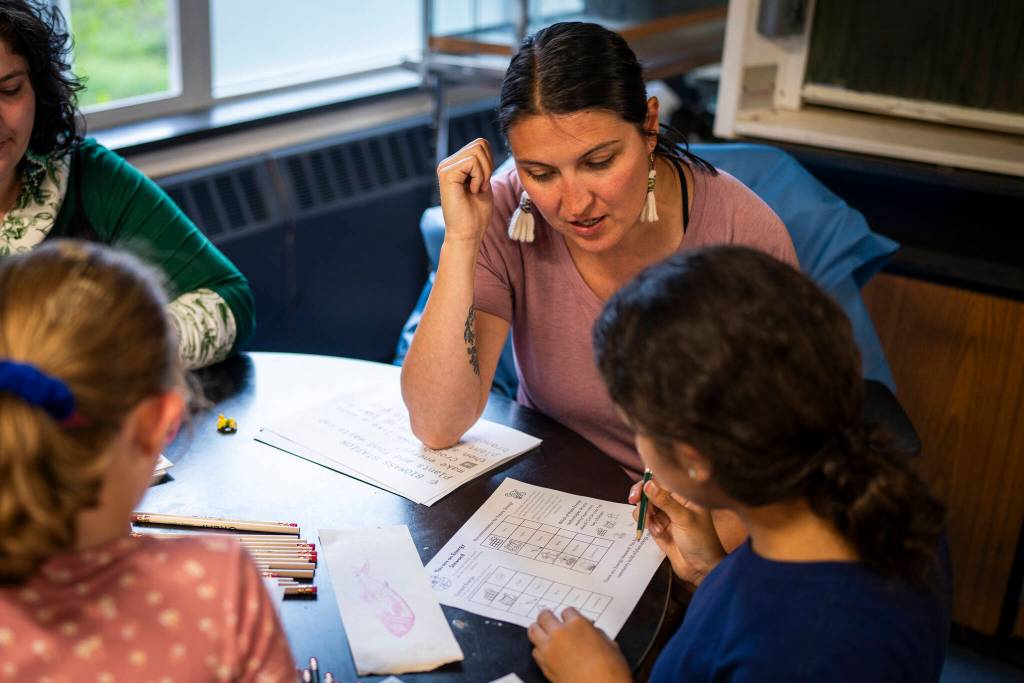
Where are our future energy leaders? They’re sitting in our high school classrooms—curious, capable, and ready to shape Alaska’s energy future— if we give them the opportunity. This year, students from Yadaa.at Kalé Juneau Douglas High School participated in the first ‘Energy, Policy, and Looking to the Future’ dual enrollment class with the University of Alaska Southeast as an opportunity to explore energy solutions in Alaska.
As a community educator for more than 15 years, I believe stewardship is more than a lesson—it is a way of being. It is a responsibility to our place, to one another, and to future generations.
That belief was shaped by mentors, like Clay Good, who saw potential in me before I saw it in myself. As my high school oceanography teacher—and later as the Regional Energy Catalyst with the Sustainable Southeast Partnership (SSP) and Renewable Energy Alaska Project (REAP)—Good modeled curiosity, integrity, and deep respect for our coastal ecosystems. When I returned to Juneau to begin my career as a Science, Technology, Engineering, and Math (STEM) educator, he stood beside me with guidance and encouragement. As I considered new professional directions, his steady mentorship gave me the confidence to step into leadership and imagine broader possibilities for community-based education.
When Mr. Good retired in 2025, I stepped up to take on those same responsibilities as the next Regional Energy Catalyst. Today, my work reflects the values he modeled: humility, reciprocity, and community-centered leadership. I strive to create for youth the same kind of spaces he created for me—where students feel seen, challenged, and empowered to pursue futures they may not yet envision for themselves or for their communities.
Alaska faces complex energy decisions that affect our lands, waters, and communities. At this moment, young people need more than information; they need mentorship, encouragement, and opportunities to see themselves as leaders in this increasingly important and dynamic field.
Through place-based energy education across Southeast Alaska, I work to help students and community members expand their understanding of energy in ways that strengthen their local communities, our region, and our state. In many ways, this work is an extension of the mentorship I received—a living legacy of stewardship passed from one generation to the next.
This year, our partners’ commitment to energy leadership for Southeast Alaska’s youth came to life through a dual enrollment course designed specifically for high school students. Dual enrollment courses are established with partnerships between high schools and colleges or universities.These programs allow students to enroll in college-level courses while still in high school, earning dual credit while building momentum toward future education and careers. In partnership with STEM teacher Kristen Wells at Juneau-Douglas High School, The Nature Conservancy, the Inside Passage Electric Cooperative, Annika Ord with the Alaska Climate Adaptation Center (Climate Adaptation SSP Catalyst), and the University of Alaska Fairbanks Bristol Bay Campus, the REAP education team created a course that bridges classroom learning with real-world energy challenges.
The ‘Energy, Policy, and Looking to the Future’ course was designed to go beyond introducing renewable energy technologies. Its purpose was to help students understand the broader landscape of Alaska’s energy future—including projects currently under construction, proposals under consideration, and the policy decisions that shape them.
Students conducted an in-depth analysis of Angoon’s Watkasate’ (Thayer Creek) run-of-river hydroelectric project, which broke ground in summer 2025. They examined the potential benefits and challenges of developing hydroelectric power in a rural, micro-gridded community and utility system. This active project served as a case study and was compared to the proposed Alaska Energy Authority’s Susitna-Watana Dam, as presented to the Alaska House Energy Committee in 2023. Located in Southcentral Alaska, the Susitna-Watana proposal has been the subject of extensive environmental and economic research, providing students with substantial data to evaluate.
Through this comparison, students explored how energy policy intersects with marine and terrestrial conservation, analyzed the tradeoffs inherent in large- and small-scale energy development, and examined how community values influence decision-making. To conclude the unit, students presented policy recommendations from the perspective of specific stakeholders, supporting their positions with research, data, and evidence-based analysis.
A key component of the course was active participation. Students took part in a mock committee meeting, representing a wide range of stakeholder perspectives—from utilities and renewable energy professionals to climate adaptation specialists, conservation advocates, and community members. Through this process, they experienced firsthand how collaboration, compromise, and communication are essential to effective energy planning. The course culminated in a solutions workshop, where students proposed sustainable, community-informed energy plans.
Throughout the course, students engaged with renewable energy professionals from across Alaska –representing everything from city utilities to non-profits and universities.These conversations brought real-world context into the classroom, exposing students to both the promise and the challenges of energy development in rural and urban communities alike. By working through hands-on, critical-thinking activities and hearing directly from practitioners, students developed a deeper understanding of why inclusive stakeholder engagement is vital at both the community and state levels.
This course is more than a class—it’s a starting point. By investing in dual enrollment opportunities like this, we are building pathways for young people to see themselves as leaders, problem-solvers, and stewards of Alaska’s energy future. REAP has committed to building these pathways with our UAF Bristol Bay campus and school district partnerships, to provide dual enrollment courses in ‘Home Energy Basics,’ ‘Renewable Energy in Alaska Communities’ and ‘Energy, Policy and Looking to the Future’ courses.
Our future energy leaders are already here. Our job is to invite them to the table.
Adriana Northcutt serves as the Regional Energy Catalyst with the Sustainable Southeast Partnership and the Renewable Energy Alaska Project, working to advance equitable clean energy across Alaska. Growing up in Juneau after her family moved north to work at the Greens Creek Mine, she became the first in her family to pursue higher education at the University of Alaska Southeast. Today, she is passionate about building pathways for youth, young women and people of color to thrive in STEM fields.