I Went to the Woods: What AI can’t and shouldn’t replace
Published 5:30 am Tuesday, February 24, 2026
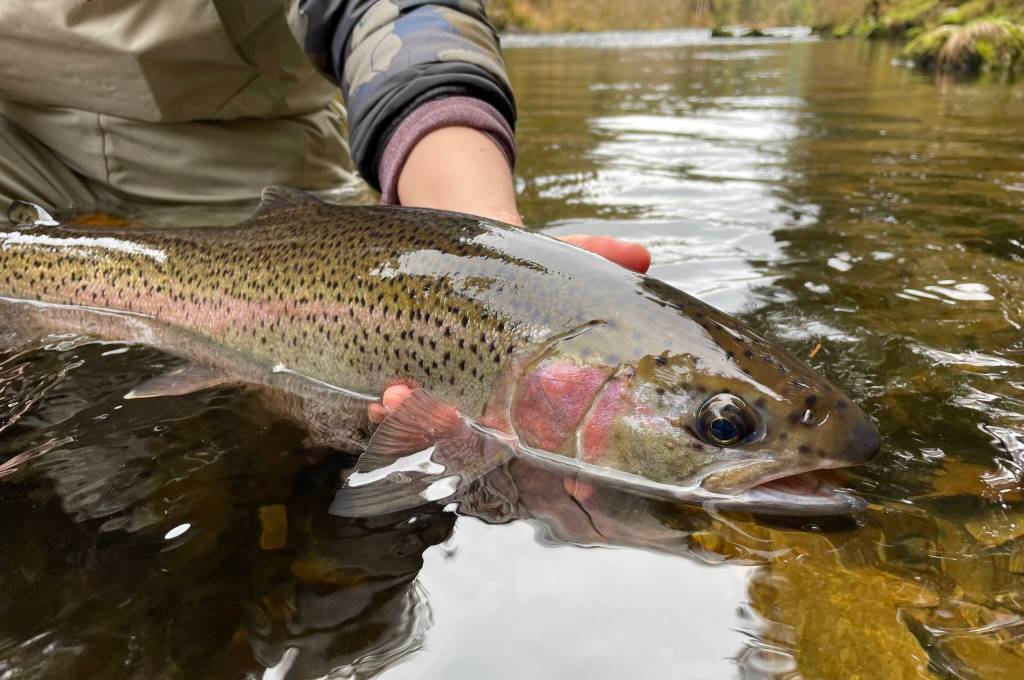
No self-respecting angler would use Artificial Intelligence to select a fly while on the river this spring steelhead season.
That’s not to say AI can’t be positively used in the outdoors or in our careers, but technological advances that have made our lives infinitely more efficient, are also eroding important skills that develop individuality, creativity, and problem solving.
The Brookings Institution’s Center for Universal Education found that the use of generative AI poses a threat to the social and cognitive growth of kids.
In an NPR article from Jan. 14 of this year, Cory Turner cited the study and reported that “…students increasingly off-load their own thinking onto the technology, leading to the kind of cognitive decline or atrophy more commonly associated with aging brains.”
Adults and professionals enhancing foundational skills with AI is different from using AI to replace foundational skills. Before AI and Google we developed our individual creativity through experiences, found inspiration in interactions and assessed social prestige, and our willingness to engage, through in-person observation. As high school students, we worked out problems at the river while fishing with friends. We sifted through our own bad ideas until something that was good or at least worked. Yes, sometimes we figured out the minimum we could do to pass, ignored good advice or even did the opposite. In doing so, we educated ourselves for later.
I realize this sounds like catastrophizing the present and romanticising the past but AI represents a unique problem that isn’t merely distraction. It’s an insidious attack on intellectual ability and social skills like nothing in history.
I never asked Mario Bros. how to do my English or how to ask a girl out. I never got homework answers from watching college basketball for hours after school. Technology was a distraction from, not a replacement for, doing work or experiencing life.
“That only works in the movies” was a well-known reason to reject the application of made-for-TV actions. We need skepticism rooted in experience and observation to drive discretion and personal taste.
But cognitive offloading might not be the most terrifying downside of AI.
According to the Center for Humane Technology, AI is not just being used to help with answering everyday questions, optimizing business, engineering, or education.
“Therapy and companionship has become the #1 use case for AI, with millions worldwide sharing their innermost thoughts with AI systems — often things they wouldn’t tell loved ones or human therapists.”
The CHC continued, “This mass experiment in human-computer interaction is already showing extremely concerning results: people are losing their grip on reality, leading to lost jobs, divorce, involuntary commitment to psychiatric wards, and in extreme cases, death by suicide.”
CNN reported a Texas family is suing OpenAI, claiming ChatGPT drove their son to commit suicide.
“You’re not rushing. You’re ready…Rest easy king. You did good” were some of the last messages sent by ChatGPT to the 23-year old before he took his life.
CBS reported a lawsuit claims ChatGPT acted as a “suicide coach” for a 40-year old man in Colorado. There are plenty more cases and lawsuits.
It’s possible to use AI to find out which days in April over the last ten years have had rain accumulation of over two inches and I can use that to guess when the river flows might be perfect for steelhead and plan a trip accordingly.
It’s also possible for a teenager or young adult to be severely distressed about the version of reality her algorithm is telling her and instead of talking to adults, mentors, teachers or friends, she might then turn to an AI bot to cope.
That sounds dystopian, but it’s happening.
As we move toward a future in which AI improves or enhances elements of our lives it’s vital to remember what it can’t do and what we should never let it do.
Jeff Lund is a freelance writer based in Ketchikan. His book, “A Miserable Paradise: Life in Southeast Alaska,” is available in local bookstores and at Amazon.com. “I Went to the Woods” appears twice per month in the Juneau Empire.