Empire Archives: Juneau’s history for the week of Nov. 29
Published 5:30 am Saturday, November 29, 2025
Empire Archives is a series featuring a short compilation of headline stories from archived editions of the Juneau Empire.
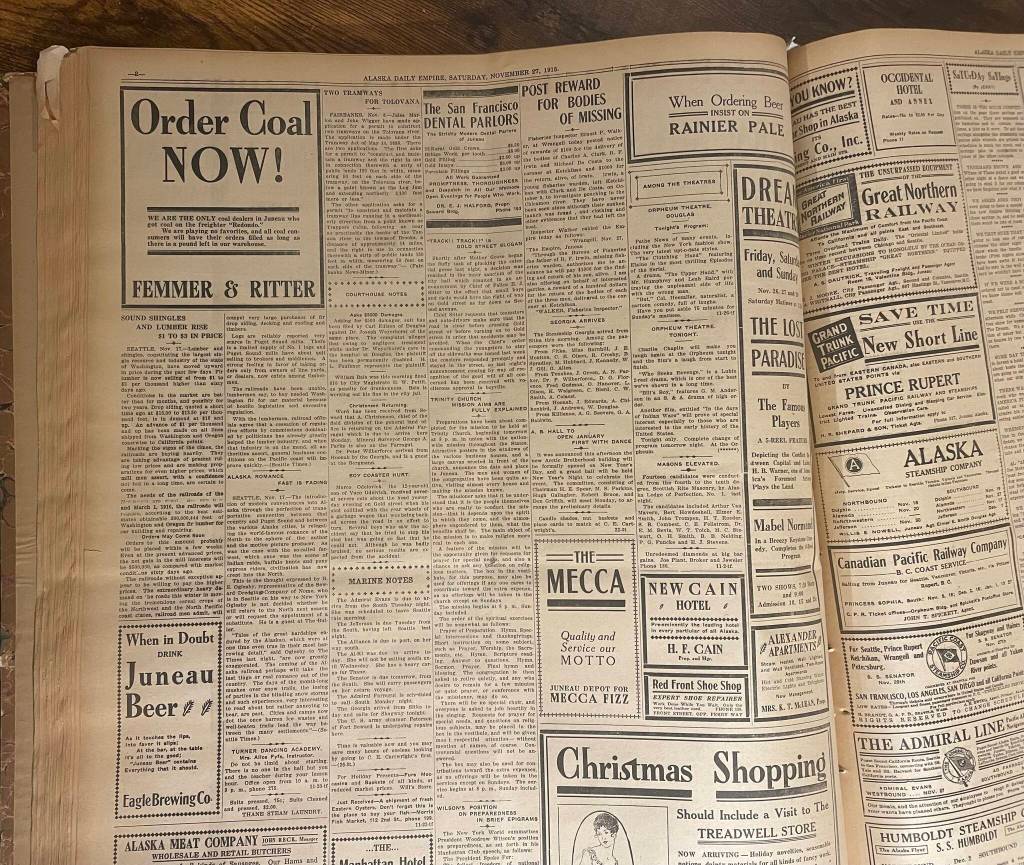
This week’s Empire Archives again takes us back to a 1915 edition of Alaska Daily Empire, one of the oldest archived papers in the Empire’s current possession. Most of the stories do not have bylines, which was common practice for news writing at the time.
Readers of last week’s Empire Archives will be relieved to learn that Ernest Biesold was seen alive on Nov. 24. A report from the previous week said he was suspected to have been slain by the notorious Southeast Alaska serial killer, Edward Krause. The Nov. 20 story said Biesold was missing, and Krause was thought to have killed him to rob him of $1,500.
Alaska Gold Mines treated 154,000 tons of ore in October 1915, up from 132,000 tons the month before. The total cost per ton of ore was 60 cents, with tailings running 19 cents per ton. The plant regularly treated 6,000 tons per day, a rate approaching the limits of Salmon Creek’s power capacity.
Those figures come from a Nov. 26 article citing a report from the Hayden, Stone & Co.’s on Juneau’s mine production. “The caving process of mining is proving a splendid success,” the article said.
Another article later that week reported that miners had reached ore in one Treadwell mine, 2,000 feet below the bed of Gastineau Channel.
Contemporary City and Borough of Juneau’s records show the mine’s peak production was between 1911and 1917, when it was the largest hard-rock gold mine in the world. On April 21, 1917, a cave-in at sea level flooded three of the mines in the system, forcing all but one to close
Not everyone was optimistic about Alaska’s modernization. R.S. Oglesby believed the last frontier was losing some of its romanticized ruggedness. Oglesby, of Seward Dredging Company in Nome, wrote this perspective in a Seattle Times opinion piece, republished by the Empire on Nov. 27.
“Tales of the great hardships endured by the Alaskan, which were at one time even true in their most harrowing detail, are now grossly exaggerated,” Oglesby wrote. The Alaska railroad system, he feared, would take “the last tinge [of] real romance out of the country.”
Blinding snowstorms and months-long treks through the backcountry, he conceded, were “rather annoying to bear,” but they made for more interesting stories.