On the Trails: Sea lions, horned grebes, and brown creepers
Published 9:30 pm Sunday, December 29, 2024

I often walk out to Pt. Louisa for the great vistas and a good chance of seeing some wildlife. Sometimes, of course, there are no detectable critters to watch, but usually I can find something of interest.
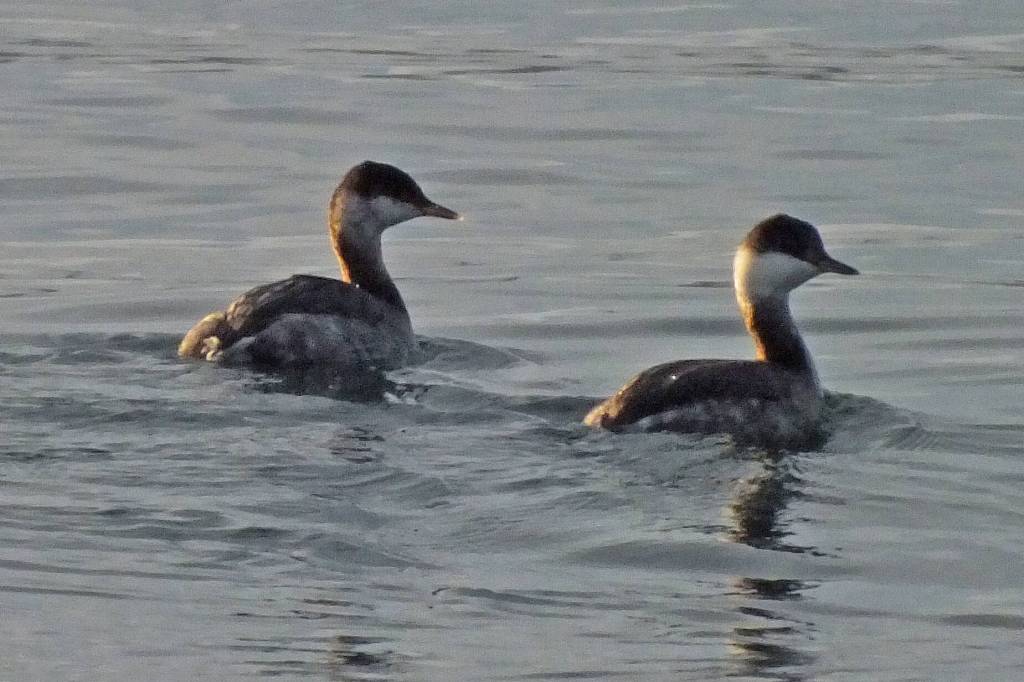
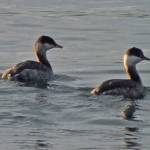
One morning during the December holidays, there was something strange making bubbles and repeated turmoil over near the Auke Rec beach, and I (along with some birders) watched that patch for quite a while, speculating about the perpetrator. What a surprise when two scuba divers popped up above the surface. This visit also produced a variety of wildlife: a common loon, some buffleheads and harlequin ducks, two species of goldeneyes, a fleet of white-winged scoters, and several horned grebes.
Grebes are interesting in several ways. Like loons, they are very aquatic, but instead of having big webbed feet their separate toes are lobed. I’d love to learn how the hydraulics differ and what difference that might make for diving and swimming. We sometimes see the red-necked grebe, but more often we see the smaller horned grebes. They breed on marshes and vegetated ponds in northwestern North America and over a stretch of Eurasia, wintering along the coasts. They can’t walk well on land, because their legs are set so far back on the body, but they are accomplished swimmers and divers, using their legs alternately or together. They can flex their legs way forward and out to the side, which must help with steering.
On the nesting areas, horned grebes are fiercely territorial, defending their space from others of the same species as well as other small birds. Before building a nest, a pair may construct a platform of vegetation that is used for copulation, especially if that pair has not used that place in previous years. Nests are built in young emergent vegetation such as sedges, grasses, and small willows with open water not far away. Both male and female build a nest, collecting pieces of vegetation into a (usually) floating pile, often attached to nearby living vegetation. Both sexes incubate the five to seven eggs for over three weeks, sometimes adding nesting material during that time. When leaving the nest for a spell of foraging, they often cover the eggs with some bits of vegetation. Newly hatched chicks are downy and can swim, commonly leaving the nest almost immediately, sometimes riding on their parents’ backs. They are fed by the parents for about two weeks and become independent when they are about three weeks old; they begin to fly a few weeks later and may stay with the family for a while. They mature when they are a year old.
A few days later, I went back out there with a friend for a profitable visit. There were some goldeneyes, harlequin ducks, a flock of white-winged scoters with one or two surf scoters in the group, and a gang of crows foraging in the rocks at the tip of the point. Some of the crows were plucking up shellfish and dropping them on the rocks with an audible click. Presumably these crows followed up the drop with a look for broken shells and an easy meal, but it was hard to tell exactly where the shell ended up.
Just off the end on the point, we saw some sea lions. We heard them while we were still way back in the trees, and when we moved out into the open, we could see that they were bellowing their displeasure at a dog on the shoreline. The dog was soon pulled away, so the lions settled down and got busy foraging. They stayed in that area for a long time, making many dives, so the foraging must have been good. Some of the dives were preceded by a raised body and vigorously flexed flippers, perhaps leading to a deeper dive. They surfaced every so often, of course, but it was hard to count them, in part because they didn’t all surface at the same time so we could count heads. Exercising our patience, we finally decided that there were at least five of them.
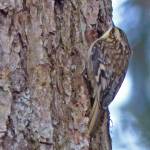
The last days of December are so short that I needed something cheery, and some good observations were available. Out on the dike trail, I stopped to chat with a Real Birder, and remarked that there were lots of reports of pygmy owls out there but I had yet to see one. The birder pointed over my head and behind me and said “Look there.” I spun around and, indeed, there was a pygmy owl perched high in the top of a tall tree! Bit farther on the trail, some friendly folks told me that I’d come upon some small birds of interest just ahead. Indeed, I soon spotted two brown creepers foraging actively, each one on its own tree. Starting at the bottom of the trunk, they hitched their way upward, probing in the bark crevices. They move both legs at the same time, hopping up, and use the tail as a prop when they land, ready for the next hop. The next day, on the DZ trail, I found my own brown creepers, foraging on their way up, then flitting on to start at the bottom of the next tree trunk. I hadn’t seen this species for quite a while, so this was a treat. All of that made the week more cheerful.
• Mary F. Willson is a retired professor of ecology. “On The Trails” appears every Wednesday in the Juneau Empire.