Truth, fiction and the certainty in between
Published 5:12 pm Sunday, May 21, 2017
“These are clothes that absolutely refuse to flatter you,” David Sedaris wrote in the New Yorker last year. He referred to that article when he presented himself to a Juneau audience last Sunday night. The award-winning writer was wearing a sports jacket and shorts that he explained had been made from two pairs of shorts sewn together. “And the scary thing is,” he added, “I think I look amazing.”
The joke would be on Sedaris if he really believed he looked great. But his “scary” stage act may also have been intended as an “emperor has no clothes jab” at President Donald Trump.
A humorist known for his mix of self-deprecating humor and profound social critiques, it’s sometimes hard to know when Sedaris wants his audience to take him seriously. On this occasion, his attire suggested not until he began reading his essay titled “A Number of Reasons I’ve Been Depressed Lately.” It chronicles his impressions of Donald Trump’s improbable rise to the presidency.
Like Sedaris’ on-stage appearance, Trump has often boasted about his successes despite the evidence. He’s repeatedly overstated the margin of his electoral college victory and exaggerated the crowd size at his inauguration ceremony. And just two days after he fired his National Security Advisor he referred to his administration as “one of the smoothest running machines in the history of machines.”
Things have gotten much worse for the president the past two weeks. He fired Federal Bureau of Investigation Director James Comey in the middle of an investigation into possible ties between his campaign and Russian officials. He followed with three contradictory explanations for that decision. After further unsubstantiated revelations, his Deputy Attorney General appointed a Special Counsel to pick up where Comey left off.
Trump is calling the investigation a witch hunt based on fake news. And there’s more than a few liberals and anti-Trump conservatives inadvertently making that argument for him. For instance, Senator Ed Markey (D-MA) told CNN that a grand jury in New York had been convened to consider evidence in the Russian investigation. His staff picked up that fake story from Louise Mensch’s blog and the Palmer Report, both of which promote conspiracy theories rivaling Alex Jones’ Infowars.
How do we effectively navigate between fact and fiction in the modern era of fast and free internet news? The answer may straddle the in-between where the only certainty is we don’t know the entire story.
Sedaris’ writing is relevant to this question. As a longtime regular on National Public Radio and frequent contributor to the New Yorker, he’s often referred to as “one of the most observant writers addressing the human condition today.” But his writings, much of which can be traced back to a diary he began keeping in 1977, have been challenged as unworthy of their nonfiction label.
Alex Heard is the editorial director of Outside magazine and longtime fan of Sedaris’ work. However, after reading his book titled “Naked” in 2007, he felt the need to question the truthfulness of some stories. “Sedaris has never denied putting words in people’s mouths,” Heard wrote, then referred his readers to a New Orleans Times-Picayune article in which Sedaris admitted to exaggerating “wildly, for the sake of the story.”
Eventually, NPR began labeling his autobiographically-based stories as fiction. But they’re still being sold from the nonfiction shelves. They’ll probably remain there partly because there isn’t an autobiography that’s ever been written without some embellishments of personal observations and recollections.
More to the point, even the most disputed unauthorized biographies are sequestered to the nonfiction section of libraries. They’re fact or fiction depending on the reader. And that suggests the writers we follow reveal more about us than the biographers or their subjects.
In these politically polarized times, the same conclusion applies to the news sources we trust. We’ve become a society where our confirmation biases are defining what New York Times columnist Paul Krugman called “North Korea levels of alternative reality.”
Which brings me back to the lesson of Sedaris’ stories. What matters more than whether they’re truth or fabrication is how we see ourselves in his acute observations of a society that’s losing its tolerance for political news that isn’t absolutely black and white.
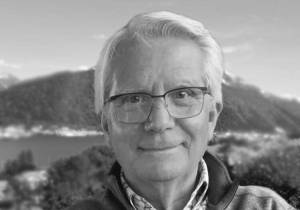
• Rich Moniak is a Juneau resident and retired civil engineer with more than 25 years of experience working in the public sector.