OPINION: Community safety not just another priority for Juneau — it’s the priority
Published 2:30 pm Wednesday, June 24, 2026
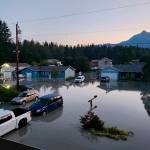

With so many issues facing our community, it’s easy to lose sight of the one that matters the most.
Community growth, a stronger economy, affordability, housing, recreational opportunities, tourism impacts, and more, all seize the attention of our Assembly and electorate, all of whom express a diversity of opinions.
But community safety is the one issue that overshadows the rest because it either directly or indirectly affects all the others.
For the majority of Juneau residents, it’s the one issue on which they can agree.
Broad support over the years for police and fire services is evident with voter-approved funding for a variety of budgetary needs including equipment acquisitions and upgrades.
Regardless of one’s individual economic circumstances, safety almost always comes first.
And so it should be with our community.
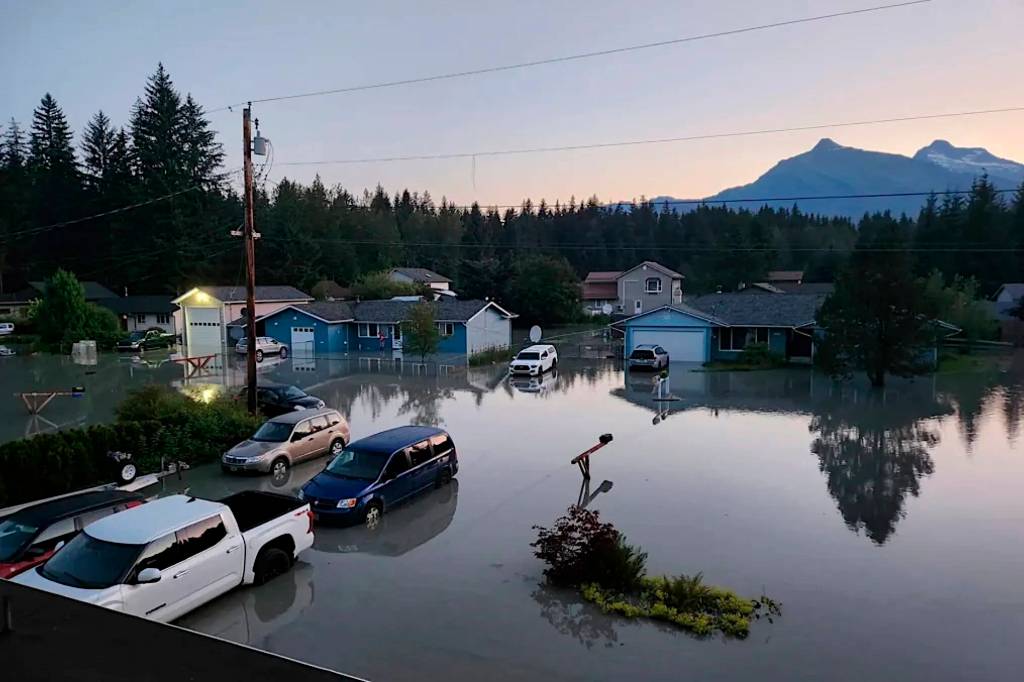
The No. 1 safety issue facing Juneau today is the threat of continued intensified flooding in the Mendenhall Valley. It’s pointless to spend millions on new housing if we can’t protect our existing housing stock. Flood-related damage and destruction will drive up current housing prices and negatively impact affordability.
The total area at risk includes thousands of homes, businesses, and public structures, including bridges, schools, and a sewage treatment plant. The potential for widespread damage, and even loss of life, is high and growing. Unaddressed, the economic impact would be catastrophic for the entire community, not just Valley residents.
To their credit, the Juneau Assembly, our federal delegation and US Army Corps of Engineers (USACE), have expended an enormous amount of time and financial resources trying to resolve this issue. The effort, so far, though, has focused mostly on a short-term solution. The installation of HESCO barriers along the Mendenhall River averted serious flooding last year, but, after failing in some locations, it was obvious that they cannot be 100% effective.
HESCO barriers have a limited life span and require millions of dollars in annual maintenance. The HESCO barriers have always been, up to now, viewed as a temporary fix while a longer-term solution is being developed.
Meanwhile, USACE has pulled back from their original preferred long-term lake tap solution which involved drilling a tunnel through Bullard Mountain and draining the basin that is causing the flooding. Instead, USACE is drafting a GLOF Technical Study due for internal review in August but with no projected timeline for public outreach or finalization. It includes an analysis of a wide range of long-term solutions, including a flood-control dam/levee, steel-pile walls, a lake tap, and even relocating structures.
Currently, no one really knows how long it will take USACE to analyze, select, design and construct an enduring solution. In the interim, USACE is proposing some “mid-term” solutions that involve continued use of HESCO barriers. Their reasoning is that it could take 10 years or longer to implement anything permanent.
The problem confronting Juneau is that all of this takes time. Government moves slowly despite its best efforts. Time is our enemy. Due to the uncertainty surrounding an enduring solution, it is difficult to sell a home in the valley, in some cases, impossible. Insurance coverage is problematic, and some homeowners are wary of investing in repairs from the last flood.
Living under this threat for 10 years or longer will be devastating for businesses, homeowners and our community, even without severe flooding.
Concerned community citizens have formed a grassroots organization, Juneau Flood Solution Advocates (JFSA) to advance the Bullard Mountain Tunnel project that would use local resources and can be accomplished in a shorter time frame. The construction of a tunnel would use existing mining technology with the expertise of the local mining community.
To make this possible, enabling federal legislation is needed for emergency funding, expedited permitting, and a public-private partnership authorization. According to mining experts, a tunnel could be constructed in less than two years at one-third the cost than previously estimated.
The lake tap solution is the best alternative because it removes the flood danger at its source and saves millions of dollars required to continually maintain and rebuild temporary barriers that ultimately, may fail.
The bureaucracy, though well-intentioned, shouldn’t make Juneau settle for a band-aid, when a solution is at hand.
Win Gruening retired as the senior vice-president in charge of business banking for Key Bank in 2012. He was born and raised in Juneau and graduated from the U.S. Air Force Academy in 1970. He is active in community affairs as a 30-plus-year member of Juneau Downtown Rotary Club and has been involved in various local and statewide organizations.