Woven Peoples and Places: Remembering the 2nd Annual Tongass Guide Academy
Published 9:20 am Monday, May 4, 2026
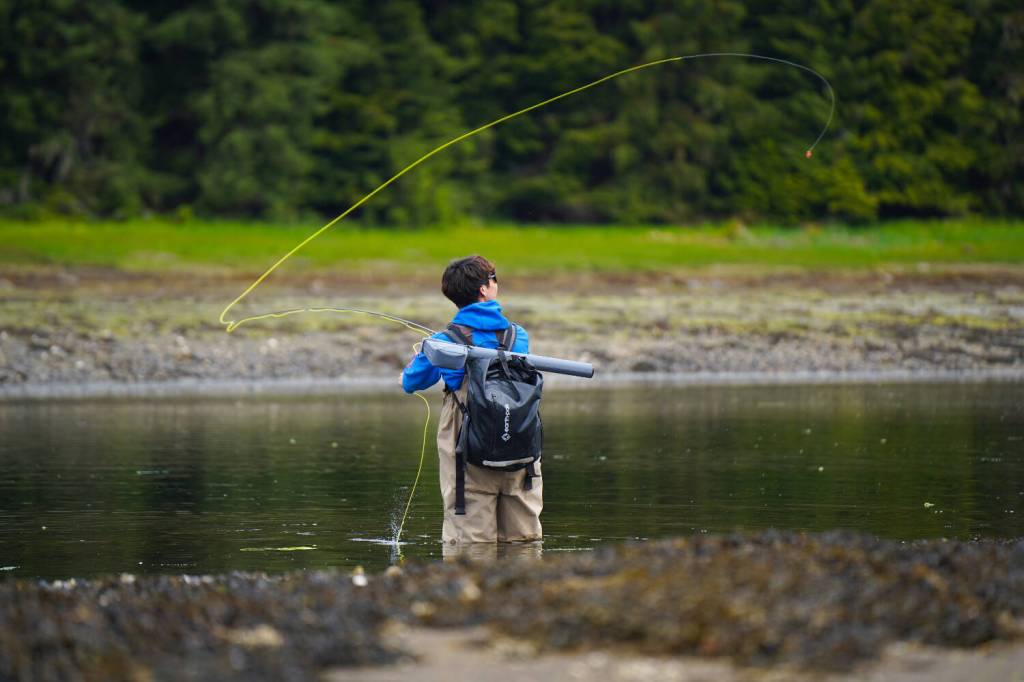
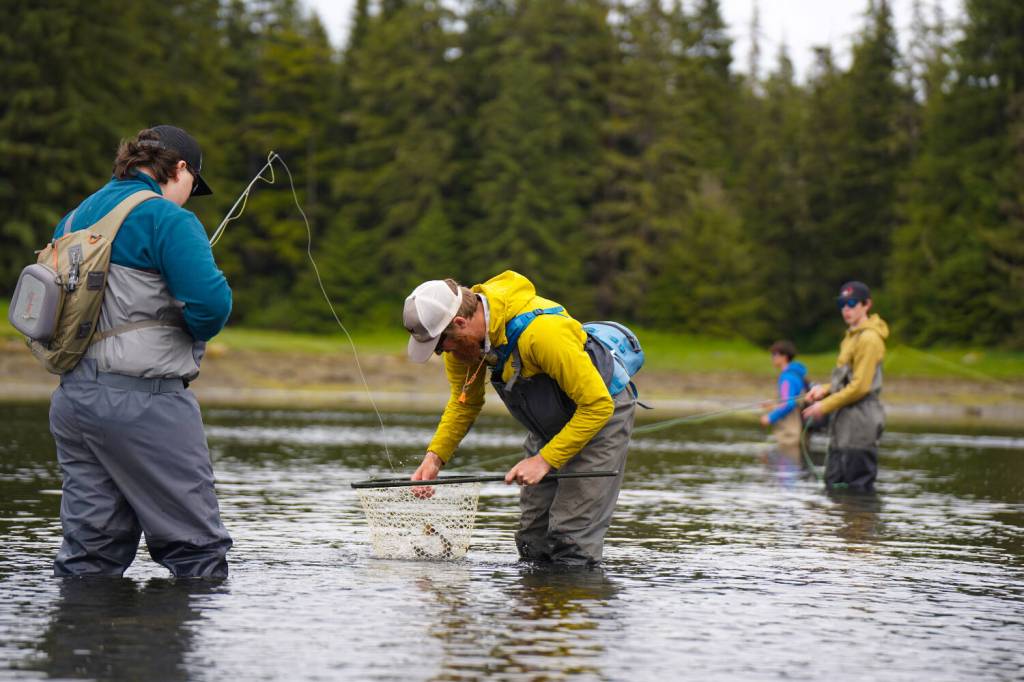

The line whisps through the afternoon air as Justice, a Tongass Guide Academy student, watches the fly he tied hours ago settle on the glassy surface of Mitchell Bay. Beside him are his classmates, cousins and friends. Feeling the weight of the rod balanced in his hand, he takes a deep breath of salt and spruce pollen mingling in the air, the same scents that greeted him each summer before, and he thinks about his younger siblings or cousins, who might stand here next season.
Suddenly, his line zips taut, and a silver fish leaps. In that moment between fisher and fish, he understands what his instructors meant about regenerative tourism: visitors won’t just pass through Angoon, they’ll carry home stories about place and culture, and move differently through the world. When it’s reeled in, he holds the largest trout he has seen for a moment at the water’s surface, careful not to handle it too long. Already, he’s imagining himself as a guide.
The 2025 Tongass Guide Academy, held in Angoon at Favorite Bay Lodge from June 15–21, brought together seven high school students from across Southeast Alaska for a culturally grounded, place-based learning experience. Designed to be a beginner-friendly program, the academy supported student growth in both technical and academic areas, serving as a stepping stone for students to explore career pathways in natural resources, recreation and guiding, while simultaneously gaining dual-credit with University of Alaska Southeast (UAS) and essential employability skills. Students learned not only the physical skills of fly fishing and guiding, but also how to think critically about tourism’s impacts on small coastal communities, and how to shape its future from within.
Over the course of the week, Tongass Guide Academy students learned about tying flies, flycasting, fishing, and skills in work readiness and customer service, while exploring the cultural, political, and ecological dimensions of tourism in coastal Alaska. The curriculum combined practical skill-building with reflective writing, digital storytelling, and geospatial technology, culminating in student-created StoryMap entries, a web-based GIS tool that combines interactive maps, multimedia content, and text to create, share and publish digital stories that document their learning.
At its core, the academy addresses regional workforce needs and shapes the future of Southeast Alaska’s tourism economy by preparing Alaska Native and local youth to be leaders in that space. With strong partnerships across Tribal, educational, nonprofit and private sectors, and core funding provided by the Sustainable Southeast Partnership (SSP) and Sealaska Heritage Institute (SHI), the program reflects a shared commitment to building a culturally informed, locallyrooted workforce.
How the academy came to be
The Bristol Bay Fly Fishing and Guide Academy caught the attention of other Alaska regions searching for the same education and employment opportunities for their youth. Within the last 15 years of operation, the Bristol Bay academies produced 180+ graduates, with nearly 15% now holding full-time seasonal employment. In 2024, Kootznoowoo, Inc., Angoon’s Alaska Native Village Corporation, brought that proven model to Southeast Alaska, partnering with Trout Unlimited to launch the Tongass Fly Fishing Guide Academy.
Rooted in their commitment to both economic development and traditional values, Kootznoowoo implemented the academy to ensure Angoon residents have the training needed to pursue sustainable employment that honors ancestral lands and waters.
Instructors represented diverse fields of expertise. Kevin Maier, a UAS professor, co-led sessions on fly fishing, environmental studies and digital storytelling. Matt Boline, Trout Unlimited’s Southeast Alaska community engagement manager, focused on fly fishing, conservation, employability skills and industry insights, while Anna Petersen, the Alaska education coordinator for Trout Unlimited, co-facilitated career and communication skills. Matt Kookesh of Kootznoowoo Inc. led sessions on cultural history and traditional ecological knowledge, helping students identify how to intentionally center ancestral knowledge, harvesting practices, and stewardship ethics in fly fishing and guiding.
Together, this team equipped students with essential technical skills, such as fly tying, various casting techniques, understanding fishing regulations and tide tables, fish biology, and habitat awareness, alongside critical soft skills like teamwork, customer service, time management, public speaking and effectively sharing and integrating cultural and ecological knowledge.
Guides have a role in the future of regenerative tourism
Amid the distant hum of boat motors, the academy students, despite being full of anticipation to participate in the ongoing local King Salmon Derby, studied from 9 a.m. well into the evening so they had time to fish the morning tides. One day ended with a film screening of Cruise Boom, a documentary produced by Sitka videographer Ellen Frankenstein. Cruise Boom shows the myriad positive and negative impacts the burgeoning cruise ship presence is having on the rural community of Sitka.
A primary aspect of the Tongass Guide Academy asked students to think critically about tourism opportunities and impacts in small coastal communities, exploring how curated experiences could address the challenges of a rapidly growing sector. In doing so, the program encourages a more holistic and regenerative approach to tourism.
A regenerative tourism approach centers the needs and values of the region and community alongside the interests of the visitors.
It seeks to improve ecosystems, elevate local economies, and promote meaningful visitor experiences guided by locals who know the land, history, and culture.
With a growing contingent of visitors eager to travel with a lighter footprint to protect the vitality of choice destinations for future generations, this approach to development is a natural fit for Southeast Alaska.
Inherently, fly fish guiding integrates sustainability ethics through a commitment to catch-and-release fishing while advocating for habitat protection and offering ecological education. Additionally, respectful guides use barbless hooks, minimize handling time, and follow fishing regulations. Through this work and practice, they foster environmental stewardship while encouraging a love for the waterways that support their livelihood.
Angoon’s tourism future
As the community develops tourism operations, Angoon plans to expand offerings for small cruise ships in the future, including educational walking tours, freshwater fly fishing, bear viewing, saltwater fishing, and tours of important cultural sites and activities.
Simultaneously, the Kootznoowoo Stewardship Crew, a community-based restoration initiative that partners locally and regionally, began habitat restoration projects in Cube Cove. Their work has included removing incidental barriers to fish passage, such as broken or debris-filled road culverts, allowing trout and salmon to reach the full range of their habitat. This will positively impact local fish populations and residents, while expanding fish guiding opportunities in the future.
The Tongass Guide Academy encouraged rural and Indigenous youth to not only reflect on the ways a growing tourism industry could shape their home communities, but also empowered them to recognize the roles they hold as leaders in that development.
The Tongass Guide Academy was a collaborative effort led by the University of Alaska Southeast, Kootznoowoo Inc., and Trout Unlimited, with key support from regional and community partners, including Spruce Root, Sealaska Heritage Institute, Bear Creek Outfitters, the Alaska Youth Stewards, Alaska Fly Fishing Goods, Orvis, U.S. Forest Service and Favorite Bay Lodge.
Just last month, the third guide academy in Southeast Alaska happened in Yakutat for grades 6-12, including a few students from Hoonah. Sealaska Heritage Institute and Central Council of the Tlingit & Haida Indian Tribes of Alaska are exploring launching one or two more academies over the next year. Sealaska Heritage Institute now hosts the SSP supported monthly workforce development and career and technical education calls. You can learn more about them at sustainablesoutheast.net.
Shaelene Grace Moler serves as the regional communications catalyst for the Sustainable Southeast Partnership hosted by Spruce Root. She grew up in Kake, but now lives in Sitka.