On the Trails: Bird nests: Variations on a theme
Published 10:30 pm Monday, July 21, 2025
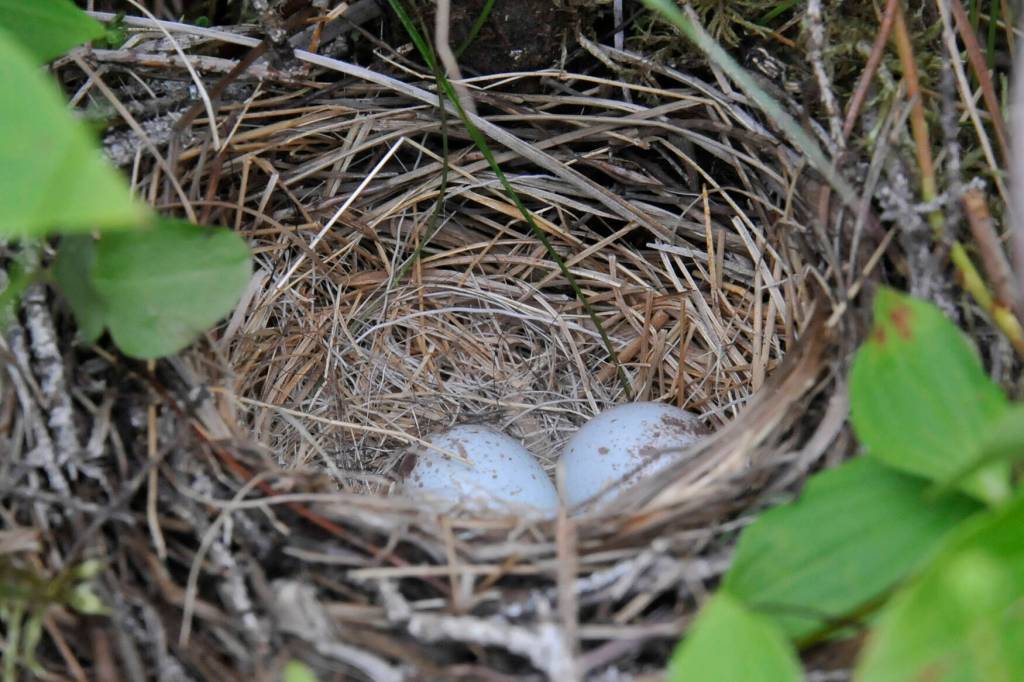
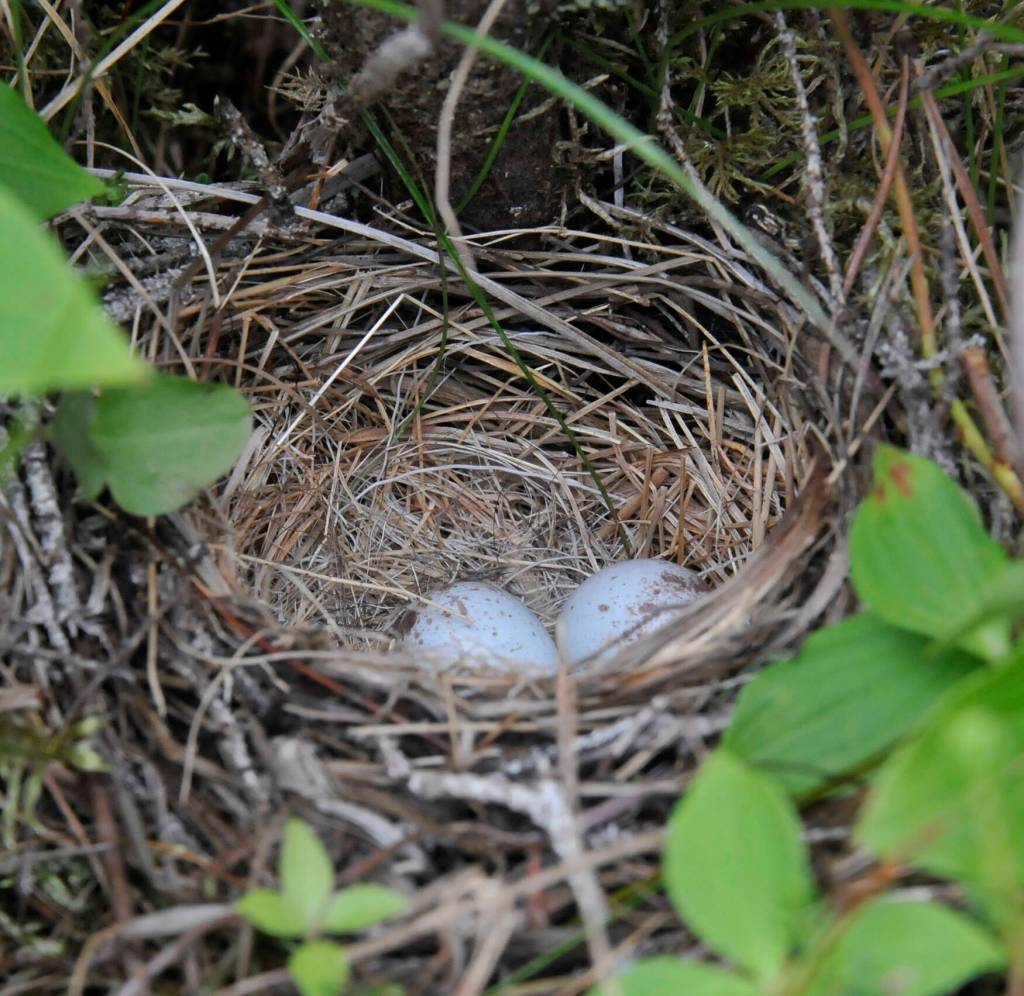
Among the thousands of bird species there is great variation in nesting habits: Some nest in burrows, or tree cavities and nest boxes, or mounds of decaying vegetation and so on. Most birds build some sort of nest for their eggs, ranging from large platforms of big sticks to shallow scrapes in the sand, although a few manage quite well without any nest at all. For example: The white tern of the southern oceans often lays an egg right on a tree branch; emperor and king penguins hold their eggs on their feet, up off the ice; common murres of northern oceans lay eggs directly on rock ledges.
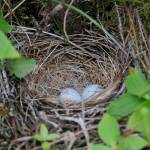
Here, I focus on the nests of small birds, mostly songbirds such as blackbirds, sparrows and warblers but including hummingbirds. Most small birds construct their nests of plant fibers (grass, bark strips, fine twigs, etc.) woven into a cup or basket, often lined with some soft material such as down or fur. Some such nests are placed in cavities but most of these are nests out in the open. Some species produce extraordinary variations on that theme: Orioles in North America suspend a bag-like nest that may be 6 inches long. The oropendolas and caciques of South America make the basket into a long, hanging bag; in some cases, the bag may be several feet long. Some of the Old World weaver birds make a small, more complex bag with the opening at the bottom.
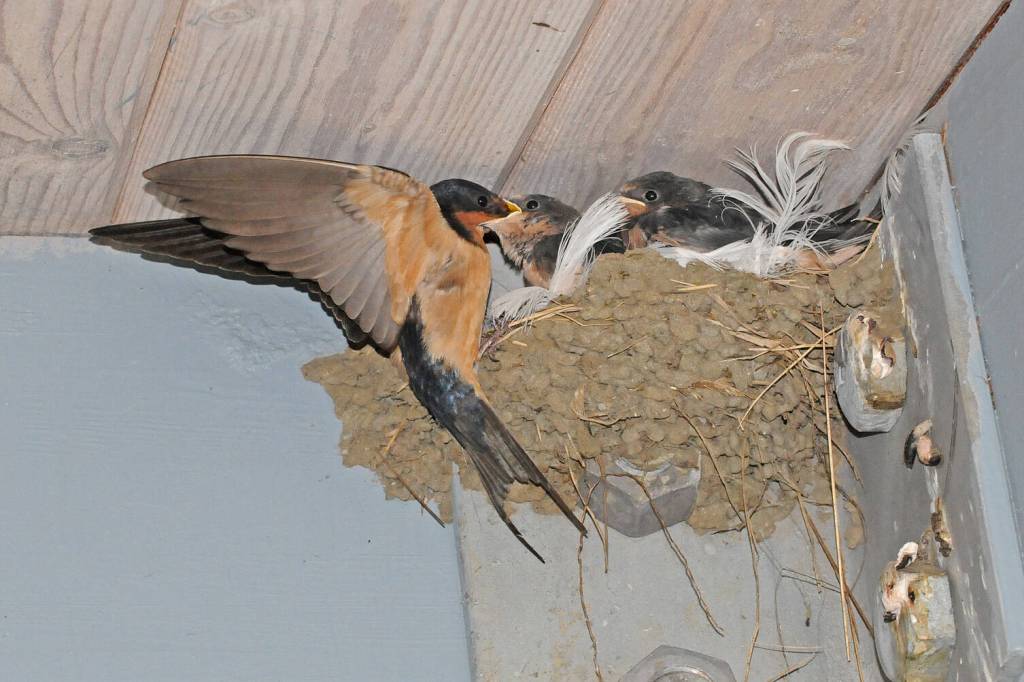
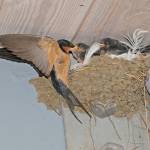
Within the range of more ordinary cup-like woven nests, there is a lot of variation in construction, using different materials. In some cases, a layer of mud is incorporated into the structure. American robins and red-winged blackbirds, for example, commonly line the woven cup with mud, sometimes a lot of it in the case of robins. Hermit thrushes add mud too, but reportedly only in eastern U.S., not in the west. Why? The function of the mud is not clear. Barn swallows and cliff swallows have forsaken the woven cup and instead make the cups of mud, instead of woven fibers. They gather pellets of mud and commonly paste them to a vertical wall in a cup-like form.
Moss is a popular ingredient of many nests. American dippers typically make a big outer ball of moss with a side opening, with a woven basket inside (but they can make do without the moss if necessary). Moss is usually a big part of a hermit thrush nest. Many birds including chickadees, nuthatches, and phoebes incorporate bits of moss in the walls of the nest. It’s a handy material but does it have any special utility? Such as perhaps helping hold other pieces together? Or adding thickness to nest walls and improving insulation?
Spider silk has good tensile strength and it’s sticky, finding a use in the nests of several bird species. Golden-crowned kinglets build a cup-shaped hammock suspended from twigs by spider silk and use the silk to bind together some moss, plant down and fibers, and hair for the outer wall of the nest. Blue-gray gnatcatchers use spider silk or the silk of caterpillars to anchor the nest to twigs. Hummingbirds use it to bind together some moss with some plant and bird down for the basic cup, and to attach decorative bits of lichen and bark to the exterior.
Another variation is the addition of aromatic green vegetation to a nearly completed nest, a habit better known among cavity-nesters than open-nesters; for example, starlings and Eurasian blue tits do so. A popular hypothesis for explaining this behavior is that the chemistry of that vegetation somehow protects the nestings from bacteria or ectoparasites and may increase nestling survival. Another idea is that chicks somehow might benefit directly by breathing the aromas. But several studies have found varied results, so more studies are needed. And why is the habit best developed among cavity-nesters?
Some species of wheatear carry stones to a nest site. In particular, black wheatears in Europe and north Africa have attracted a lot of attention for their stone-carrying behavior. Males lug relatively large stones toward a nest site, probably as a sexual display. The stones may contribute to a platform for the cup-nest and the females carry smaller stones for that platform. The relative contribution of male and female to the platform seems to vary, for unknown reasons, and the function of those stones in the platform is not clear. More puzzlement…
• Mary F. Willson is a retired professor of ecology. “On The Trails” appears every Wednesday in the Juneau Empire.