OPINION: Trump’s crypto salesman
Published 5:30 am Saturday, June 6, 2026

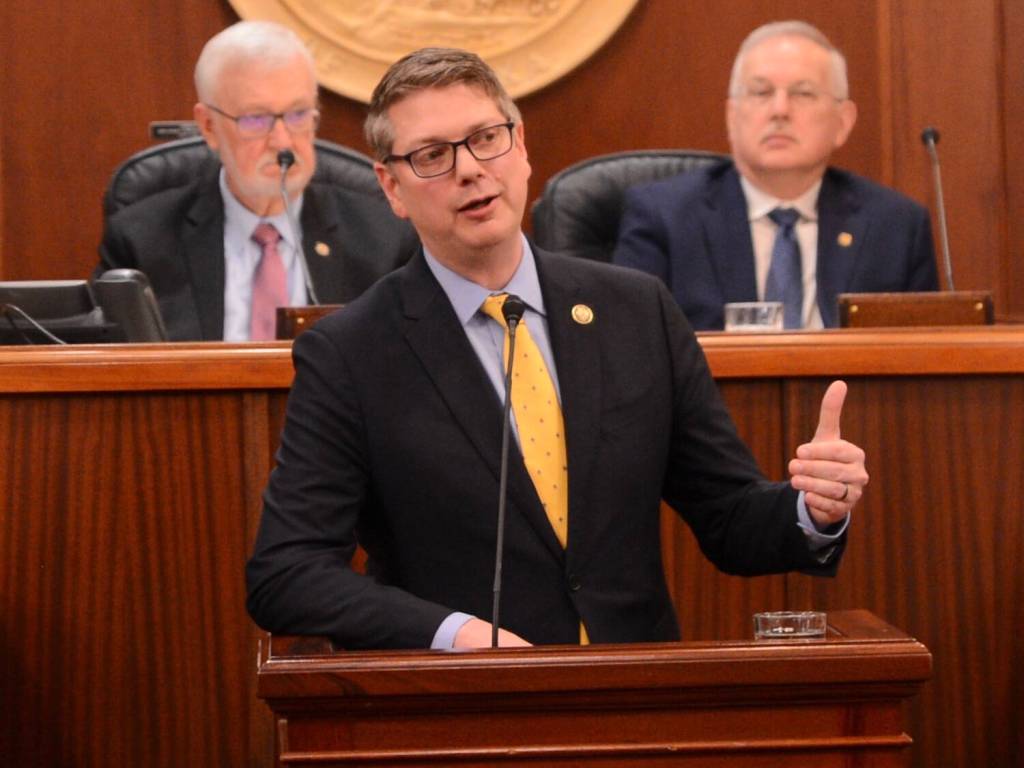


While Alaska struggles with rising costs, economic uncertainty, and the fallout from Donald Trump’s policies, Representative Nick Begich is spending his political capital promoting cryptocurrency.
That fact alone should alarm Alaskans.
Families are paying more for groceries, housing, energy, and transportation. Fishermen facegrowing uncertainty. Communities need infrastructure, affordable housing, and economic stability. Yet instead of concentrating on those challenges, Begich has devoted time and legislative effort to the American Reserve Modernization Act, a proposal designed to elevate cryptocurrency within federal policy.
Why pursue a measure that offers little tangible benefit to Alaska while the state faces far more urgent concerns? Why spend political capital on digital assets instead of lowering costs, strengthening communities, or addressing the economic pressures squeezing Alaskan families?Most important, why champion an industry increasingly intertwined with Donald Trump’s financial interests?
Trump’s transformation on cryptocurrency raises legitimate concerns. He once dismissed digital currencies as dangerous and lacking value. Today he enthusiastically promotes them. The shift coincided with the growth of cryptocurrency ventures connected to his family and political orbit, ventures that have attracted billions of foreign dollars in investment and opened new avenues for influence, access, and profit.
Begich has become a reliable advocate for that agenda, promoting Trump’s priorities even as Alaskans grapple with the consequences of Trump’s broader economic policies. Tariffs raise costs. Uncertainty discourages investment. Volatility complicates planning. Families and businesses absorb the burden.
Supporters portray cryptocurrency as innovation, but innovation is measured by practical value, not publicity campaigns or soaring valuations. Cryptocurrency does not lower grocery bills, expand housing supply, repair roads, strengthen fisheries, or reduce energy costs. For most Alaskans, it solves no pressing problem.
Unlike gold, silver, or platinum, cryptocurrency has no widely recognized industrial value that helps establish a floor beneath its price. Precious metals are scarce, but they are also used in electronics, manufacturing, medicine, energy systems, and countless other applications. Their value is continuously tested in real markets where businesses need them for practical purposes. The U.S. dollar, meanwhile, is backed by the full faith and credit of the United States government and supported by the world’s largest economy. Cryptocurrency rests on neither foundation. Its value depends largely on collective belief, artificial scarcity, and the expectation that someone else will pay more for it later. Strip away the hype, and little remains to anchor its worth to the real economy.
Wealth flows from late entrants to early adopters, from smaller investors to larger holders, from ordinary participants to insiders positioned near the top of the market.
Buy now. Trust the code. Trust the crowd.
When prices rise, promoters celebrate their vision. When prices collapse, they suddenly speak of patience, long horizons, and market cycles. That is not investment leadership. It is salesmanship.
The risks extend beyond volatility. Cryptocurrency has become a favored vehicle for ransomware operators, fraudsters, sanctions evaders, money launderers, and other actors who benefit from limited transparency and rapid transactions. The less visible the money trail becomes, the easier misconduct becomes. The easier misconduct becomes, the harder accountability becomes.
Members of Congress should be confronting those risks, not helping sanitize them.
When Begich lends his office to cryptocurrency promotion, he is doing more than supporting a technology. He is lending credibility to an industry whose reputation remains deeply troubled. He is helping normalize opacity, legitimize speculation, and blur the line between public service and private promotion.
The costs are not merely financial. Cryptocurrency mining and the data centers supporting it consume enormous quantities of electricity and water while placing additional demands on local infrastructure. Communities often inherit the burdens while investors capture the rewards. Promises of prosperity too often produce higher utility demands, greater resource consumption, and benefits that flow elsewhere.
Private profits. Public costs. Political protection.
That formula has become increasingly familiar in Washington.
Trump’s embrace of cryptocurrency gives the industry something it desperately needs: political legitimacy. Begich helps provide it. Together they present speculation as strategy, promotion as policy, and private interests as public priorities.
Alaska deserves better.
Alaskans did not send Nick Begich to Washington to market Trump’s latest business venture. They sent him to fight for Alaska. As families struggle with rising costs and economic uncertainty, every hour spent advancing a crypto agenda that benefits Trump’s orbit is an hour not spent addressing Alaska’s needs. A representative who mistakes a sales pitch for public service risks discovering that voters know the difference.
Van Abbott is a 36-year resident of Alaska having worked in Ketchikan, Fairbanks and Anchorage as a municipal, financial and utility manager. He resides in Ketchikan and is currently a freelance writer. He served as a Peace Corps teacher in the 1960s. See his website: politicalwinds.org.