
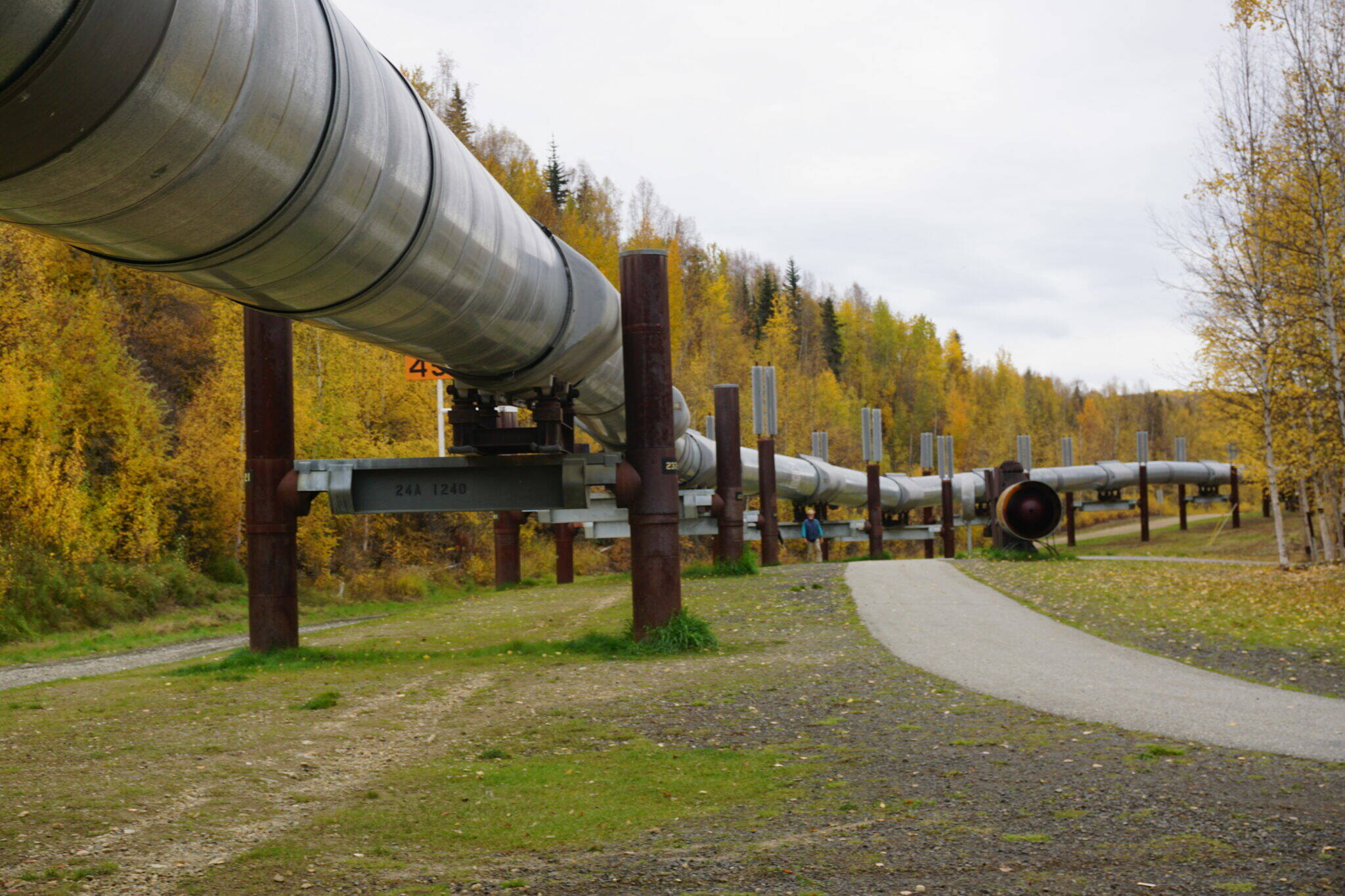
Gov. Mike Dunleavy’s annual energy conference included visits from three of the Trump administration’s top officials, but it didn’t include any major developments on the financing of the proposed 800-mile trans-Alaska natural gas pipeline.
U.S. Interior Secretary Doug Burgum, U.S. Energy Secretary Chris Wright, and Lee Zeldin, administrator of the U.S. Environmental Protection Agency, traveled to the North Slope and to Anchorage this week during a visit that coincided with the fourth annual Alaska Sustainable Energy Conference.
Despite the conference’s name, oil and gas development took top billing, with all three officials saying that they hope to increase oil and gas production in Alaska under the direction of President Donald Trump.
“President Trump wants to see the flows through (the trans-Alaska Pipeline System) doubled,” Wright said during a speech on the North Slope this week. “The oil is here. The discoveries are here. If we free Alaska and the people here (from regulation), we’re going to more than double the oil flow through the pipeline and build the big, beautiful twin, the natural gas pipeline, from the North Slope.”
Despite the week’s enthusiasm for the Alaska Liquefied Natural Gas pipeline, better known as AKLNG, it still isn’t clear who will pay for it to get built.
The natural gas pipeline and associated processing plants are expected to cost $38.7 billion, but that estimate was published in 2020, and it predates inflation-driven and tariff-driven cost increases under the Biden and Trump presidencies.
Energy developer Glenfarne, which is pursuing AKLNG on behalf of the state, announced this week that 50 firms had formally expressed interest in AKLNG contracts worth more than $115 billion.
Those contracts include possible supply agreements — people interested in selling things to AKLNG for construction — as well as possible investors.
An expression of interest isn’t a firm commitment, and no investors said this week that they will back the project. Officials from Japan, Korea and other nations — possible customers for Alaska gas — visited the state this week but made no announcements.
Taiwan’s state-run energy company, CPC, signed a non-binding agreement in March stating that it would buy liquefied natural gas from Alaska and invest in the project.
As currently envisioned, AKLNG would be constructed in two phases — the first would be a pipeline from the North Slope to Fairbanks and Southcentral Alaska for domestic, in-Alaska gas customers.
The second phase would involve facilities and equipment needed to export gas overseas.
Glenfarne is expected to announce a go/no-go final investment decision on the first phase by the end of the year.
Speaking to NBC reporters in Prudhoe Bay, Burgum said that the U.S. military could be a key customer for the first phase of the project.
“They’re ready to sign on to take an offtake agreement from this pipeline to get gas to our super strategic, important bases across Alaska,” he said on CNBC.
Actually signing a customer agreement could make financing easier to come by.
“If you get the commercial offtakers for the gas, financing is pretty straightforward,” Wright told CNBC.
Legislation passed by Congress and signed by President Joe Biden allows $30 billion in federally guaranteed loans for the project.
This week, Wright told reporters in Anchorage that the U.S. Energy Department could make additional loans available.
“They’re going to get details of the project to come together, but I think it’s quite likely that you will see loan guarantees provided by the loan program office at the Department of Energy to build the pipeline part of that project,” he said.
Under the Biden administration, the DOE’s Loan Programs Office grew into a major financier for green-energy projects. The Trump Administration has halted most of that work, and Wright suggested that it could be redirected to the natural gas pipeline.
• James Brooks is a longtime Alaska reporter, having previously worked at the Anchorage Daily News, Juneau Empire, Kodiak Mirror and Fairbanks Daily News-Miner. This article originally appeared online at alaskabeacon.com. Alaska Beacon, an affiliate of States Newsroom, is an independent, nonpartisan news organization focused on connecting Alaskans to their state government.
