
A $2,272 Permanent Fund Dividend, $680 per-student increase in education funding, a small surplus to cover uncertain expenses and various provisions such as banning Medicaid-funded elective abortions are in the revised proposed budget for next year released by the state House Finance Committee on Friday.
The proposed spending plan for the fiscal year beginning July 1 is in some ways a repeat of last year’s budget battle at the Alaska State Capitol, most notably a lower PFD than Gov. Mike Dunleavy is seeking and higher than what the Senate is proposing. The dividend funding will drastically shape how much money is available for other major issue areas such as education, and if the state will incur a deficit that requires the economically and politically precarious step of tapping reserve funds.
But there also are significant new elements, including the House budget boosting the PFD by $444 by abandoning an agreement last year by lawmakers that if oil prices are higher than expected then half of the surplus will go toward dividends and half deposited in the budget reserve. The state Department of Revenue projects an extra $222 for PFDs this year under the agreement, but the House budget directs all funds to the dividend.
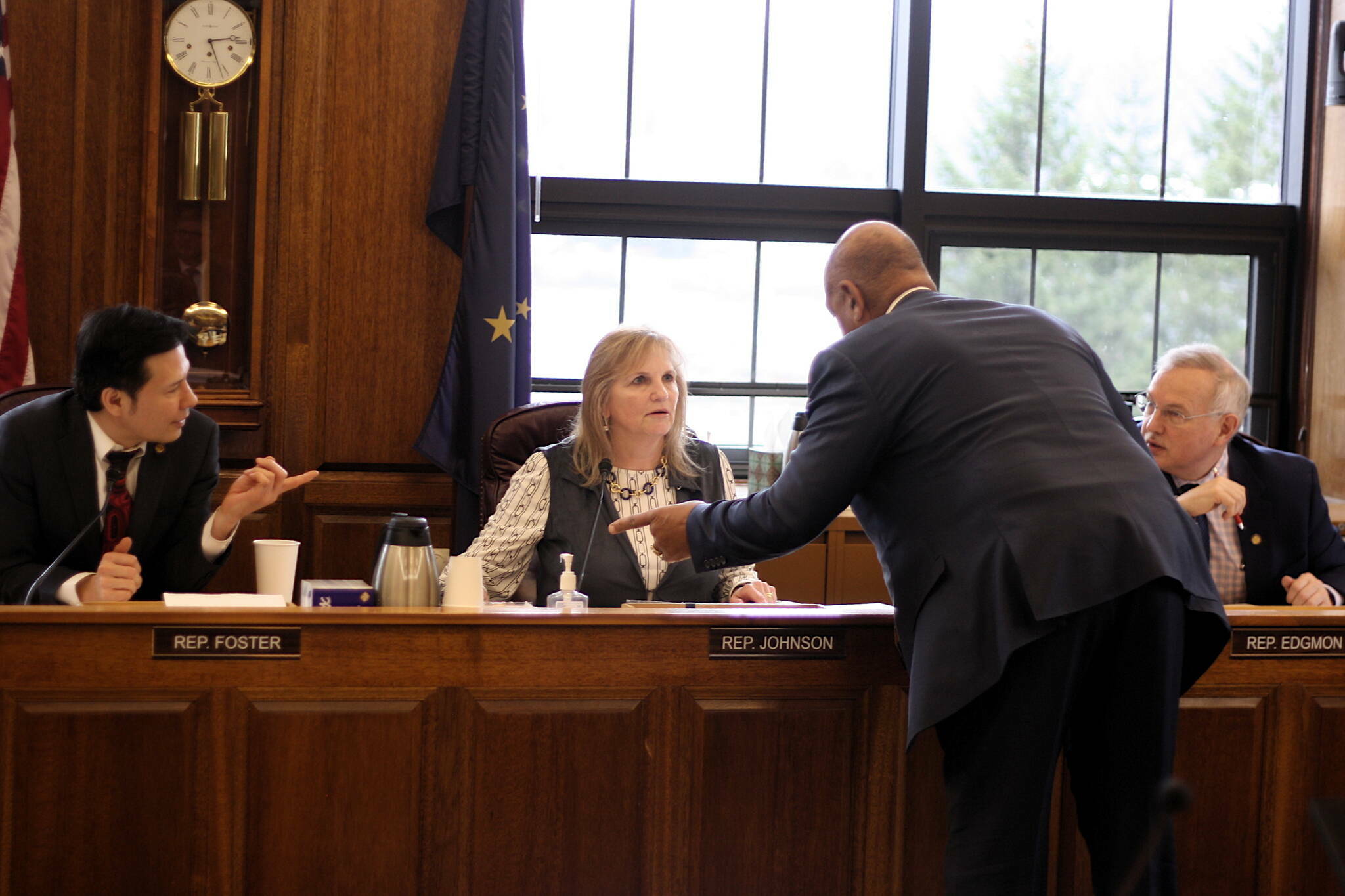
“It does represent the third-largest dividend in Alaska’s history,” said DeLena Johnson, a Palmer Republican who co-chairs the House Finance Committee, during Friday’s meeting. “And it still does have a $150 million surplus. And so with inflation and energy I think we felt like this was how we could strike a balance between state services, an education increase, (and) try to get that we listened to the public comment and we tried to put in those things that people made note of as well as providing that healthy check this fall.”
An extra bonus for Alaskans, so to speak, is the extra energy-related payment is exempt from federal income taxes, said Remond Henderson, Johnson’s chief of staff, during a presentation at Friday’s meeting.
That clause is likely to meet resistance in the Senate, where leaders of the bipartisan majority are favoring an approach similar to last year that would result in a dividend of about $1,600, including the previously agreed upon $222 bonus payment. Funds saved compared to the House’s PFD would go toward the reserve, and state programs and infrastructure projects.
The House Finance Committee is scheduled to begin considering amendments to its budget bill on Wednesday.
Much of the framework of the House’s budget is similar to the plan proposed last December and updated in February by Gov. Mike Dunleavy, although his budget contains no education funding increase while proposing a “statutory” PFD of $3,429 ($3,651 with the $222 bonus payment) that would result in a $1 billion deficit. Johnson, noting a statutory dividend hasn’t been paid since 2015, said the House’s goal was to avoid a deficit while including the largest PFD possible.
The other major line-item — and policy — difference in the House and governor’s budgets is the $680 increase in the Base Student Allocation for public schools, totaling about $175 million.
The increase has been the most contentious issue of this year’s session as the Legislature passed a bill including those funds, but Dunleavy vetoed it and the Legislature failed by a single vote to override last week. Furthermore, Dunleavy has made it clear he is willing to use his line-item veto power to reject some or all of a BSA increase when he signs the budget in June unless the Legislature also approves certain policy goals of his such as boosting state funding and authority for charter schools.
Senate majority leaders have stated the BSA increase is among their top priorities this session. They have also expressed concerns about tapping into the Constitutional Budget Reserve, which currently has about $2.7 billion, noting budgets such as the governor’s that include large PFDs could deplete it within a few years.
The House’s budget, which contains about $10.4 billion in total spending and $6.2 billion in operating expenditures, does include numerous trims of the governor’s proposal that result in about a 1.8% decrease in statewide spending, Henderson said.
That includes a $40 million increase for the Department of Corrections to pay for staff overtime, due to reported staff shortages, due to the department’s budget increasing 36% during the past five years. The House also made several cuts to the Department of Law budget, including reducing the governor’s proposed $2 million for “statehood defense” — involving a large number of legal challenges by the state primarily against the federal government — by about $500,000.
However, while the budget has a $152 million surplus, it does not include numerous items that still likely will need to be funded, so “that $152 million could disappear quite rapidly,” Henderson said. For example, he said, the Alaska Marine Highway System may be facing a $38 million shortfall depending on its operating plan for the coming year.
Other costs not funded yet include nearly $24 million for extending a low-income senior benefits program that appears likely to pass the Legislature, school and university maintenance, any increases in state employee contracts currently being negotiated, and some emergency services.
The House’s budget also includes a number of intent provisions, including one for Medicaid services stating “no money appropriated in this appropriation may be expended for an abortion that is not a mandatory service…unless a U.S. Supreme Court decision provides new precedent.” Similar clauses and legislation have been proposed and sometimes adopted for many years, but the Alaska Supreme Court has ruled they violate the state’s constitution.
The House version also includes intent language prohibiting the Alaska Permanent Fund Corp. from establishing or maintaining a new office in Anchorage without legislative approval, following APFC’s opening of such an office last year despite funding authorization to do so.
• Contact Mark Sabbatini at mark.sabbatini@juneauempire.com or (907) 957-2306.
