
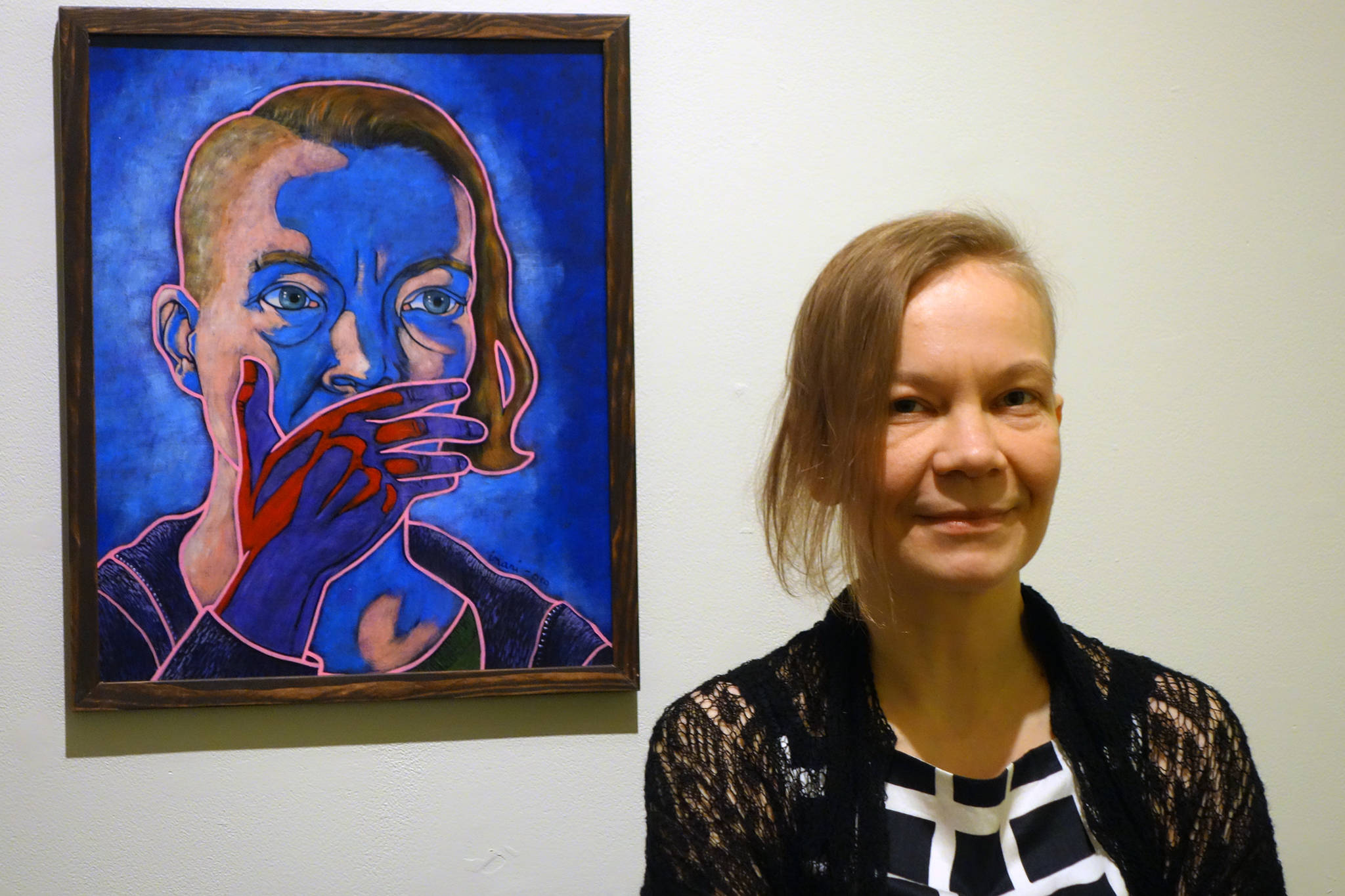
The story of Inari Kylänen’s immigration from Finland to the U.S. isn’t fraught with danger or loaded with tension.
Kylänen, who is now a U.S. citizen, wanted to study art and came to Fairbanks as an exchange student in 2001 before becoming a permanent resident in 2004. She studied art, met her future husband and told the Capital City Weekly the whole process was relatively smooth.
However, Kylänen is acutely aware that isn’t every immigrant’s experience, and her new exhibition at the Juneau-Douglas City Museum, “A Nation of Immigrants” grapples with the way the reality of her immigration contrasts with the experiences of Latinx and Middle Eastern immigrants and other people of color who come to the U.S.
“This is a little bit of my guilt about how I sailed through the immigration system,” Kylänen said in an interview. “I was one of the protected classes, and I can kind of just go and glide along, and there was never any question of me belonging or being part of the U.S. Then, I talked to some of my friends who might have darker skin, they might speak Spanish, and their experiences are very different than mine. I’m white, I come from a North European country, I come from a middle-class family, so all of these privileges kind of stack in my favor, so this is me dealing with some of that guilt.”
[Here’s what we watched, read, listened to and played in 2019]
Kylänen said anti-immigrant rhetoric during the 2016 election also helped lead her toward the idea for “Nation of Immigrants.”
President Donald J. Trump’s campaign announcement in 2016 famously included digs at Mexican immigrants. It wasn’t the last time the president reportedly made incendiary comments about immigrants, and the president’s so-called “Muslim Ban” also factors into the exhibition.
“It made me question for the first time, am I welcome here?” Kylänen said. “What sort of American am I? Can I count myself into this or not?”
“Nation of Immigrants” includes several paintings of faces of people of color backed by the Statue of Liberty’s iconic crown, and many of those pieces correspond with specific pieces of legislation related to immigration that came to be since France gave the U.S. the Statue of Liberty.
At the opening for the exhibit Friday, papers detailing some of those landmark immigration laws were available for attendees. Those included the Chinese Exclusion Act of 1882, presidential proclamations from 1917 that designated German-born people as alien enemies, Trump’s Muslim Ban, the orders that led to the internment of Japanese-Americans and more.
“These are all things that were passed as legislation after the Statue of Liberty was erected that limit that freedom and limit the people that can come to the U.S.,” Kylänen said.
While the seed for the project dates back several years, Kylänen said many of the acrylic paintings were finished within the past three months. She said it’s discouraging that the idea behind the pieces is still timely years later.
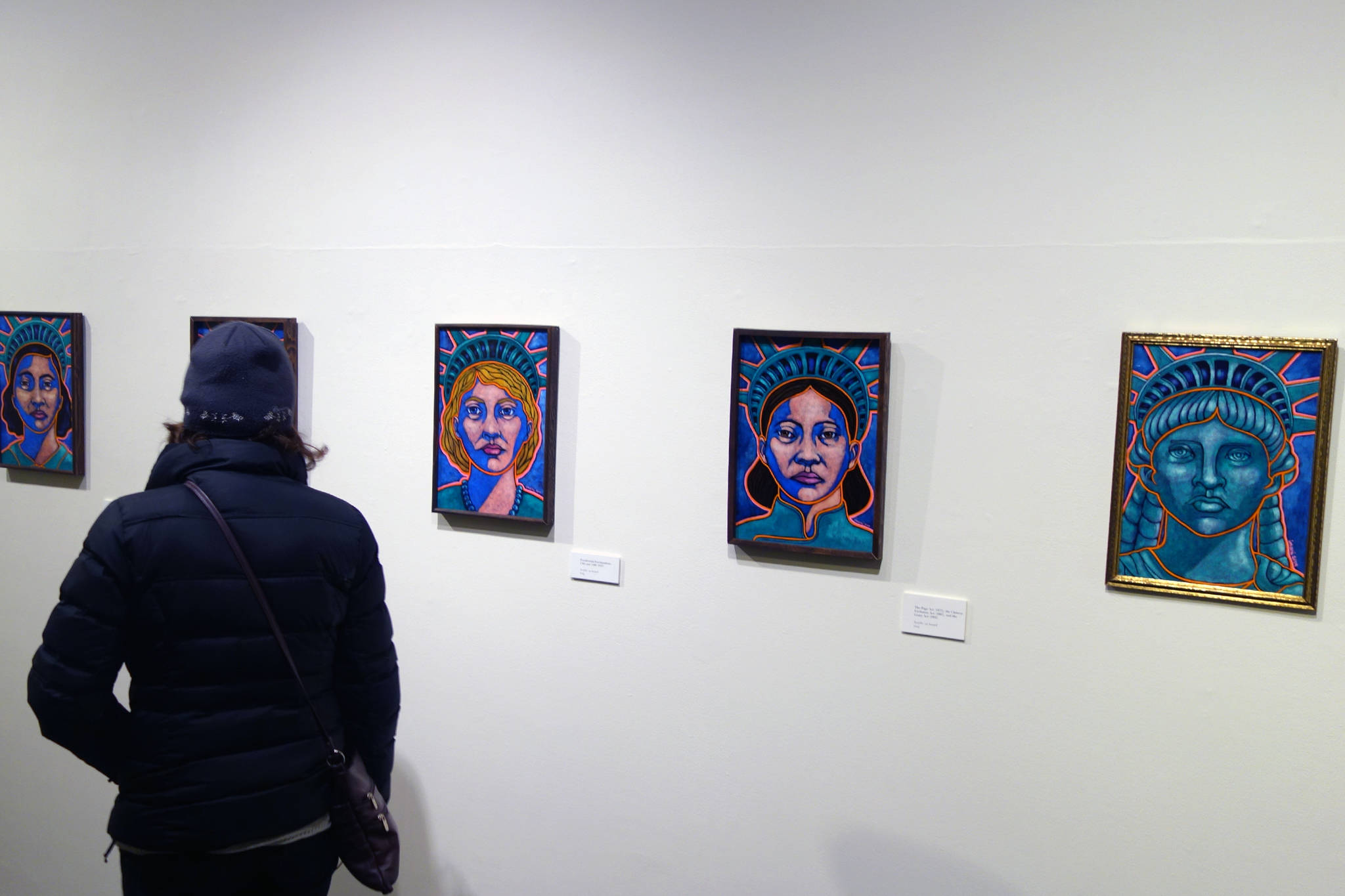
Ben Hohenstatt | Capital City Weekly A Juneau-Douglas City Museum attendee looks at artwork by Inari Kylänen.
“I wish that things would always get better and more inclusive and be more open, and when they don’t it’s sad and sort of frustrating,” Kylänen said.
She said that’s true of both the U.S. and Finland.
“It’s not just the U.S.,” Kylänen said. “It’s Europe as well.”
She said recently Finland’s immigration process has become restrictive. That’s partly because of an influx of Syrian refugees into Europe.
[The five biggest arts stories of 2019]
“One of my pieces deals with that,” Kylänen said. “The guilt of what happens when you close all the borders and don’t let people in.”
Despite the clear critique of immigration policy present in the work, Kylänen reiterated that her personal experiences in the U.S. have been positive.
“I love living in Alaska, and I always feel welcome, but not everybody does,” Kylänen said. “There’s a lot of guilt with that as well.”
• Contact reporter Ben Hohenstatt at (907)523-2243 or bhohenstatt@juneauempire.com. Follow him on Twitter at @BenHohenstatt
