
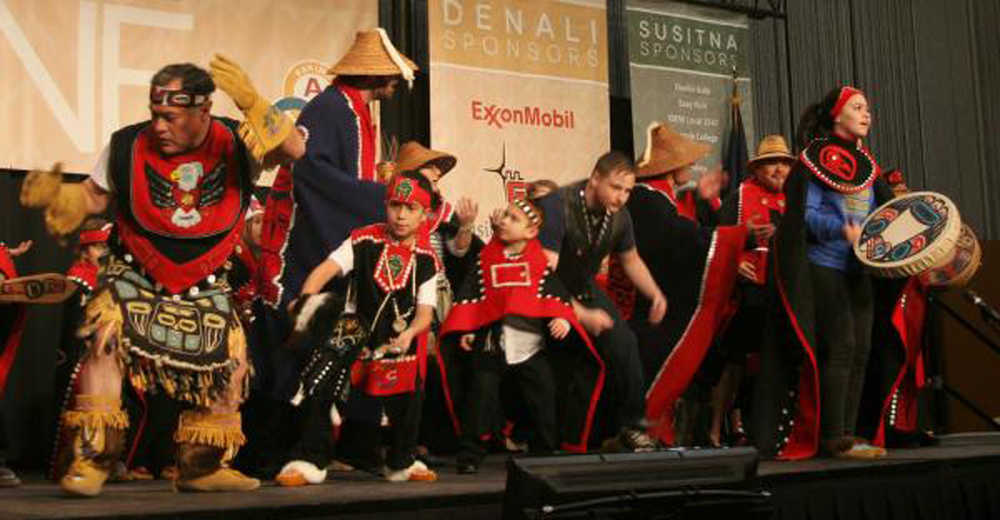
ANCHORAGE — Alaska’s largest gathering of indigenous people is scheduled to take place in Anchorage this week, giving participants a forum for discussing crucial issues, including the state’s ongoing fiscal crisis.
The annual conference of the Federation of Alaska Natives will open Thursday and continue through Saturday at the downtown Dena’ina Convention Center. The convention draws up to 5,000 people from around the state each year.
“The whole point of the convention is to get people together, get them engaged in issues and sharing information and strengthening the Native community to deal with the challenges that are ahead,” said AFN president Julie Kitka.
As always, the event will be preceded by the three-day Elders and Youth Conference that is hosted by the First Alaskans Institute.
The theme of this year’s AFN convention is “Heroes in Our Homeland.” Planned panel discussions and work sessions include the Alaska’s economic woes amid low oil prices, substance abuse, and the justice system and Alaska Natives.
The theme of the elders and youth conference is “Not in Our Smokehouse!,” which organizers say represents the love and protection people feel about their way of life.
Scheduled participants for this year’s convention include keynote speakers Haida weaver Delores Churchill, and her grandson, Donald Varnell, a Haida carver. Kitka said the pair and other speakers represent the theme as people who are well esteemed, but just not as well-known by the general public.
Other scheduled speakers include U.S. Census Bureau director John H. Thompson., Alaska Gov. Bill Walker, Alaska’s three-member congressional delegation and Lt. Gov. Byron Mallott, a Tlingit who was born in the southeast Alaska village of Yakutat.
The federation was created in the mid-1960s in when Alaska Natives gathered for a three-day conference to focus on indigenous land rights, according to the AFN’s website. The organization said its main focus the first several years was to work on obtaining a fair land settlement, which materialized in the form of the 1971 Alaska Native Claims Settlement Act.
The law compensated Alaska Natives for loss of historic lands. It led to establishment of regional and village Native corporations with the right to select 44 million acres of land and appropriated $962.5 million to them. Thirteen regional Native corporations and scores of village corporations were created under the law.
Next week’s convention comes on the heels of President Barack Obama’s three-day visit to Alaska that began Aug. 31 and focused almost entirely on climate change. During his tour, Obama became the first sitting president to set foot in the Alaska Arctic when he visited the largely Inupiat Eskimo regional hub of Kotzebue, telling residents who gathered to greet him that their plight should be the world’s wake-up call on global warming.
None of the scheduled work sessions or panel discussions in upcoming convention deal outright with climate change, however, according to the event agenda. But aspects of the environmental changes taking place have been dealt with in past convention workshops, formal resolutions and through convention guest speakers over the years, according to Kitka.
“These are not new things coming out there,” she said. “What is new is the historic visit by the president raising the visibility and putting a greater sense of the urgency for people all to work together.”
For more information, visit http://www.nativefederation.org/
